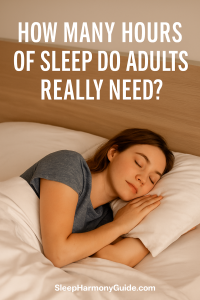
How Many Hours of Sleep Do Adults Really Need? Science-Based Guide to Age, Lifestyle, and Sleep Debt
🌙 Feeling Tired All the Time — Even After Sleeping?
If you’ve ever wondered why you still feel tired after a “full night’s sleep,” you’re not alone. Many adults struggle with restless nights, inconsistent sleep patterns, stress, and racing thoughts — all of which make it hard to understand exactly how many hours of sleep adults need to feel their best.
The truth? Sleep needs aren’t one-size-fits-all. Age, lifestyle, stress levels, physical activity, and your sleep quality all play a role. And while the classic “7–8 hours a night” recommendation works for most people, it’s not the whole story.
This guide breaks down the science behind optimal sleep duration, how sleep needs change across adulthood, how to recover from sleep debt, and how U.S. adults can build healthier sleep habits to support energy, productivity, and mental well-being.
😴 Why Adults Need More Sleep Than They Think
Sleep isn’t just about feeling rested — it’s a biological necessity that affects:
-
Brain Function & Memory
-
Immune System Strength
-
Stress Hormone Balance
-
Emotional Stability
-
Weight Regulation & Metabolism
-
Heart Health
-
Focus and Productivity
Most adults don’t realize they’re chronically sleep-deprived because symptoms build slowly: grogginess, irritability, poor focus, sugar cravings, and mood swings.
This is why understanding how many hours of sleep adults need is essential for long-term health.
🌙 Recommended Sleep Duration by Age
Below is a chart using respected guidelines from sleep researchers and U.S. health organizations.
Age Group | Recommended Hours | Notes
—————————————————————
18–25 (Young Adults) | 7–9 hours | Higher needs due to stress, late nights, and irregular schedules
26–64 (Adults) | 7–9 hours | Ideal range for mental clarity, hormone balance, and productivity
65+ (Older Adults) | 7–8 hours | Sleep becomes lighter; naps may increase naturally
—————————————————————
Highly Active Adults | 8–10 hours | Athletes or labor-intensive jobs may require more recovery sleep
Sleep Debt Recovery | 8–12 hours | Temporary increase helps restore balance after deprivation
The key takeaway:
Most adults need 7–9 hours, but some require more based on lifestyle, stress, or physical activity.
🌙 The Truth About the “7–8 Hours” Myth
You’ve heard it everywhere: “Adults need 7–8 hours of sleep.”
But the reality is:
-
Some adults function best with 9 hours
-
Some can perform fine with 7
-
6 hours is too little for most people, even if they think they’re used to it
-
Long-term short sleep significantly increases health risks
The “7–8 hours” guideline is an average — not a universal rule. The ideal duration varies based on your circadian rhythm, lifestyle, and overall health.
🌙 Sleep Needs by Lifestyle & Activity Level
Not every adult has the same daily demands. Here’s how different lifestyles impact how many hours of sleep adults need.
Active Adults or Athletes
These individuals generally require 8–10 hours due to muscle repair and recovery needs.
High-Stress Professionals
People with demanding careers (healthcare workers, entrepreneurs, teachers, executives) often need closer to 8–9 hours because stress depletes the brain faster.
Parents of Young Children
Parents experience interrupted sleep and higher stress, requiring at least 8 hours, sometimes more.
Shift Workers
Those working nights or rotating shifts have disrupted circadian rhythms and may need 8–9 hours plus planned naps.
🌙 Understanding Sleep Debt: What Happens When You Don’t Sleep Enough
Sleep debt is the difference between how much sleep your body needs and how much you actually get.
Example:
If you need 8 hours but only sleep 5…
You build up 3 hours of sleep debt in one night.
Symptoms of sleep debt include:
-
Reduced Focus & Productivity
-
Increased Irritability
-
Weakened Immune System
-
Hormonal Imbalance
-
Slower Reaction Times
-
Increased Appetite
-
Poor Physical Performance
How to Recover from Sleep Debt
-
Add 1 extra hour per night until symptoms improve
-
Take a 20–30 minute nap before 3 p.m.
-
Prioritize earlier bedtimes instead of sleeping in
-
Use morning light to reset circadian rhythm
Sleep debt is reversible — but only with consistent habits.
🌙 How to Tell If You’re Not Getting Enough Sleep
Even if you sleep 7–8 hours, you may not feel rested. Signs of sleep insufficiency include:
-
Falling asleep immediately (sign of chronic sleep deprivation)
-
Need for multiple alarms
-
Afternoon energy crashes
-
Irritability or emotional sensitivity
-
Poor memory or concentration
-
Relying on caffeine to feel normal
-
Feeling unrefreshed in the morning
-
Weekend oversleeping
If several apply, you likely need more sleep than you’re currently getting.
🌙 Circadian Rhythm: How Your Inner Clock Affects Sleep Duration
Your circadian rhythm is a 24-hour biological schedule that influences:
-
Sleep timing
-
Hormone release
-
Body temperature
-
Alertness levels
When your circadian rhythm is aligned, falling asleep and waking up feels natural. When misaligned, sleep becomes difficult — even if you’re exhausted.
Common disruptors include:
-
Staying up late
-
Irregular bedtimes
-
Shift work
-
Jet lag
-
Excess blue light exposure
-
Stress and overthinking
Resetting your rhythm improves sleep duration and quality.
🌙 How to Optimize Sleep Duration and Quality
Here are science-backed strategies to help adults improve sleep quality and meet their ideal sleep hours.
Develop a Consistent Bedtime
The brain thrives on routine.
Use Morning Sunlight Exposure
Helps reset your circadian rhythm naturally.
Limit Caffeine After 2 P.M.
Caffeine has a 6–8 hour half-life.
Reduce Blue Light at Night
Screens delay melatonin production, disrupting sleep timing.
Build a Wind-Down Routine
-
Dim The Lights
-
Use A Warm Shower Or Bath
-
Drink Herbal Tea
-
Read A Calming Book
-
Play Relaxing Music Or White Noise
Use Sleep-Supporting Supplements
-
Melatonin (for schedule resets)
-
Magnesium Glycinate (for relaxation)
-
Chamomile Or Lemon Balm Tea
-
Lavender Aromatherapy
Create A Healthy Sleep Environment
-
Keep Your Bedroom Cool (65–68°F)
-
Use Blackout Curtains
-
Choose A Supportive Mattress
-
Keep Your Space Quiet
-
Limit Clutter And Overstimulation
🌙 Productivity, Mood & Health: Why Sleep Duration Matters
Adults who regularly get the recommended hours of sleep benefit from:
-
Stronger Immune System
-
Better Mood Stability
-
Higher Productivity
-
Improved Focus and Memory
-
Healthy Hormone Balance
-
Lower Risk of Chronic Diseases
-
Better Emotional Coping Skills
-
Improved Physical Performance
Sleep isn’t just rest — it’s recovery for your brain and body.
🩺 When to See a Doctor About Your Sleep Duration
You should speak to a sleep specialist if:
-
Your sleep problems have lasted 3+ months
-
You routinely sleep less than 6 hours
-
You wake up gasping or snoring loudly
-
You feel tired even after a full night
-
You have chronic pain disrupting sleep
-
You suspect sleep apnea
-
You rely on sleeping pills or alcohol to fall asleep
-
You have anxiety or depression affecting your sleep
A doctor may recommend:
-
CBT-I therapy
-
Sleep study (polysomnography)
-
Medication
-
Circadian rhythm evaluation
-
Lifestyle and stress reduction changes
❓ FAQs: How Many Hours of Sleep Do Adults Need
How many hours of sleep do adults need on average?
Most adults need 7–9 hours, depending on age and lifestyle.
Do adults over 50 need less sleep?
Adults 65+ typically need 7–8 hours, but sleep becomes lighter and more fragmented.
Is 6 hours of sleep enough for adults?
For most adults, 6 hours is not enough and leads to sleep debt.
How much sleep do active adults or athletes need?
Highly active people often need 8–10 hours for full recovery.
Does oversleeping make you tired?
Yes — sleeping too much can disrupt circadian rhythm and increase grogginess.
How long does it take to recover from sleep debt?
Most people need several days of consistent sleep to fully recover.
Can naps replace lost nighttime sleep?
Short naps can help, but they cannot fully replace consistent overnight sleep.
🌙 Conclusion: Your Ideal Sleep Hours Are Personal — But Achievable
Understanding how many hours of sleep adults need is key to improving mood, energy, productivity, and overall health. With the right habits, consistent routines, and sleep-friendly environment, you can align your sleep duration with what your body truly needs.
Healthy sleep is not a luxury — it’s a foundation for a better life. And tonight can be the first step toward deeper, more restorative rest.
⚠️ Sleep Health Disclaimer
This article is for informational purposes only and does not provide medical advice. Always consult a healthcare provider before starting new supplements or sleep treatments, especially if you have chronic insomnia, underlying health conditions, or ongoing sleep disturbances.
 Explore more:
- How to Fall Asleep Faster Naturally
- Why You Can’t Fall Asleep Even When You’re Tired
- How to Fix Your Sleep Schedule After Staying Up Late