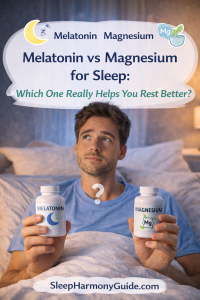
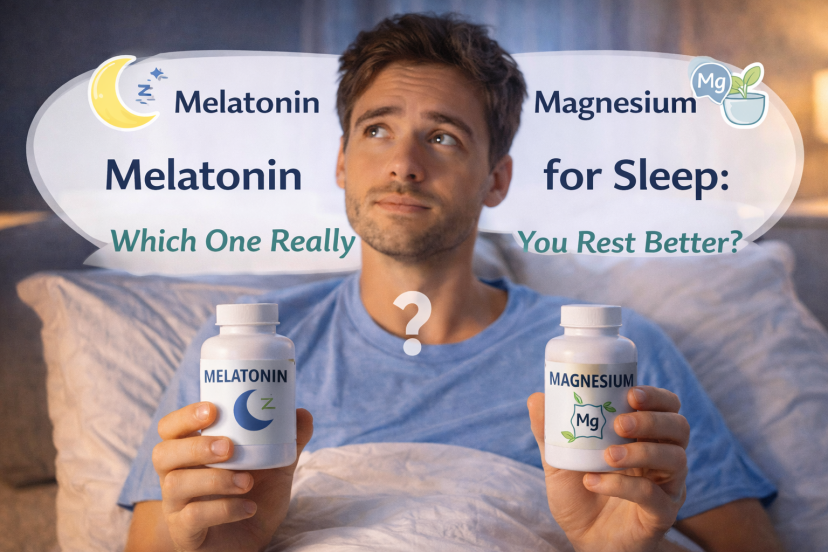
Melatonin vs Magnesium for Sleep: Which One Really Helps You Rest Better?
😴 When Sleep Won’t Come Easily
If you toss and turn at night, stare at the ceiling, or feel wired but exhausted, you’re not alone. Millions of adults in the U.S. struggle with falling asleep, staying asleep, or waking up feeling unrested. When sleep problems persist, many people turn to supplements — especially melatonin and magnesium.
But choosing between them can feel confusing. One is a hormone. The other is a mineral. Both are linked to sleep, relaxation, and circadian regulation — but they work in very different ways.
In this guide, we’ll break down melatonin vs magnesium for sleep in simple terms. You’ll learn how each supplement works, who it’s best for, proper timing and dosage, and how to combine supplements with healthy sleep habits for better results.
🌿 Understanding Sleep And Why It Breaks Down
Before comparing melatonin vs magnesium for sleep, it helps to understand what actually controls sleep.
🧠 Key Systems That Regulate Sleep
-
Sleep hormones: Like melatonin, which signals when it’s time to sleep
-
Sleep minerals: Like magnesium, which helps calm nerves and muscles
-
Circadian regulation: Your internal 24-hour body clock
-
Nervous system balance: Stress vs relaxation
Sleep issues often happen when one or more of these systems are disrupted.
💊 What Is Melatonin And How Does It Help Sleep?
Melatonin is a hormone naturally produced by the brain’s pineal gland. It plays a central role in circadian regulation — telling your body when it’s time to sleep and wake.
🌙 How Melatonin Works
-
Released in response to darkness
-
Signals your brain that bedtime is approaching
-
Helps regulate sleep timing, not sleep depth
Melatonin supplements don’t act like sedatives. Instead, they support your natural sleep-wake rhythm.
✅ Pros Of Melatonin For Sleep
Melatonin can be helpful for certain sleep problems.

🌿 Benefits Include
-
Helpful for jet lag or shift work
-
Useful for delayed sleep phase syndrome
-
Supports circadian regulation
-
Non-habit forming for short-term use
For people whose sleep schedule is off, melatonin may help reset timing.
⚠️ Cons And Side Effects Of Melatonin
Melatonin isn’t perfect — especially when misused.
🚫 Potential Downsides
-
Can cause grogginess or vivid dreams
-
May worsen anxiety in some people
-
Less effective for middle-of-the-night waking
-
Long-term use is still debated
This is why melatonin vs magnesium for sleep comparisons matter — the cause of your insomnia matters.
💊 What Is Magnesium And Why Is It Linked To Sleep?
Magnesium is an essential mineral involved in hundreds of body processes, including muscle relaxation, nerve signaling, and stress regulation.
Unlike melatonin, magnesium doesn’t control sleep timing. Instead, it helps your body relax enough to fall and stay asleep.
🌿 How Magnesium Supports Sleep
-
Calms the nervous system
-
Supports GABA (a calming neurotransmitter)
-
Reduces muscle tension and cramps
-
Helps quiet racing thoughts
This makes magnesium especially helpful for stress-related insomnia.
💪 Pros Of Magnesium For Sleep
Magnesium often shines in melatonin vs magnesium for sleep comparisons.
🌿 Benefits Include
-
Promotes relaxation and calm
-
Helps with nighttime anxiety
-
Supports deeper sleep quality
-
Useful for muscle tension or restless legs
Many adults are mildly deficient in magnesium, especially in the U.S.
⚠️ Cons And Side Effects Of Magnesium
While generally safe, magnesium still requires smart use.
🚫 Potential Downsides
-
Digestive upset with some forms
-
Too high doses may cause diarrhea
-
Effects can take days to build
Choosing the right form matters when using sleep minerals.

🌙 Melatonin Vs Magnesium For Sleep: Key Differences
Here’s a clear comparison to help you decide.
✅ Melatonin
-
A sleep hormone
-
Best for sleep timing issues
-
Helps you feel sleepy
-
Works quickly
✅ Magnesium
-
A sleep mineral
-
Best for stress and tension
-
Helps you stay asleep
-
Supports relaxation
When comparing melatonin vs magnesium for sleep, the best option depends on why you’re not sleeping.
🧠 Which Is Better For Different Sleep Problems?
🌙 Trouble Falling Asleep Late
-
Melatonin may help shift your clock
😣 Racing Thoughts Or Anxiety
-
Magnesium is often more effective
💤 Waking Up At Night
-
Magnesium may support deeper sleep
✈️ Jet Lag Or Travel
-
Melatonin is usually preferred
Some people even use both — carefully and temporarily.
⏰ Timing And Dosage Guidelines
Proper timing matters when using supplements.
💊 Melatonin Dosage
-
Typical dose: 0.5–3 mg
-
Take 30–60 minutes before bed
-
Lower doses often work better
💊 Magnesium Dosage
-
Typical dose: 200–400 mg
-
Take 1–2 hours before bed
-
Magnesium glycinate or citrate is popular
Avoid mega-dosing — more is not better.
🌿 Best Magnesium Types For Sleep
Not all magnesium supplements are the same.
🌿 Recommended Forms
-
Magnesium glycinate: Gentle, calming
-
Magnesium citrate: Effective but may affect digestion
-
Magnesium threonate: Supports brain relaxation
Choose reputable U.S. brands and check third-party testing.
🌿 Can You Combine Melatonin And Magnesium?
In some cases, yes — but cautiously.
✅ Combination Tips
-
Use low-dose melatonin
-
Pair with magnesium for relaxation
-
Avoid long-term daily melatonin use
Always assess how your body responds.
🌿 Lifestyle Habits That Improve Supplement Results
Supplements work best when paired with good habits.

🌙 Sleep-Friendly Habits
-
Consistent bedtime and wake time
-
Dim lights after sunset
-
Avoid screens 60–90 minutes before bed
🌿 Helpful Tools For U.S. Readers
-
White noise machines (Hatch, LectroFan)
-
Sleep trackers (Fitbit, Apple Watch, Oura Ring)
-
Blue-light–blocking glasses
Circadian regulation improves when habits align with supplements.
🌿 Herbal Teas And Natural Sleep Support
Supplements aren’t the only option.
🌿 Gentle Sleep Aids
-
Lemon balm
-
Passionflower
These can complement magnesium or replace melatonin for sensitive sleepers.
🩺 When To See A Doctor Or Sleep Specialist
Supplements help mild to moderate sleep issues, but not everything.
🚨 Seek Medical Advice If
-
Insomnia lasts longer than 3 months
-
Daytime fatigue affects safety
-
You rely on supplements nightly
-
Anxiety or depression worsens sleep
A sleep specialist can assess circadian regulation and underlying causes.
❓ FAQs: Melatonin Vs Magnesium For Sleep
❓ Which Is Better: Melatonin Vs Magnesium For Sleep?
It depends on the cause. Melatonin helps with sleep timing, while magnesium helps with relaxation and sleep quality.
❓ Can Magnesium Replace Melatonin?
For stress-related insomnia, yes. Magnesium often works better for calming the nervous system.
❓ Is Melatonin Safe For Long-Term Use?
Short-term use is generally safe, but long-term daily use should be supervised by a doctor.

❓ What Time Should I Take Magnesium For Sleep?
About 1–2 hours before bedtime is ideal for most people.
❓ Can I Take Both Together?
Some people can, using low doses. Always monitor for side effects.
❓ Does Magnesium Help Anxiety-Related Insomnia?
Yes. Magnesium supports GABA and nervous system relaxation.
❓ Are Natural Sleep Supplements Better Than Medication?
For mild sleep issues, many people find supplements and lifestyle changes effective without medication risks.
🌙 Conclusion: Choosing What Works For Your Sleep
When comparing melatonin vs magnesium for sleep, there’s no one-size-fits-all answer. Melatonin helps guide your internal clock. Magnesium helps your body and mind unwind. Understanding your sleep pattern — not just your symptoms — is the key to choosing wisely.
Start low, go slow, and combine supplements with calming routines. Restful sleep is possible — and often closer than you think.
⚠️ Sleep Health Disclaimer
This article is for educational purposes only and does not replace medical advice. Always consult a healthcare professional before starting supplements, especially if you are pregnant, have a medical condition, or take prescription medications.
 Explore more:
- What Is the 123 Sleep Rule?
- Why You Wake Up Tired Even After 8 Hours of Sleep
- Anxiety And Insomnia: Breaking The Cycle