Why You Can’t Fall Asleep Even When You’re Tired (And How To Finally Wind Down)
😴 Exhausted But Wide Awake
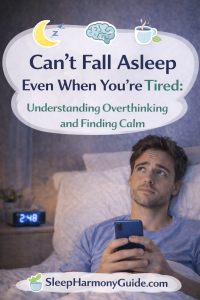
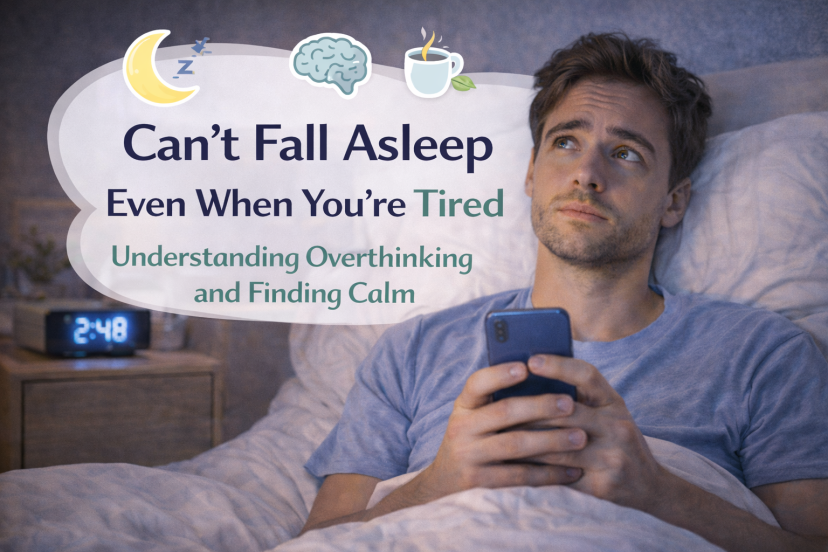
You’ve been tired all day. Your eyes feel heavy. Your body aches for rest. But the moment your head hits the pillow, your brain switches on. Thoughts race. Worries pop up. Minutes turn into hours.
If you can’t fall asleep even when you’re tired, you’re not alone—and you’re not broken. This frustrating experience is often linked to paradoxical insomnia, a form of sleep onset insomnia driven by mental overstimulation rather than a lack of sleepiness.
In this guide, we’ll explore why this happens, how hyperarousal and overthinking at night hijack sleep, and—most importantly—what you can do to gently wind down and reclaim restful nights.
🧠 Understanding Why You Can’t Fall Asleep Even When You’re Tired
Feeling tired doesn’t always mean your brain is ready to sleep. Sleep requires both sleep drive (physical tiredness) and mental calm.
🌿 When The Brain Overrides Fatigue
-
Stress keeps the nervous system alert
-
Worry increases nighttime arousal
-
Bedtime becomes a “performance.”
-
The brain associates bed with wakefulness
This mismatch explains why many people can’t fall asleep even when tired.
⚡ What Is Paradoxical Insomnia?
Paradoxical insomnia (sometimes called sleep state misperception) happens when you feel awake for long periods—even if your body is drifting in and out of light sleep.
🦵 Key Features
-
Long time to fall asleep
-
Feeling “wired but tired.”
-
Light, unrefreshing sleep
-
Strong awareness of wakefulness
It’s closely tied to hyperarousal, a state where the brain stays on high alert.
🌡️ Hyperarousal: The Real Reason Sleep Won’t Start
Hyperarousal means your nervous system is stuck in “on” mode.
🌿 Common Triggers
-
Chronic stress
-
Anxiety about sleep
-
Overstimulation from screens
-
Late caffeine or intense workouts
When hyperarousal is present, the body produces alerting chemicals that block sleep—even if you’re exhausted.
🧠 Overthinking At Night And Racing Thoughts
One of the most common reasons people can’t fall asleep even when tired is overthinking at night.
🧠 Why Thoughts Get Louder At Bedtime
-
Fewer distractions
-
Quiet environment amplifies worries
-
The brain tries to “solve” problems
-
Stress hormones rise instead of falling
The harder you try to stop thinking, the more active the mind becomes.
😣 Symptoms Of Sleep Onset Insomnia
Sleep onset insomnia focuses on difficulty falling asleep, not staying asleep.
💤 Common Signs
-
Lying awake longer than 30–45 minutes
-
Anxiety as bedtime approaches
-
Clock-watching
-
Fear of another bad night
These symptoms often reinforce the cycle of not being able to fall asleep even when tired.
🌿 Why Forcing Sleep Backfires
Sleep is not something you can force. Effort increases alertness.
❌ What Makes It Worse
-
Trying to “shut off” thoughts
-
Checking the clock repeatedly
-
Panicking about sleep loss
-
Staying in bed, frustrated
Breaking this cycle requires allowing sleep, not chasing it.
🌬️ Calming Techniques To Reduce Hyperarousal
🌿 Breathing To Signal Safety
Slow breathing lowers nervous system arousal.
Try this:
-
Inhale through the nose for 4 seconds
-
Exhale through the mouth for 6–8 seconds
-
Repeat for 5–10 minutes
This tells the brain it’s safe to rest.
🧘 Progressive Muscle Relaxation
This technique helps release physical tension linked to hyperarousal.
💪 How To Practice
-
Tense each muscle group for 5 seconds
-
Release fully for 10 seconds
-
Move slowly from feet to head
Many people fall asleep before finishing.
🌙 Winding-Down Rituals That Actually Work
Rituals help the brain transition out of “day mode.”
🌿 Effective Evening Rituals
-
Warm shower or bath
-
Gentle stretching
-
Reading something neutral
-
Listening to calming audio
Consistency matters more than perfection.
💊 Supplements That May Help You Fall Asleep
Supplements won’t fix habits—but they can support relaxation.
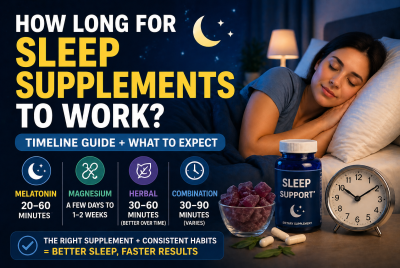
💊 Magnesium
-
Supports a nervous system calm
-
Helps quiet overthinking
-
Useful for stress-related insomnia
Typical dose: 200–400 mg (magnesium glycinate)
💊 Melatonin
-
Helps regulate sleep timing
-
Useful if your schedule is off
-
Not ideal for chronic anxiety alone
Typical dose: 0.5–3 mg, short-term use
🌿 Herbal Teas
-
Chamomile
-
Lemon balm
-
Passionflower
These gently support sleep onset without strong side effects.
🌙 Lifestyle Habits That Reduce Sleep Onset Insomnia
🌿 Daytime Strategies
-
Morning sunlight exposure
-
Regular movement
-
Avoid long naps
Sleep drive builds during the day—not at night.
🌙 Evening Habits To Prevent Overthinking At Night
-
Set a “worry window” earlier in the evening
-
Write tomorrow’s to-do list before bed
-
Limit screens 60–90 minutes before sleep
These steps lower mental stimulation.
🔇 Sleep Tools That Help Quiet The Mind (U.S. Favorites)
✅ Helpful Options
-
White noise machines (LectroFan, Hatch)
-
Guided sleep apps (Calm, Headspace)
-
Sleep trackers (Fitbit, Oura Ring) — used gently
Tools should support calm, not control sleep.
🌿 Preventing The “Tired But Awake” Cycle
✅ Prevention Tips
-
Keep a consistent bedtime window
-
Avoid clock-watching
-
Get out of bed if awake too long
-
Focus on rest, not sleep
When pressure drops, sleep often returns.
🩺 When To See A Doctor Or Sleep Specialist
Sometimes professional help is needed.
🚨 Seek Help If
-
You can’t fall asleep even when tired for 3+ months
-
Anxiety or panic occurs at bedtime
-
Daytime functioning is impaired
-
Sleep loss affects mood or safety
Cognitive Behavioral Therapy for Insomnia (CBT-I) is highly effective for sleep onset insomnia.
❓ FAQs: Can’t Fall Asleep Even When Tired
❓ Why Can’t I Fall Asleep Even When I’m Exhausted?
Mental hyperarousal and stress can override physical tiredness.
❓ Is This A Form Of Insomnia?
Yes. It’s often sleep onset insomnia or paradoxical insomnia.
❓ Does Anxiety Cause Overthinking At Night?
Yes. Anxiety increases mental activity when distractions fade.
❓ Can Magnesium Help Me Fall Asleep?
Magnesium may help calm the nervous system and reduce racing thoughts.
❓ Should I Stay In Bed If I Can’t Sleep?
No. Getting up briefly can reduce frustration and reset sleep cues.
❓ How Long Is Too Long To Lie Awake?
If awake more than 20–30 minutes, it’s often better to step out of bed.
❓ Can This Problem Go Away Naturally?
Yes. With the right calming routines, many people restore natural sleep.
🌙 Conclusion: Sleep Returns When You Stop Chasing It
If you can’t fall asleep even when tired, it doesn’t mean something is wrong with you. It means your nervous system needs reassurance—not force.
By reducing hyperarousal, easing overthinking at night, and creating gentle wind-down rituals, you give your body permission to do what it already knows how to do. Sleep isn’t lost—it’s waiting for calm.
Be patient. Be kind to yourself. Rest will follow.
⚠️ Sleep Health Disclaimer
This article is for educational purposes only and does not replace professional medical advice. Consult a qualified healthcare provider before starting supplements or treatments for insomnia or sleep disorders.
 Explore more:
- Sleep Anxiety: How To Calm Your Mind Before Bed And Finally Rest
- The Stages of Sleep Explained
- Sleep Paralysis Explained