Yoga Before Bed: The 7 Best Poses For Sleep That Calm Your Mind And Body
🌙 When Your Body Is Tired But Your Mind Won’t Switch Off
You crawl into bed exhausted—yet your thoughts keep looping. Your shoulders feel tight, your breathing is shallow, and sleep feels just out of reach. If this sounds familiar, you’re not alone. Millions of Americans struggle with nighttime restlessness, racing thoughts, and light, broken sleep.
That’s where yoga for sleep can make a powerful difference. Unlike intense workouts, gentle nighttime yoga helps slow your nervous system, release muscle tension, and signal to your brain that it’s safe to rest. This guide walks you through a calming bedtime yoga routine designed specifically to help you fall asleep faster and stay asleep longer—no flexibility or experience required.
🧠 Why Yoga Helps You Sleep Better At Night
Sleep problems are often driven by stress, tension, and an overactive nervous system. Yoga directly targets all three.
Yoga supports sleep by:
-
Lowering cortisol (stress hormone) levels
-
Activating the parasympathetic “rest-and-digest” response
-
Releasing physical tension held in the hips, back, and shoulders
-
Improving breathing depth and rhythm
Research shows that gentle yoga and breathwork before bed can reduce insomnia symptoms and improve overall sleep quality.
😴 Who Can Benefit From Yoga For Sleep?
Yoga before bed is especially helpful if you experience:
-
Difficulty falling asleep
-
Frequent nighttime awakenings
-
Anxiety or racing thoughts at night
-
Muscle stiffness or body tension
-
Stress-related insomnia
Because it’s low-impact and adaptable, bedtime yoga works well for beginners, older adults, and anyone returning to movement after a long day.
❓ How To Prepare For A Bedtime Yoga Routine
Before starting, set yourself up for calm—not performance.
✅ Simple Setup Tips
-
Dim the lights or use a bedside lamp
-
Wear loose, comfortable clothing
-
Practice on a yoga mat, rug, or carpet
-
Keep movements slow and gentle
-
Focus on breathing, not stretching depth
Even 10–15 minutes can be enough to cue sleep.
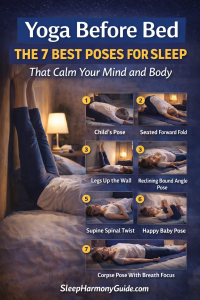
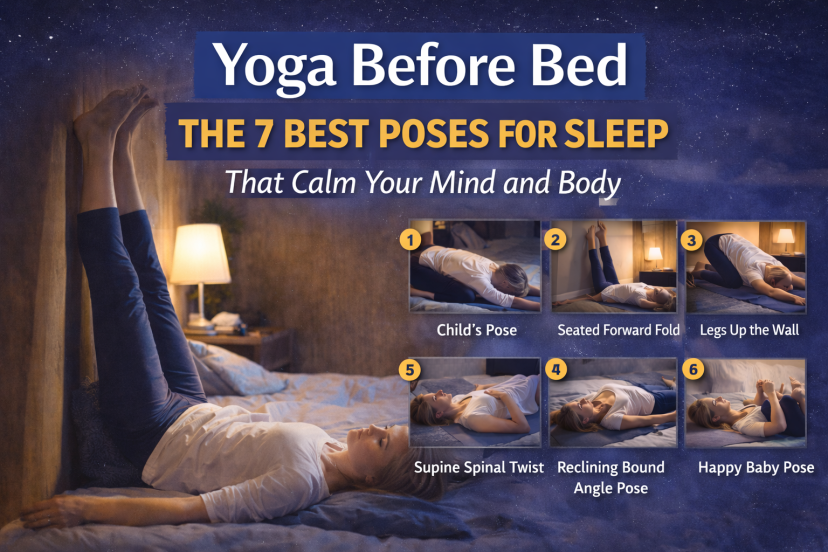
🌿 Yoga Before Bed: The 7 Best Poses For Sleep
These restorative poses are designed to relax—not energize—your body.
🦵 1. Child’s Pose (Balasana)
Why it helps:
Gently stretches the lower back and hips while calming the nervous system.
How to do it:
-
Kneel and sit back on your heels
-
Fold forward, arms relaxed
-
Rest your forehead on the mat or pillow
Hold: 1–3 minutes
Sleep benefit: Encourages slow breathing and mental grounding
🦵 2. Seated Forward Fold (Paschimottanasana – Gentle)
Why it helps:
Releases tension in the spine and hamstrings while signaling inward focus.
How to do it:
-
Sit with legs extended
-
Hinge forward slightly—no forcing
-
Let your head and shoulders relax
Hold: 1–2 minutes
Sleep benefit: Reduces overstimulation after busy days
🦵 3. Legs Up The Wall (Viparita Karani)
Why it helps:
One of the best yoga poses for sleep—deeply calming and restorative.
How to do it:
-
Lie on your back with your legs resting against a wall
-
Arms relaxed by your sides
Hold: 3–5 minutes
Sleep benefit: Lowers heart rate and relieves leg fatigue
🦵 4. Reclining Bound Angle Pose (Supta Baddha Konasana)
Why it helps:
Opens hips gently while promoting deep relaxation.
How to do it:
-
Lie on your back
-
Bring the soles of the feet together
-
Support knees with pillows
Hold: 3–5 minutes
Sleep benefit: Releases stored tension linked to stress and anxiety
🦵 5. Supine Spinal Twist (Supta Matsyendrasana)
Why it helps:
Relieves lower back tightness and massages internal organs.
How to do it:
-
Lie on your back
-
Hug one knee in and twist gently to the side
-
Switch sides
Hold: 1–2 minutes per side
Sleep benefit: Helps unwind after sitting or screen time
🦵 6. Happy Baby Pose (Ananda Balasana)
Why it helps:
It releases the hips and lower back while calming the mind.
How to do it:
-
Lie on your back
-
Hold the outsides of your feet
-
Gently rock side to side
Hold: 1–2 minutes
Sleep benefit: Relieves physical tension that interferes with sleep
🦵 7. Corpse Pose With Breath Focus (Savasana)
Why it helps:
This is where your body integrates all the benefits.
How to do it:
-
Lie flat on your back
-
Close your eyes
-
Breathe slowly through the nose
Hold: 3–5 minutes
Sleep benefit: Triggers the body’s sleep response
🌙 Yoga Nidra: Deep Relaxation Without Movement
If physical poses feel like too much, yoga nidra is an excellent alternative.
Yoga nidra is:
-
A guided body-scan meditation
-
Done lying down in bed
-
Focused on awareness and breath
Just 10–20 minutes of yoga nidra can feel as restorative as hours of sleep—and often leads directly into deep rest.
💊 Supporting Your Bedtime Yoga With Sleep-Friendly Habits
Yoga works best as part of a calming routine.
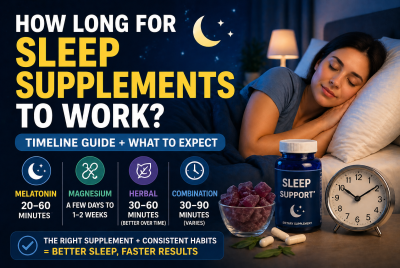
💊 Helpful Supplements (Optional)
-
Magnesium glycinate: Supports muscle relaxation
-
Low-dose melatonin: Helps regulate sleep timing
-
Herbal teas: Chamomile, passionflower, lemon balm
🌿 Sleep Environment Tips
-
Use white noise machines to block disturbances
-
Keep bedroom cool (65–68°F)
-
Dim screens 60–90 minutes before bed
Popular U.S. sleep tools like white noise machines or sleep trackers can help reinforce consistency without obsession.
🚫 What To Avoid After Bedtime Yoga
-
Intense stretching or power yoga
-
Late-night workouts
-
Bright lights or phone scrolling
-
Checking the clock repeatedly
Yoga should gently guide you toward sleep—not wake you up.
💪 How Often Should You Practice Yoga For Sleep?
Consistency matters more than duration.
Best approach:
-
10–20 minutes nightly
-
Same time each evening
-
Pair with breathing or yoga nidra
Within 1–2 weeks, many people notice faster sleep onset and fewer awakenings.
🩺 When To See A Doctor
Consider professional guidance if:
-
Insomnia lasts longer than 4–6 weeks
-
Sleep loss affects work or mood
-
Anxiety or depression symptoms increase
-
You rely on sleep medications regularly
Yoga is supportive, but persistent sleep disorders deserve medical evaluation.
❓ FAQs: Yoga For Sleep
1. Is yoga for sleep safe every night?
Yes. Gentle bedtime yoga is safe for daily practice.
2. How long before bed should I do yoga?
Ideally, 30–60 minutes before bedtime.
3. Can yoga replace sleep medication?
It may reduce reliance for some people, but consult your doctor.
4. Is yoga nidra better than poses?
Both help—yoga nidra is best when you’re very tired.
5. Can beginners do bedtime yoga?
Absolutely. These poses are beginner-friendly.
6. Will yoga help anxiety-related insomnia?
Yes. Yoga calms the nervous system and reduces stress signals.
7. How soon will I notice results?
Many people notice improvement within 7–14 days.
🧘♀️ Conclusion: Let Yoga Guide You Into Rest
Sleep doesn’t come from forcing it—it comes from allowing your body to unwind. By practicing yoga for sleep, you give your nervous system permission to slow down, soften, and let go of the day.
Start gently. Stay consistent. And remember—rest is not something you earn. It’s something you allow.
⚠️ Disclaimer
This article is for educational purposes only and does not replace medical advice. Always consult a qualified healthcare professional before starting supplements or if sleep problems persist or worsen.
 Explore more:
- How Many Hours Of Sleep Do Adults Need?
- Best Sleep Positions For Back, Neck & Shoulder Pain
- How To Fall Asleep Fast Naturally