Alcohol And Sleep Quality: The Hidden Disruption That Wakes You Up At Night
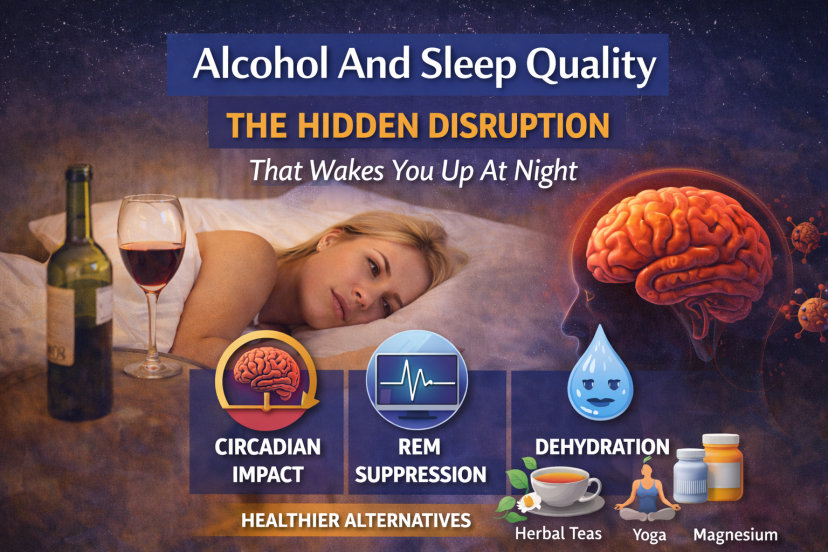
🌙 Why That Nightcap Feels Helpful—Until It Isn’t
After a long day, a glass of wine or a cocktail can feel like instant relief. Your shoulders drop, your thoughts slow, and sleep seems to come faster. But then something strange happens. You wake up at 2 or 3 a.m., restless, thirsty, or anxious. Your sleep feels light. You wake up tired.
If this sounds familiar, you’re not imagining it. Alcohol and sleep quality are deeply connected—and not in the way most people expect. While alcohol may help you fall asleep faster, it quietly disrupts the very sleep stages your brain and body need most.
In this guide, we’ll break down the nightcap myth, explain how alcohol suppresses REM sleep and deep rest, and share healthier alternatives that support truly restorative sleep.
🧠 How Alcohol And Sleep Quality Are Connected
Sleep isn’t just about time in bed. It’s about sleep architecture—the natural progression through light sleep, deep sleep, and REM.
Alcohol interferes with this process from the very first hour.
Alcohol affects sleep by:
-
Altering brain chemistry that regulates sleep cycles
-
Suppressing REM sleep early in the night
-
Increasing nighttime awakenings later
-
Disrupting hydration and temperature regulation
The result is fragmented, non-restorative sleep—even if you slept for 7–8 hours.
🍷 The Nightcap Myth: Why Alcohol Feels Like It Helps
Alcohol is a sedative, not a sleep aid.
Why it feels helpful at first:
-
Slows brain activity
-
Reduces anxiety temporarily
-
Shortens sleep onset (falling asleep faster)
But sedation is not the same as natural sleep. As alcohol is metabolized—usually after 3–4 hours—it triggers rebound alertness and stress hormones.
That’s when the real sleep disruption begins.
😴 REM Suppression: The Biggest Sleep Problem With Alcohol
REM sleep is critical for:
-
Emotional regulation
-
Memory consolidation
-
Mental clarity and mood
Alcohol significantly suppresses REM sleep, especially in the first half of the night.
What happens instead:
-
More light sleep
-
Less dreaming
-
Reduced emotional processing
-
Increased anxiety the next day
As alcohol wears off, REM sleep may rebound—but in a fragmented, unstable way that leads to vivid dreams or early awakenings.
⏰ Why Alcohol Causes Middle-Of-The-Night Wakeups
Many people fall asleep quickly after drinking, then wake up wide awake hours later.
This happens because:
-
Alcohol withdrawal activates the nervous system
-
Cortisol (stress hormone) rises
-
Heart rate and body temperature increase
This is why alcohol is strongly linked to sleep maintenance insomnia, especially waking between 2–4 a.m.
💧 Dehydration And Sleep: An Overlooked Factor
Alcohol is a diuretic—it increases urine production and fluid loss.
Dehydration sleep problems include:
-
Dry mouth or thirst at night
-
Muscle cramps or restlessness
-
Headaches upon waking
-
Increased heart rate
Even mild dehydration can pull you out of deeper sleep stages and contribute to nighttime awakenings.
⚠️ Symptoms Of Alcohol-Related Sleep Disruption
If alcohol is affecting your sleep quality, you may notice:
-
Waking up unrefreshed
-
Night sweats or overheating
-
Vivid dreams or nightmares
-
Anxiety or irritability the next day
-
Brain fog or low energy
These effects can occur even with moderate drinking, especially as we age.
🌿 How Alcohol Impacts Sleep As You Get Older
With age, the body metabolizes alcohol more slowly.
This means:
-
Alcohol stays in your system longer
-
Sleep disruption is stronger
-
REM suppression is more pronounced
-
Nighttime awakenings increase
Many people notice sleep quality declines in their 30s and 40s—not because of age alone, but because alcohol tolerance changes.
🌿 Healthier Alternatives To A Nightcap
You don’t need alcohol to unwind. These options support relaxation without sabotaging sleep.
⭐ Calming Drinks
-
Chamomile tea: Supports relaxation
-
Passionflower: May reduce nighttime anxiety
-
Tart cherry juice (small amount): Contains natural melatonin
🌿 Evening Rituals
-
Warm shower or bath
-
Gentle stretching or yoga
-
Reading under dim light
These signal your brain that it’s time to rest—naturally.
💊 Supplements That Support Sleep Without Alcohol
When used responsibly, supplements can help smooth the transition to sleep.
⭐ Magnesium Glycinate
-
Dose: 200–400 mg
-
Supports muscle relaxation and a calm nervous system
💊 Low-Dose Melatonin
-
Dose: 0.3–1 mg
-
Helps regulate sleep timing (not sedation)
🌿 Herbal Options
-
Valerian root (short-term use)
-
Lemon balm for mild anxiety
Always consult a professional if combining supplements or medications.
🛏️ Lifestyle Strategies To Improve Sleep Quality
✅ Timing Matters
-
Stop drinking alcohol at least 3–4 hours before bed
-
Earlier is better—evening drinking still impacts sleep
⭐ Hydration Support
-
Drink water alongside alcohol
-
Add electrolytes earlier in the evening
✅ Sleep Environment
-
Keep bedroom cool (65–68°F)
-
Use white noise machines to prevent micro-awakenings
-
Avoid screens late at night
Many U.S. readers find that sleep trackers reveal just how much alcohol reduces deep and REM sleep.
🚫 Common Mistakes That Make Alcohol Sleep Worse
-
Drinking “just one” close to bedtime
-
Assuming falling asleep fast equals good sleep
-
Using alcohol to manage anxiety long-term
-
Skipping hydration
Awareness is the first step toward better rest.
💡 Can You Ever Drink And Sleep Well?
For some people, occasional earlier-in-the-evening alcohol may have minimal impact. But consistency matters.
Best practices if you choose to drink:
-
Keep it occasional
-
Finish drinking by early evening
-
Prioritize hydration
-
Avoid nightly use as a sleep tool
If sleep improves when alcohol is reduced, that’s valuable feedback from your body.
⚕️ When To See A Doctor
Talk to a healthcare provider if:

-
Sleep problems persist without alcohol
-
You rely on alcohol to fall asleep
-
Anxiety or depression symptoms worsen
-
Nighttime awakenings affect daily function
Sleep disorders and alcohol use patterns often overlap—and both are treatable.
❓ FAQs: Alcohol And Sleep Quality
1. Does alcohol help you sleep at all?
It helps with falling asleep but worsens sleep quality overall.
2. How long before bed should I stop drinking?
At least 3–4 hours, earlier if possible.
3. Does red wine affect sleep differently?
No—alcohol is alcohol when it comes to sleep disruption.
4. Why do I wake up anxious after drinking?
Alcohol withdrawal raises cortisol and nervous system activity.
5. Does alcohol reduce REM sleep?
Yes. REM suppression is one of its strongest effects.
6. Can hydration fix alcohol-related sleep issues?
It helps, but doesn’t fully prevent REM disruption.
7. Will sleep improve if I stop drinking?
Many people notice better sleep within 3–7 days.
✅ Conclusion: Better Sleep Starts With Awareness
Alcohol doesn’t ruin sleep in obvious ways—it disrupts it quietly. By understanding how alcohol and sleep quality interact, you can make informed choices that support deeper rest, better mood, and more energy.
You don’t have to give up comfort—you just need better tools for it. Your sleep is worth protecting.
⚠️ Disclaimer
This article is for educational purposes only and does not replace medical advice. Always consult a qualified healthcare professional before starting supplements, changing alcohol use, or if sleep problems persist.
 Explore more: