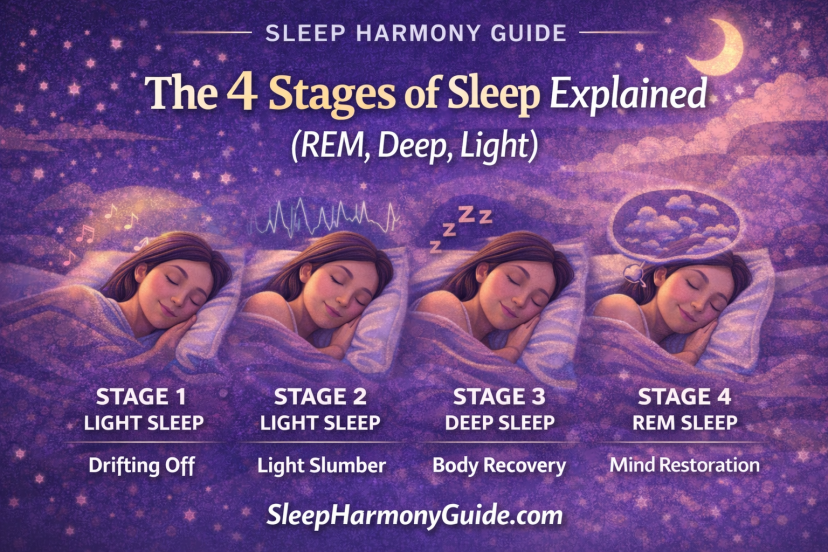
The 4 Stages Of Sleep Explained (REM, Deep, Light)
🌙 Why You Can Sleep And Still Feel Tired
Have you ever slept 7 or 8 hours but still woke up feeling exhausted? You’re not imagining it. Sleep isn’t just about how long you sleep — it’s about how you sleep.
Your night is made up of repeating sleep cycles, each with different stages that heal your body and mind. If these stages get disrupted, you may wake up tired, foggy, or moody.
In this guide, you’ll find the stages of sleep explained in a simple, visual way so you understand:
-
What each sleep stage does
-
Why REM and deep sleep matter most
-
What disrupts sleep stages
-
How to improve your sleep naturally
Let’s break down what really happens when you close your eyes.
🧠 What Are Sleep Stages?
Sleep is not one flat state. It moves through a pattern called a sleep cycle.
Each cycle lasts about:
-
90–110 minutes
-
Repeats 4–6 times per night
Every cycle includes:
-
Light sleep
-
Deep sleep
-
REM sleep
The balance of these stages changes as the night goes on.

💤 Stages Of Sleep Explained: The Big Picture
Here’s the simple version of the stages of sleep explained:
-
Light sleep = drifting and easy to wake
-
Deep sleep = body repair and recovery
-
REM sleep = dreams, memory, emotions
You need all of them, but deep sleep and REM sleep are the most healing.
🌿 Stage 1: Light Sleep (Falling Asleep)
This is the very first stage.
🦵 What Happens
-
You drift in and out of sleep
-
Muscles relax
-
Breathing slows
-
Mind begins to calm
You may feel like:
-
You’re half-awake
-
You hear sounds
-
You twitch or jerk
This stage only lasts a few minutes.
🌙 Why It Matters
-
Helps your body let go of the day
-
Prepares you for deeper sleep
🌿 Stage 2: Light Sleep (Staying Asleep)
This is deeper than stage 1, but still light sleep.
🦵 What Happens
-
Heart rate slows
-
Body temperature drops
-
Brain activity changes
-
You’re harder to wake
You spend the most time in this stage — about 45–55% of your night.
🌙 Why It Matters
-
Helps your body relax fully
-
Prepares you for deep sleep
-
Supports learning and memory
💪 Stage 3: Deep Sleep (Physical Healing)
This is the most powerful stage for your body.
🦵 What Happens
-
Muscles repair
-
Tissues grow
-
The immune system strengthens
-
Energy restores
This is where the real deep sleep benefits happen.
🌙 Deep Sleep Benefits
-
Physical recovery
-
Strong immunity
-
Growth hormone release
-
Less pain and inflammation
-
Better energy
If you miss deep sleep, you may feel:
-
Sore
-
Weak
-
Run-down
-
More likely to get sick
🧠 Stage 4: REM Sleep (Dreaming And Brain Healing)
REM stands for Rapid Eye Movement.
🦵 What Happens
-
You dream
-
The brain is very active
-
Eyes move under lids
-
The body is mostly still
This is when your mind heals.
🌙 REM Sleep Benefits
-
Memory building
-
Emotional balance
-
Learning and creativity
-
Stress processing
Without enough REM sleep, you may feel:
-
Moody
-
Anxious
-
Forgetful
-
Mentally tired
🔄 How Sleep Cycles Work All Night
Each night:
-
Early cycles = more deep sleep
-
Later cycles = more REM sleep
That’s why:
-
Short nights miss REM
-
Broken sleep misses deep sleep
Both are needed for full recovery.
🦵 What Disrupts Sleep Stages
Many things can break healthy sleep cycles.
🌿 Common Disruptors
-
Stress and anxiety
-
Late screen time
-
Noise or light
-
Alcohol
-
Late caffeine
-
Irregular bedtime
-
Pain or illness
These can stop you from reaching deep or REM sleep.
😴 Signs Your Sleep Stages Are Off
🦵 Body Signs
-
Wake up tired
-
Muscle aches
-
Low energy
-
Frequent illness
🧠 Mind Signs
-
Brain fog
-
Anxiety
-
Low focus
-
Poor memory
Even with enough hours, poor sleep stages cause tiredness.
🌙 How To Improve Your Sleep Stages Naturally
🌿 Evening Routine
-
Turn off screens 1 hour before bed
-
Dim lights
-
Read or stretch
-
Warm shower
-
Calm music
🦵 Body Relaxation
-
Deep breathing
-
Gentle yoga
-
Muscle relaxation
💊 Supplements That Support Sleep Stages
Always talk to a doctor first.
💊 Helpful Options
-
Melatonin – helps with sleep timing
-
Magnesium glycinate – relaxes muscles
-
L-theanine – calms the mind
-
Glycine – supports deep sleep
Use low doses and avoid mixing many.
🌿 Herbal Teas For Better Sleep
-
Chamomile
-
Lavender
-
Lemon balm
-
Passionflower
-
Valerian
They support relaxation, not instant sleep.
🔊 Tools That Help Sleep Stages
Many U.S. adults use:
-
White noise machines (Hatch, LectroFan)
-
Sleep trackers (Fitbit, Oura, Apple Watch)
-
Blackout curtains
-
Cooling pillows
Sleep trackers can show light, deep, and REM sleep patterns.
🌞 Daytime Habits That Improve Night Sleep
💪 Morning
-
Get sunlight early
-
Move your body
🌿 Day
-
Limit naps
-
Stay active
-
Eat balanced meals
🌙 Evening
-
Avoid caffeine after 2 PM
-
Eat light dinners
Good days create good nights.
🚨 When To See A Doctor
See a doctor or sleep specialist if you:
-
Can’t sleep for weeks
-
Snore loudly
-
Stop breathing at night
-
Have panic at bedtime
-
Feel depressed
Sleep problems may come from:
-
Sleep apnea
-
Anxiety disorders
-
Depression
-
Hormone issues
-
Chronic pain
❓ FAQs About Stages Of Sleep Explained
1. What are the stages of sleep?
They are light sleep, deep sleep, and REM sleep, repeated in cycles all night.

2. Which stage is most important?
Deep sleep and REM sleep are the most healing.
3. How long is one sleep cycle?
About 90–110 minutes.
4. How much deep sleep do adults need?
About 15–25% of total sleep.
5. How much REM sleep is normal?
About 20–25% of total sleep.
6. Does alcohol affect sleep stages?
Yes, it reduces deep and REM sleep.
7. Can sleep trackers show sleep stages?
Yes, most modern trackers estimate light, deep, and REM sleep.
🌙 Conclusion: Sleep Is More Than Just Hours
Understanding the stages of sleep explained helps you see why sleep quality matters as much as sleep length.
You don’t just need more sleep — you need better sleep.
When you support your sleep stages with calm routines, healthy habits, and gentle tools, your body and mind can finally do what they were designed to do at night: heal, restore, and reset.
You deserve deep rest — and now you know how to support it.
⚠️ Disclaimer
This article is for educational purposes only and does not replace medical advice. Always talk to a healthcare provider if you have long-term sleep problems, medical conditions, or plan to use supplements.
 Explore more:
- Morning Routines That Improve Nighttime Sleep Quality
- How To Build A Healthy Nighttime Routine
- Napping The Right Way: How Long Should A Nap Be?