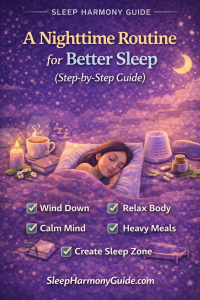
How To Build A Healthy Nighttime Routine (That Actually Works)
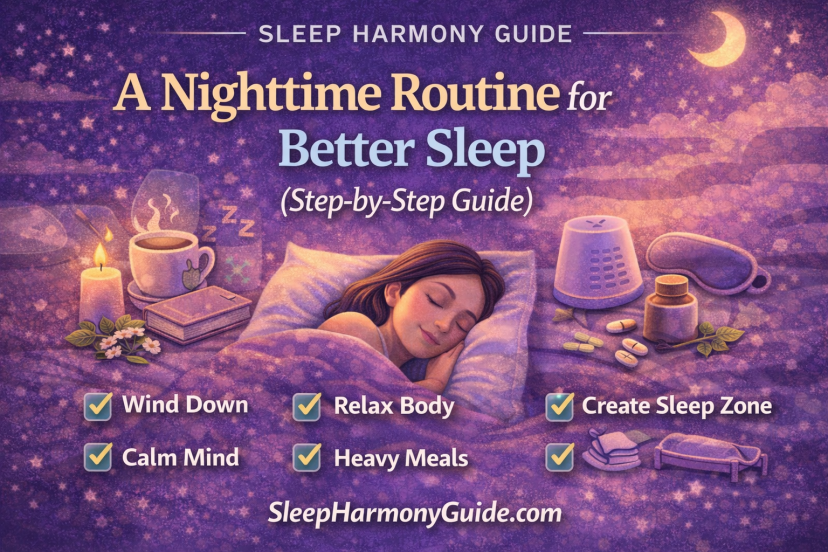
🌙 When Bedtime Feels Like A Battle
You’re tired all day. But the moment your head hits the pillow, your mind turns on. Thoughts race. Your body feels restless. You check the clock again… and again.
If that sounds familiar, you’re not alone.
Millions of people struggle with poor sleep, not because they “can’t sleep,” but because their bodies and minds are not prepared for sleep.
That’s where a nighttime routine for better sleep changes everything.
In this guide, you’ll learn:
-
Why bedtime routines matter
-
What disrupts sleep at night
-
How to build a step-by-step wind-down plan
-
Simple bedtime rituals that calm your body
-
Natural tools that support deeper sleep
Let’s build a nighttime routine that finally helps you rest.
🧠 Why Your Nighttime Routine Matters
Sleep doesn’t start when you close your eyes.
It starts with what you do before bed.
Your brain needs time to shift from:
-
Alert mode → calm mode
-
Stress hormones → sleep hormones
-
Busy thoughts → relaxed thinking
A consistent nighttime routine for better sleep trains your brain to recognize:
“Sleep is coming. It’s safe to relax now.”
🦵 What Disrupts Sleep Before Bed
Many common habits quietly destroy sleep.
🌿 Common Sleep Disruptors
-
Bright screens
-
Late caffeine
-
Heavy meals
-
News or social media
-
Work stress
-
Loud noise or bright rooms
These keep your brain in “day mode” when it should be slowing down.
😴 Signs You Need A Better Night Routine
-
Trouble falling asleep
-
Waking up often
-
Racing thoughts
-
Restless body
-
Waking tired
-
Needing naps
If this is you, your bedtime habits—not your body—may be the problem.
🌙 The Goal Of A Healthy Nighttime Routine
A good nighttime routine should:
-
Slow your nervous system
-
Calm your thoughts
-
Relax your muscles
-
Signal sleep time
Think of it as a gentle bridge between day and night.
🌿 Step 1: Set A Consistent Sleep Window
Your body loves rhythm.
💪 What To Do
-
Pick a bedtime you can keep most nights
-
Pick a wake-up time—even on weekends
-
Stay within 1 hour of your schedule
This helps your body release melatonin naturally.
🌿 Step 2: Start Winding Down 60–90 Minutes Before Bed
Your routine begins before bed.
🦵 Wind-Down Habits That Work
-
Dim lights
-
Turn off bright screens
-
Change into comfortable clothes
-
Lower noise
-
Move slowly
This tells your brain: “Day is ending.”
🌿 Step 3: Create Your Personal Wind-Down Ritual
Your nighttime routine for better sleep should feel calm, not forced.
🌙 Sample Wind-Down Routine
-
60 min before: Screens off
-
45 min before: Warm shower
-
30 min before: Light stretching
-
20 min before: Herbal tea
-
10 min before: Breathing or reading
You can mix and match what feels right.
🛁 Step 4: Use Warmth To Trigger Sleep
Warmth helps your body release sleep hormones.
🌿 Helpful Warm Habits
-
Warm shower or bath
-
Heating pad on shoulders
-
Warm socks
-
Warm tea
After warmth, your body naturally cools—and that triggers sleep.
🦵 Step 5: Relax Your Body
Tight muscles block sleep.
💪 Simple Relaxation Techniques
-
Shoulder rolls
-
Neck stretches
-
Gentle yoga
-
Progressive muscle relaxation
Try this:
-
Tighten one muscle group for 5 seconds
-
Release for 10 seconds
-
Move through your body slowly
🌬️ Step 6: Calm Your Breathing
Your breath controls your nervous system.
🌿 Simple Breathing Ritual
-
Inhale 4 seconds
-
Hold 4 seconds
-
Exhale 6–8 seconds
-
Repeat 5–10 times
Long exhales tell your body: “You are safe.”
📖 Step 7: Calm Your Mind
Racing thoughts keep you awake.
🧠 Wind-Down Mind Habits
-
Write worries in a notebook
-
Read calming books
-
Pray or meditate
-
Visualize peaceful scenes
Avoid:
-
News
-
Social media
-
Work emails
🌿 Step 8: Create A Sleep-Friendly Bedroom
Your room should support your nighttime routine for better sleep.
🌙 Ideal Sleep Space
-
Cool (65–70°F)
-
Dark
-
Quiet
-
Clean
-
Comfortable mattress
🔊 Helpful Tools
-
White noise machines (Hatch, LectroFan)
-
Blackout curtains
-
Cooling pillows
-
Eye masks
💊 Step 9: Use Natural Sleep Support (If Needed)
Always talk to a doctor first.
💊 Gentle Sleep Supplements
-
Melatonin – helps with sleep timing
-
Magnesium glycinate – relaxes muscles
-
L-theanine – calms the mind
-
Glycine – supports deep sleep
Use low doses and not every night.
🌿 Step 10: Add Herbal Bedtime Rituals
Herbs support relaxation.
🌿 Best Bedtime Teas
-
Chamomile
-
Lavender
-
Lemon balm
-
Passionflower
-
Valerian
Drink 30–45 minutes before bed.
🌞 Day Habits That Improve Night Sleep
Your nighttime routine starts in the morning.
💪 Daytime Sleep Support
-
Morning sunlight
-
Daily movement
-
Regular meals
-
Limit naps
-
No caffeine after 2 PM
Good days lead to good nights.
🧠 Emotional Habits That Help Sleep
Stress follows you to bed.
🌿 Calm Your Evenings
-
Say “no” to late stress
-
Lower evening workload
-
Create boundaries
-
Protect your wind-down time
Your sleep is not a luxury—it’s health.
🚨 When A Routine Is Not Enough
A nighttime routine for better sleep helps many people—but not all problems.
See A Doctor If You:
-
Can’t sleep for weeks
-
Feel tired every day
-
Snore loudly
-
Stop breathing at night
-
Have panic at bedtime
-
Feel depressed
Sleep problems may come from:
-
Sleep apnea
-
Anxiety disorders
-
Hormone problems
-
Chronic pain
❓ FAQs About Nighttime Routine For Better Sleep
1. How long should my nighttime routine be?
About 45–90 minutes works best for most people.
2. Do I have to follow the same routine every night?
Yes—consistency trains your brain to sleep.
3. Can I use my phone during my routine?
Try not to. Blue light and stimulation delay sleep hormones.
4. What if I miss my routine one night?
Just restart the next night. Progress, not perfection.
5. How long before my routine helps?
Most people feel changes in 5–14 days.
6. Can kids or teens use routines too?
Yes—routines help all ages sleep better.
7. What is the most important habit?
Consistent bedtime and screen-free wind-down time.
🌙 Conclusion: Sleep Begins Before Bed
A healthy nighttime routine for better sleep is not about forcing sleep—it’s about inviting it.
When you:
-
Slow your evenings
-
Calm your body
-
Quiet your mind
-
Protect your rest
Your sleep begins to change naturally.
You don’t need perfection.
You just need consistency.
Tonight, start small.
One calm habit.
One quiet moment.
Your body will remember how to rest.
⚠️ Disclaimer
This article is for educational purposes only and does not replace medical advice. Always consult a healthcare provider if you have ongoing sleep problems, health conditions, or plan to use supplements.
 Explore more:
- Morning Routines That Improve Nighttime Sleep Quality
- How To Fix Your Sleep Schedule After Staying Up Late
- Napping The Right Way: How Long Should A Nap Be?