Best Sleep Position For Back, Neck & Shoulder Pain (Sleep Without Waking Up Sore)
🌙 When Sleep Makes Your Pain Worse
You go to bed hoping sleep will help your body recover—yet you wake up stiff, sore, and aching. Your back feels tight. And your neck won’t turn easily. Your shoulder throbs before the day even starts.
If this sounds familiar, you’re not alone. Many people struggle with pain that actually gets worse overnight, not better. Often, the problem isn’t your mattress or how long you sleep—it’s how you sleep.
The best sleep positions for pain support your spine, reduce joint pressure, and allow muscles to fully relax. Small posture changes, better pillow alignment, and simple nighttime habits can make a huge difference in how you feel in the morning.
This guide breaks down the best and worst sleep positions for back, neck, and shoulder pain, explains why pain happens at night, and gives you practical, image-friendly tips you can use tonight.
🦴 Why Sleep Position Matters For Pain
Sleep is when your body repairs tissue, relaxes muscles, and resets the nervous system. But poor posture during sleep can do the opposite.
How Poor Sleep Posture Causes Pain
• Compresses spinal discs
• Twists the neck for hours
• Strains shoulder joints
• Creates muscle imbalances
• Reduces circulation
Even mild misalignment—held for 6–8 hours—can lead to inflammation and morning pain.
🧠 Common Causes Of Back, Neck & Shoulder Pain During Sleep
Before choosing the best sleep positions for pain, it helps to understand what’s triggering discomfort.

Nighttime Pain Triggers
• Poor pillow alignment
• Unsupportive mattress
• Side sleeping without leg support
• Sleeping on the stomach
• Muscle tension from stress
Pain often builds slowly overnight and shows up most intensely in the morning.
🛏️ Best Sleep Positions For Pain Relief
Not all sleep positions are created equal. Some support the spine naturally—others quietly strain it all night.
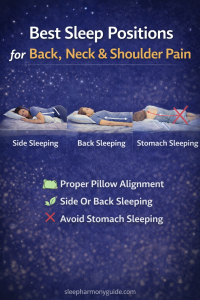
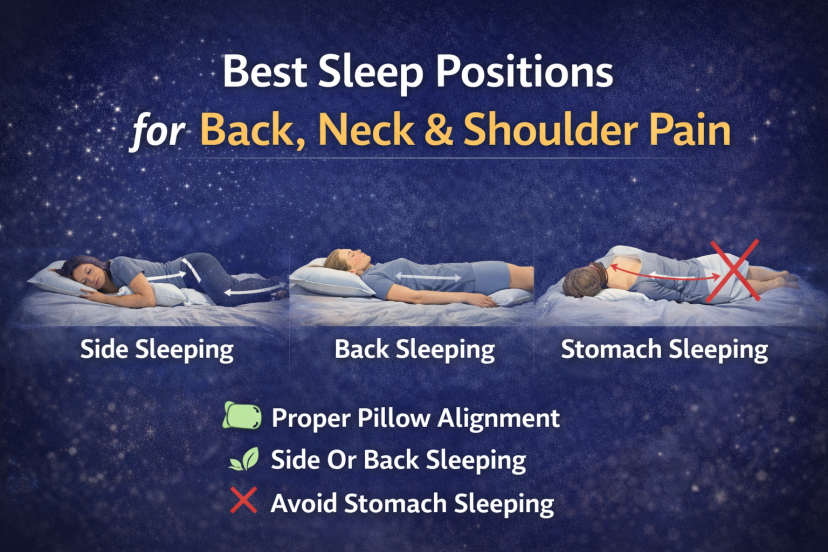
🦵 Side Sleeping: One Of The Best Sleep Positions For Pain
Side sleeping is often recommended for people with back and shoulder pain—when done correctly.
Why Side Sleeping Helps
• Keeps the spine more neutral
• Reduces pressure on the lower back
• Can ease shoulder compression
• Supports natural spinal curves
How To Optimize Side Sleeping
• Use a pillow that keeps your neck level
• Place a pillow between your knees
• Keep ears, shoulders, and hips aligned
Without knee support, side sleeping can twist the lower back and hips.
🛌 Best Side Sleeping Position For Shoulder Pain
If shoulder pain wakes you up, the side you sleep on matters.
Shoulder-Friendly Tips
• Avoid sleeping on the painful shoulder
• Hug a pillow to support the top arm
• Use a slightly thicker pillow to fill shoulder space
This reduces compression and strain on shoulder joints and nerves.

🌙 Back Sleeping: Best For Spinal Alignment
Back sleeping is often considered the gold standard for spinal health.
Benefits Of Back Sleeping
• Keeps spine naturally aligned
• Distributes weight evenly
• Reduces neck rotation
• Minimizes pressure points
How To Improve Back Sleeping Comfort
• Place a pillow under your knees
• Use a low-profile pillow for the neck
• Keep arms relaxed at your sides
Knee support prevents the lower back from arching excessively.
❌ Stomach Sleeping: Worst Sleep Position For Pain
Stomach sleeping is the most common cause of neck and back pain.
Why Stomach Sleeping Causes Pain
• Forces the neck to twist for hours
• Arches the lower back unnaturally
• Compresses joints and muscles
If you can’t stop stomach sleeping immediately, placing a thin pillow under one hip can reduce strain while you transition away from it.
🧩 Pillow Alignment: The Hidden Key To Pain-Free Sleep
Even the best sleep positions for pain won’t help if your pillow is wrong.
Signs Of Poor Pillow Alignment
• Neck stiffness in the morning
• Head tilted up or down during sleep
• Shoulder numbness
• Headaches upon waking
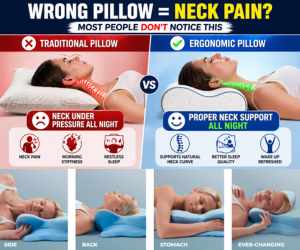
Pillow Alignment Basics
• Side sleepers need thicker pillows
• Back sleepers need medium-low pillows
• Pillows should keep the neck neutral

Memory foam or adjustable pillows often work well for pain-prone sleepers.
🌿 Mattress Support And Pain Reduction
Your mattress plays a major role in how your body aligns overnight.
Mattress Tips For Pain Relief
• Medium-firm mattresses often work best
• Too soft = sinking and misalignment
• Too firm = pressure points
If replacing a mattress isn’t an option, a supportive mattress topper can help.
🌿 Lifestyle Habits That Improve Sleep-Related Pain
Pain doesn’t start at bedtime—your daytime habits matter too.
Daily Habits That Support Better Sleep Posture
• Gentle stretching before bed
• Light evening walks
• Avoid heavy meals late at night
• Manage stress with breathing or meditation
Reducing muscle tension before bed allows your body to relax more fully.
💊 Supplements And Natural Aids For Nighttime Pain
While sleep position is key, some natural supports may help.

Common Options People Use
• Magnesium glycinate (muscle relaxation)
• Herbal teas like chamomile
• Warm showers before bed
These don’t fix posture—but they help muscles release tension.
🛌 Sleep Environment Adjustments That Reduce Pain
Your sleep environment affects how often you move and tense up.
Helpful Sleep Tools
• White noise machines to prevent startle responses
• Sleep trackers to spot restlessness
• Supportive body pillows for side sleeping
Less movement and fewer awakenings often mean less pain.
🚨 When To See A Doctor
While posture fixes many issues, some pain needs professional care.
Talk To A Healthcare Provider If You Have
• Persistent pain lasting weeks
• Numbness or tingling in arms or legs
• Sharp or worsening pain at night
• Pain following injury
Sleep position helps—but it doesn’t replace medical diagnosis.
❓ FAQs: Best Sleep Positions For Pain
1. What is the best sleep position for back pain?
Back sleeping with a pillow under the knees or side sleeping with knee support works best.
2. Is side sleeping bad for the shoulders?
Not if done correctly. Avoid sleeping on the painful shoulder and support the top arm.
3. Can changing sleep position really reduce pain?
Yes. Small alignment changes can significantly reduce overnight strain.
4. What pillow is best for neck pain?
A pillow that keeps the neck neutral—not tilted up or down.
5. Is stomach sleeping always bad?
It’s the most likely to cause pain, especially in the neck and lower back.
6. How long does it take to feel improvement?
Many people notice changes within a few nights to two weeks.
7. Should I use a body pillow?
Yes. Body pillows help maintain alignment during side sleeping.
🌟 Conclusion: Small Changes, Better Mornings
If you wake up sore, stiff, or in pain, your body isn’t broken—it’s asking for better support.
The best sleep positions for pain keep your spine aligned, reduce joint pressure, and allow muscles to truly relax overnight. With proper pillow alignment, supportive posture, and a few simple habits, sleep can become part of your recovery instead of the cause of your pain.
Start with one change tonight. Your mornings can feel better again.
⚠️ Disclaimer
This content is for educational purposes only and does not replace professional medical advice. Always consult a qualified healthcare provider for ongoing pain, injuries, or medical conditions.
 Explore more:
- The Ideal Bedroom Temperature for Deep Sleep
- Caffeine And Sleep
- Alcohol And Sleep Quality: The Hidden Disruption