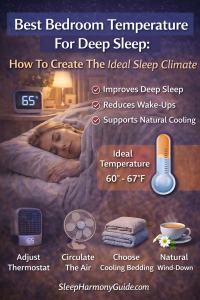
Best Bedroom Temperature For Deep Sleep: How To Create The Ideal Sleep Climate
💡 When You’re Tired But Can’t Get Comfortable
You turn off the lights, crawl into bed, and try to relax—but something feels off. You’re tossing, flipping the pillow, kicking off the blanket, then pulling it back on. Your mind wants sleep, but your body just can’t settle.
If this sounds familiar, your bedroom temperature may be working against you.
Many people focus on supplements, routines, or meditation, but overlook one of the most powerful sleep factors: the temperature of the room. Finding the best temperature for sleep can dramatically improve how fast you fall asleep, how deeply you rest, and how refreshed you feel in the morning.
This guide breaks down the science, the ideal range, and simple ways to optimize your sleep environment—without expensive upgrades.
🧠 Why Bedroom Temperature Matters For Sleep
Your body follows a natural rhythm that prepares you for rest each night. One key signal is core body temperature.
As bedtime approaches:
-
Your core temperature naturally drops
-
Melatonin increases
-
Muscles relax
-
Sleep pressure builds
A bedroom that’s too warm—or too cold—can interrupt this process and fragment sleep.
Temperature doesn’t just affect comfort; it directly affects sleep stages, including deep sleep and REM.
🌡️ What Is The Best Temperature For Sleep?
Most sleep experts agree on a fairly narrow range.
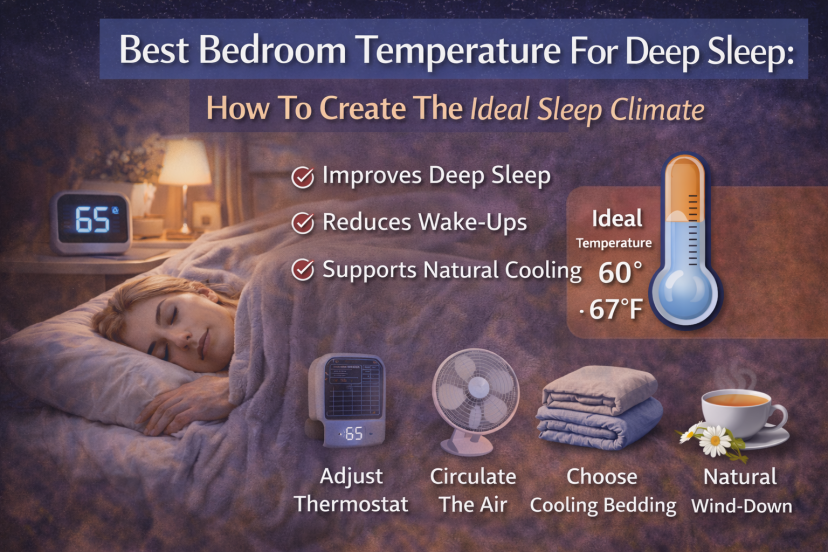
✅ Ideal Bedroom Temperature Range
-
60–67°F (15.5–19.5°C) for most adults
-
Some people prefer slightly warmer or cooler
This range supports the body’s natural cooling process and promotes deeper sleep.
If your room is consistently above 70°F, sleep quality often suffers—even if you don’t fully wake up.
❄️ Why A Cool Bedroom Promotes Deep Sleep
A cool bedroom helps your body do what it’s already trying to do at night.
Benefits include:
-
Faster sleep onset
-
More deep (slow-wave) sleep
-
Fewer nighttime awakenings
-
Improved REM sleep stability
When the room is warm, your body has to work harder to cool itself—pulling you out of restorative sleep stages.
😴 Signs Your Bedroom Temperature Is Hurting Your Sleep
You may need to adjust your sleep climate if you notice:
-
Night sweats or overheating
-
Waking up thirsty or restless
-
Tossing blankets on and off
-
Light, fragmented sleep
-
Feeling unrefreshed despite enough hours in bed
These symptoms are often misattributed to stress or insomnia when the real issue is environmental.
🌿 How Temperature Interacts With Sleep Hormones
Melatonin And Cooling
Melatonin helps lower core body temperature. A cooler room supports this process, while heat suppresses it.
Cortisol And Overheating
A warm environment can increase nighttime cortisol, making you more alert during the night and early morning.
That’s why cooling the room can feel instantly calming.
🛏️ How To Set Up The Ideal Sleep Climate
You don’t need a high-tech setup—small tweaks go a long way.
Adjust The Thermostat
-
Set it between 60–67°F
-
Lower it gradually in the evening
-
Use programmable or smart thermostats if available
Improve Air Circulation
-
Use a ceiling fan or a floor fan
-
Fans help evaporate heat and create gentle white noise
Choose Breathable Bedding
-
Cotton or bamboo sheets
-
Lightweight blankets
-
Avoid heavy synthetic fabrics
🦵 Body Temperature And Bedding Choices
Your mattress and bedding can trap or release heat.
Cooling-friendly options include:
-
Gel-infused or breathable foam mattresses
-
Moisture-wicking mattress protectors
-
Layered bedding instead of one heavy comforter
This allows easy temperature adjustment without waking fully.
🌬️ White Noise And Cooling Go Hand In Hand
Many U.S. sleepers find that white noise machines or fans improve sleep quality in two ways:
-
Masking sudden sounds
-
Improving airflow perception
The gentle sound also helps signal “sleep time” to the brain.
🌿 Natural Ways To Cool Your Body Before Bed
If lowering the thermostat isn’t enough, focus on body-based cooling.
🌿 Evening Cooling Habits
-
Take a warm (not hot) shower—it promotes heat release afterward
-
Avoid heavy meals late at night
-
Limit alcohol, which raises body temperature
-
Hydrate earlier in the evening
Counterintuitive but true: warm showers help your body cool down afterward.
💊 Supplements And Temperature Regulation
Some supplements can indirectly support temperature-related sleep issues.
Magnesium
-
Helps relax muscles
-
May reduce restlessness linked to overheating
Melatonin
-
Supports natural nighttime cooling
-
Best used in low doses if needed
🌿 Herbal Teas
-
Chamomile
-
Lemon balm
-
Peppermint (mild cooling sensation)
These support relaxation without raising body heat.
🧠 How Temperature Affects Different Sleep Stages
Light Sleep
Too much heat increases light sleep and micro-awakenings.
Deep Sleep
Deep sleep thrives in cooler conditions—this is when physical recovery happens.
REM Sleep
REM is sensitive to disruptions. Overheating often causes REM fragmentation and vivid dreams.
Optimizing the ideal sleep climate supports all stages.
🚫 Common Temperature Mistakes To Avoid
-
Keeping the room warm for “comfort.”
-
Heavy blankets year-round
-
Space heaters near the bed
-
Sleeping in restrictive or synthetic clothing
Comfort isn’t warmth—it’s thermal balance.
🏡 Temperature Tips For Different Seasons
❄️ Winter
-
Lower the thermostat slightly
-
Use breathable blankets
-
Avoid overdressing
☀️ Summer
-
Use fans or AC
-
Close blinds during the day
-
Switch to lighter bedding
Seasonal adjustments keep sleep consistent year-round.
🩺 When Temperature Changes Aren’t Enough
Talk to a healthcare provider if:
-
Night sweats are severe or persistent
-
Sleep remains poor despite a cool bedroom
-
You experience hot flashes or hormonal symptoms
-
Insomnia lasts longer than 4–6 weeks
Medical conditions can affect temperature regulation.
❓ FAQs: Best Temperature For Sleep
1. Is 65°F really the best temperature for sleep?
For most adults, yes—but comfort varies slightly.
2. Can a bedroom be too cold?
Yes. Being too cold can cause muscle tension and wake-ups.
3. Do babies and older adults need different temperatures?
Yes. Infants often need slightly warmer rooms.
4. Does sleeping naked help regulate temperature?
It may be the case for some people, depending on bedding.
5. Are cooling mattresses worth it?
They can help, especially for hot sleepers.
6. Does humidity matter for sleep?
Yes. Aim for 30–50% humidity.
7. Will lowering the temperature really improve sleep quality?
For many people, it’s one of the fastest improvements.
🌀 Conclusion: Small Temperature Changes, Big Sleep Gains
You don’t need perfect routines or expensive gadgets to sleep better. Sometimes the biggest improvement comes from adjusting your environment.
By dialing in the best temperature for sleep, creating a cool bedroom, and supporting your body’s natural rhythms, you make deep, restorative sleep far more likely.
Start tonight—lower the temperature, simplify your bedding, and let your body do what it’s designed to do.
⚠️ Disclaimer
This article is for educational purposes only and does not replace medical advice. Always consult a qualified healthcare professional before starting supplements or if sleep problems persist or worsen.
 Explore more:
- What Is the 123 Sleep Rule?
- Melatonin vs Magnesium for Sleep
- Blue Light And Sleep: Why Screens Keep You Awake