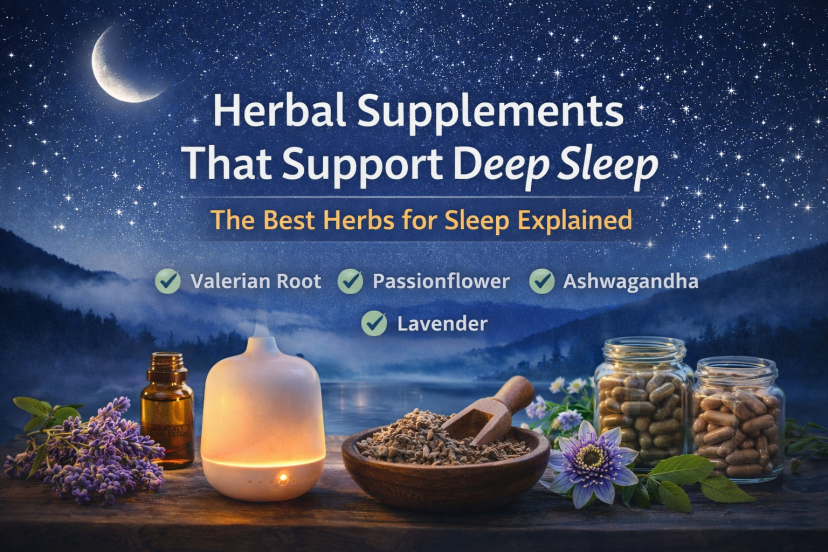
Herbal Supplements That Support Deep Sleep: The Best Herbs For Sleep Explained
🌙 When You’re Tired, But Sleep Won’t Come
You turn off the lights, lie down, and hope tonight will be different. But instead of drifting off, your mind stays busy. Thoughts race. Your body feels tense. Minutes turn into hours—and morning comes far too quickly.
If you struggle with insomnia, restlessness, or waking up unrefreshed, you’re not alone. Many adults want better sleep without relying on prescription medications or harsh sleep aids. That’s where herbal supplements come in.
The best herbs for sleep have been used for centuries to calm the nervous system, reduce stress, and support deeper rest. When chosen carefully and used correctly, these natural remedies can become a powerful part of a healthy sleep routine.
This guide ranks the most effective sleep-supporting herbs, explains how they work, and shows how to use them safely—especially for U.S. adults looking for gentle, evidence-based solutions.
🌿 Why Natural Herbs Can Support Better Sleep
Herbal sleep supplements work differently from prescription medications. Instead of forcing sedation, they help the body relax naturally.
How Sleep Herbs Work
• Calm the nervous system
• Reduce stress hormones
• Support relaxation and mood balance
• Help regulate sleep-wake rhythms
• Improve sleep depth and quality
The best herbs for sleep are most effective when paired with good sleep hygiene and consistent bedtime routines.
🧠 Common Causes Of Poor Sleep Herbs May Help
Before choosing a supplement, it’s helpful to understand why sleep is disrupted.
Common Sleep Disruptors
• Stress and anxiety
• Racing thoughts at night
• Muscle tension
• Irregular sleep schedules
• Overstimulation before bed
Herbal supplements are especially helpful when stress and nervous system overactivity are the main issues, not underlying medical sleep disorders.
🌿 Evidence-Ranked List: The Best Herbs For Sleep
Below is a ranked list of the most researched and commonly used herbs for sleep, based on effectiveness, safety, and real-world use.
💤 Valerian Root: Best Studied Herb For Sleep Support
Valerian root is one of the most researched herbal sleep aids and is often used for insomnia and restlessness.
Benefits Of Valerian Root
• Supports faster sleep onset
• Helps reduce nighttime awakenings
• Promotes deeper sleep
• May calm anxious thoughts
Valerian root works by increasing GABA activity, a calming neurotransmitter in the brain.
How To Use Valerian Root
• Capsules or tablets (300–600 mg)
• Taken 30–60 minutes before bed
• Best used consistently for 1–2 weeks
Some people notice a strong smell or vivid dreams—this is normal and often fades with use.
🌸 Passionflower: Gentle Support For Anxiety-Related Sleep Issues
Passionflower is especially helpful when anxiety or mental overactivity keeps you awake.
Benefits Of Passionflower
• Reduces nervous tension
• Calms racing thoughts
• Supports relaxation before bed
• Often used for stress-related insomnia
Passionflower is milder than valerian root and works well for people sensitive to stronger supplements.
How To Use Passionflower
• Tea or capsules
• 250–500 mg before bedtime
• Can be combined with other calming herbs
🌿 Ashwagandha: Stress-Reducing Herb For Better Sleep
Ashwagandha is an adaptogenic herb that helps the body manage stress over time.
Benefits Of Ashwagandha
• Lowers stress and cortisol levels
• Supports nervous system balance
• May improve sleep quality indirectly
• Helps with stress-related fatigue
Ashwagandha isn’t a sedative—it works best for people whose sleep problems stem from chronic stress.
How To Use Ashwagandha
• Capsules or powder
• 300–600 mg daily
• Taken in the evening or earlier in the day
🌼 Lavender: Calming Herb For Sleep Relaxation
Lavender is best known for its aroma, but it also offers sleep benefits when used internally or externally.
Benefits Of Lavender
• Promotes relaxation
• Supports calm breathing
• Reduces mild anxiety
• Enhances bedtime routines
Lavender is especially effective when combined with aromatherapy practices.
How To Use Lavender For Sleep
• Herbal tea
• Aromatherapy diffuser
• Lavender oil capsules (as directed)
Lavender works best as part of a calming nighttime ritual.
🌿 Herbal Teas That Support Deep Sleep
Herbal teas are a gentle way to introduce sleep-supporting herbs into your routine.
Popular Sleep-Friendly Herbal Teas
• Chamomile
• Passionflower
• Lemon balm
• Lavender blends
Sipping tea 30–60 minutes before bed can signal your body that it’s time to unwind.
💊 Combining Herbs With Other Natural Sleep Supports
Herbs work best when paired with supportive nutrients and habits.
Common Sleep Supplements To Combine Carefully
• Melatonin – Supports sleep timing
• Magnesium glycinate – Relaxes muscles
• L-theanine – Promotes calm focus
Always introduce one supplement at a time to see how your body responds.
🛌 Lifestyle Habits That Enhance Herbal Sleep Aids
Even the best herbs for sleep won’t work well without supportive routines.
Sleep-Friendly Lifestyle Tips
• Keep consistent bed and wake times
• Reduce screen exposure before bed
• Use white noise machines for background calm
• Track sleep patterns with wearable sleep trackers
Many U.S. adults find that combining herbs, routine, and environment leads to the most consistent improvement.
🚨 When To See A Doctor
Herbal supplements are helpful for mild to moderate sleep issues—but not all sleep problems should be self-treated.
Consult A Sleep Specialist If You Experience
• Chronic insomnia lasting over 3 months
• Loud snoring or breathing pauses
• Severe daytime sleepiness
• Anxiety or depression interfering with sleep
A healthcare provider can help rule out underlying conditions and guide safe treatment.
❓ FAQs About The Best Herbs For Sleep
1. What is the most effective herb for sleep?
Valerian root is one of the most researched and widely used herbs for sleep.
2. Can I combine multiple sleep herbs?
Yes, but start slowly and avoid high doses without guidance.
3. How long do herbal sleep supplements take to work?
Some work within days; others need 1–2 weeks of consistent use.
4. Are herbal sleep aids safe for nightly use?
Many are safe short-term, but long-term use should be discussed with a provider.
5. Do herbs work better than melatonin?
They work differently—herbs focus on relaxation, while melatonin affects sleep timing.
6. Can herbs help anxiety-related insomnia?
Yes. Passionflower, ashwagandha, and lavender are especially helpful.
7. Are herbal sleep supplements regulated in the U.S.?
They are regulated as dietary supplements, not medications, so quality varies by brand.
🌟 Conclusion: Gentle Support For Restful Nights
Better sleep doesn’t always require stronger medications or drastic changes. Sometimes, the most effective solutions are the gentlest ones.
The best herbs for sleep support your body’s natural ability to relax, unwind, and rest deeply—especially when paired with healthy habits and a calming bedtime routine. Start with one herb, listen to your body, and give it time to work.
With consistency and care, restful nights can become a regular part of your life again.
⚠️ Disclaimer
This content is for educational purposes only and does not replace professional medical advice. Always consult a qualified healthcare provider before starting herbal supplements, especially if you are pregnant, nursing, taking medications, or managing a medical condition.
 Explore more:
- Insomnia After Travel
- Why You Wake Up Tired After 8 Hours Of Sleep
- Natural Remedies for Insomnia That Actually Work