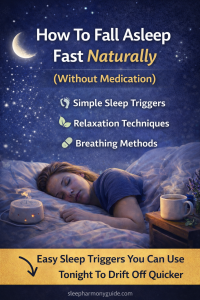
How To Fall Asleep Fast Naturally (Without Medication)
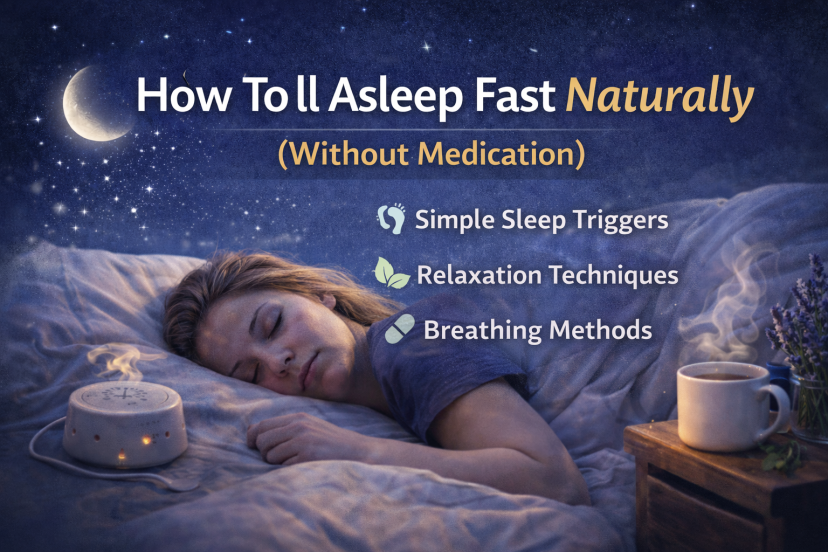
😴 When Your Body Is Tired But Your Mind Won’t Shut Off
You’re exhausted. Your eyes feel heavy. But the moment your head hits the pillow, your brain flips on like a light switch. Thoughts race, muscles stay tense, and minutes turn into hours.
If you’re searching for how to fall asleep fast naturally, you’re far from alone. Many people struggle with sleep onset insomnia—difficulty falling asleep—even when they’re physically tired. Stress, anxiety, and modern habits keep the nervous system stuck in “alert mode,” making sleep feel just out of reach.
The good news? You don’t need medication to fall asleep faster. There are natural sleep triggers that work with your biology—not against it. This guide walks you through simple, proven techniques you can use tonight to calm your mind, relax your body, and drift off more easily.
How To Fall Asleep Fast Naturally? (Short Answer)
To fall asleep fast naturally, focus on calming your nervous system:
-
Slow your breathing: inhale for 4 seconds, exhale for 6 seconds, for a few minutes
-
Relax your body: do a quick body scan or progressive muscle relaxation
-
Dim lights and stop screens at least 30–60 minutes before bed
-
Create a calm sleep cue: white noise, a cool room, or herbal tea (like chamomile)
-
Let go of trying to sleep—relaxation comes first, sleep follows
These simple steps signal safety to your brain and help you drift off faster without medication.
🧠 Why Falling Asleep Can Be So Hard
Before fixing the problem, it helps to understand what’s actually happening.
Common Reasons You Can’t Fall Asleep
• Racing thoughts or anxiety
• Stress hormones staying elevated
• Muscle tension
• Irregular sleep schedule
• Screen exposure before bed
When your nervous system doesn’t feel safe or relaxed, your body resists sleep—no matter how tired you are.
🌿 How To Fall Asleep Fast Naturally By Calming The Nervous System
The key to falling asleep quickly is not forcing sleep—it’s lowering arousal.
Your body has two modes:
• Fight-or-flight (alert)
• Rest-and-digest (relaxed)
Natural sleep initiation techniques work by shifting you into the rest-and-digest state.
🫁 Breathing Methods That Help You Fall Asleep Faster
Breathing is one of the fastest ways to calm the nervous system.
4-6 Breathing (Simple And Effective)
• Inhale through your nose for 4 seconds
• Exhale slowly through your mouth for 6 seconds
• Repeat for 3–5 minutes
Longer exhales signal safety to the brain and promote relaxation.
4-7-8 Breathing Method
• Inhale for 4 seconds
• Hold for 7 seconds
• Exhale slowly for 8 seconds
This technique is especially helpful when anxiety keeps you awake.
🌿 Relaxation Techniques That Trigger Sleep
Relaxation techniques work by releasing physical tension and redirecting attention away from thoughts.
Progressive Muscle Relaxation
• Start at your toes
• Gently tense, then release each muscle group
• Move slowly up the body
This tells your brain that it’s safe to let go.
Body Scan Relaxation
• Focus attention on each body part
• Notice sensations without judgment
• Let each area soften
Many people fall asleep before finishing the scan.
🛌 The “Cognitive Shuffle” For Racing Thoughts
When your mind won’t stop, distraction can help—without stimulation.
How The Cognitive Shuffle Works
• Think of random, unrelated images
• Avoid emotional or logical connections
• Let your brain drift
Examples:
• A red apple
• A quiet lake
• A soft blanket
This gently disengages the thinking brain and allows sleep to happen.
🌙 How To Fall Asleep Fast Naturally With Sensory Cues
Your senses strongly influence sleep readiness.
Sound
• Use white noise machines to mask sudden sounds
• Gentle rainfall or fan noise works well
Light
• Dim lights 60 minutes before bed
• Avoid overhead lighting at night
Temperature
• Keep the bedroom cool (60–67°F)
• Cooler temperatures support faster sleep onset
🌿 Herbal Teas And Natural Sleep Aids
While not instant fixes, certain natural aids support faster relaxation.
Herbal Teas For Sleep Initiation
• Chamomile
• Lemon balm
• Passionflower
Drink tea 30–60 minutes before bed to avoid nighttime bathroom trips.
Supplements That May Help
• Magnesium glycinate (muscle relaxation)
• Low-dose melatonin (sleep timing, not sedation)
Always start with the lowest effective dose.
🕰️ Lifestyle Habits That Help You Fall Asleep Faster
Your daytime habits strongly affect nighttime sleep.
Sleep-Supporting Habits
• Wake up at the same time every day
• Get morning sunlight exposure
• Avoid long daytime naps
• Limit caffeine after early afternoon
Consistency trains your body to fall asleep faster at night.
🌿 What NOT To Do When Trying To Fall Asleep
Some common habits actually make falling asleep harder.
Avoid These Sleep Sabotagers
• Checking the clock repeatedly
• Forcing sleep
• Using your phone in bed
• Lying awake for hours
If you can’t sleep after ~20 minutes, get up briefly and do something calming in low light.
🚨 When To See A Doctor
Occasional trouble falling asleep is normal. Chronic issues may need professional care.
Talk To A Sleep Specialist If You Have
• Ongoing insomnia lasting over 3 months
• Severe anxiety or panic at night
• Daytime exhaustion despite good habits
• Suspected sleep disorders
Natural techniques are most effective when no underlying condition is present.
❓ FAQs: How To Fall Asleep Fast Naturally
1. How long should it take to fall asleep?
Most people fall asleep within 10–20 minutes.
2. Do breathing methods really work?
Yes. They directly calm the nervous system and reduce arousal.
3. Is melatonin safe for falling asleep faster?
Low doses can help with timing, but it’s not a sedative.
4. What if relaxation techniques don’t work?
If relaxation techniques don’t work, try a different method—calming is personal.
5. Can white noise help me fall asleep faster?
Yes. It reduces disruptions and promotes relaxation.
6. Should I stay in bed if I can’t sleep?
No. Briefly getting up can reset sleep pressure.
7. How long until natural methods start working?
Some work immediately; others improve sleep within days.
🌟 Conclusion: Falling Asleep Is A Skill You Can Relearn
If you’ve been asking how to fall asleep fast naturally, remember this: sleep is not something you force—it’s something you allow.
By calming your breathing, relaxing your body, reducing stimulation, and creating the right environment, you can trigger sleep naturally—without medication. Start with one technique tonight, stay consistent, and trust your body’s ability to rest again.
Restful sleep is closer than you think.
⚠️ Disclaimer
This content is for educational purposes only and does not replace professional medical advice. Always consult a qualified healthcare provider regarding sleep disorders, supplements, or persistent insomnia.
 Explore more:
- Best Sleep Position For Back, Neck & Shoulder Pain
- Cognitive Behavioral Therapy for Insomnia (CBT-I)
- Alcohol And Sleep Quality: The Hidden Disruption