Muscle Relaxation for Sleep: A Step-by-Step Guide to Releasing Tension Before Bed
😴 When Your Body Refuses to Relax
You’re exhausted. You’ve done everything “right” — dimmed the lights, put away your phone, even tried herbal tea — but when you finally lie down, your body feels tense. Your shoulders are tight, and your jaw is clenched. Your legs won’t stay still. This physical tension is your body’s silent way of saying, “I’m still stressed.” And when your body is tense, your mind can’t truly rest. The solution? Muscle relaxation for sleep — a proven technique that helps you release physical and mental tension through slow, mindful muscle engagement. It’s called Progressive Muscle Relaxation (PMR), and it’s one of the simplest, most effective ways to calm your nervous system before bed.
Let’s explore how it works, why it’s backed by science, and how you can do it tonight for faster, deeper, and more peaceful sleep.
🧠 The Science Behind Muscle Relaxation for Sleep
Your body and mind are deeply connected. When you’re stressed or anxious, your muscles automatically tighten — a built-in survival response known as the fight-or-flight mode.
Unfortunately, this tension doesn’t just fade when the day ends. It lingers in your neck, shoulders, and back — keeping your body on “alert” long after your mind wants to rest.
Muscle relaxation for sleep works by reversing this process. Through intentional tension release, you train your body to shift from the sympathetic (stress) state to the parasympathetic (rest-and-digest) state.
🌿 Key Benefits:
-
Lowers heart rate and blood pressure
-
Reduces cortisol (the stress hormone)
-
Relieves physical tension and muscle pain
-
Enhances blood flow and body awareness
-
Helps you fall asleep faster and stay asleep longer
A 2022 Sleep Health Journal study found that participants who practiced guided muscle relaxation before bed reported improved sleep onset time and deeper rest compared to those who didn’t.
🌙 What Is Progressive Muscle Relaxation (PMR)?
Progressive Muscle Relaxation (PMR) is a step-by-step technique developed by Dr. Edmund Jacobson in the 1930s.
It involves tensing and releasing different muscle groups in sequence to promote calm and physical awareness.
When you intentionally tense a muscle, it increases contrast — making the release that follows even more relaxing.
It’s like pressing “reset” on your body.
🕯️ How to Do Muscle Relaxation for Sleep (Step-by-Step)
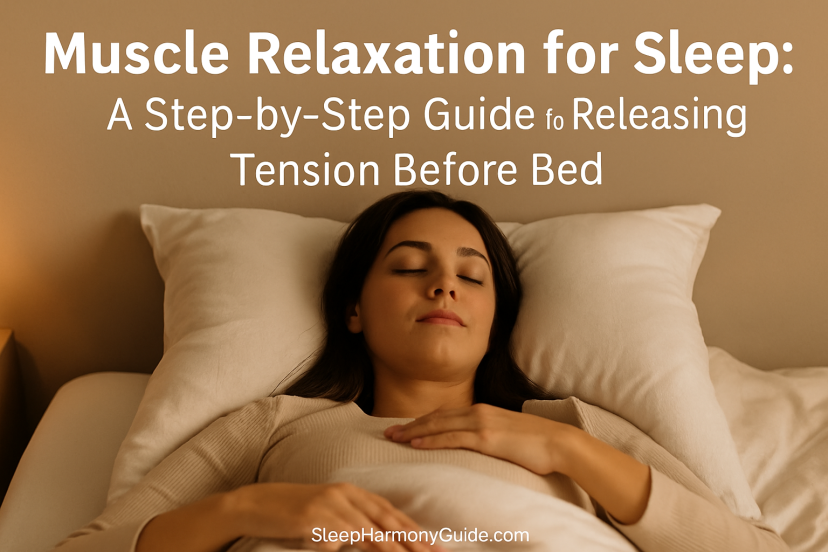
You can do this lying in bed or sitting in a comfortable chair. It only takes 10–15 minutes.
🌿 Step 1: Prepare Your Space
-
Dim the lights and silence your phone.
-
Lie on your back with arms at your sides.
-
Take a few deep, slow breaths. Inhale through your nose, exhale through your mouth.
Optional tools for a U.S. audience:
-
Weighted blanket: Adds comfort and pressure relief
-
White noise machine: Blocks distractions (Hatch Restore, Yogasleep Dohm)
-
Lavender oil diffuser: Promotes relaxation and calm
🌙 Step 2: Focus on Breathing
Before you begin, center your attention on your breath.
Inhale slowly for 4 seconds, hold for 2 seconds, and exhale for 6 seconds.
Let your breath guide your rhythm through the rest of the exercise.
🧘 Step 3: Start the Guided Muscle Relaxation Sequence
Work your way from head to toe — or the other way around. Here’s a simple sequence you can follow:
🕯️ Face and Neck
-
Tighten your forehead by raising your eyebrows. Hold for 5 seconds.
-
Release completely and feel the tension fade.
-
Clench your jaw gently, hold, then relax your mouth and let your tongue rest.
🌿 Shoulders and Arms
-
Shrug your shoulders up toward your ears. Hold for 5 seconds, then let them drop.
-
Make fists with your hands. Hold and release.
-
Feel warmth spread through your arms as you relax.
💤 Chest and Back
-
Inhale deeply, expand your chest.
-
Hold for 5 seconds, then exhale slowly and feel your upper body soften.
-
Imagine your back melting into the mattress.
🌙 Stomach and Core
-
Tighten your abs slightly — as if bracing for a gentle poke.
-
Hold for 5 seconds, then let go completely.
-
Notice the difference between tension and release.
🕯️ Legs and Feet
-
Press your heels into the bed, tightening your thighs. Hold and release.
-
Curl your toes, hold for 5 seconds, then relax and let your feet fall naturally outward.
Take a deep breath. Feel your whole body heavy, supported, and calm. 🌿
🌿 Combine PMR with a Body Scan for Deeper Relaxation
A body scan is another form of guided relaxation that pairs beautifully with PMR.
Instead of tensing each muscle, you simply observe sensations across your body — noticing areas of tightness and intentionally letting them go.
🕯️ Simple Body Scan Meditation:
-
Close your eyes and take a deep breath.
-
Starting at the top of your head, bring gentle awareness to each part of your body.
-
As you move downward (forehead → shoulders → chest → legs), notice any tension.
-
With each exhale, imagine that tightness melting away.
💡 Tip: Use a guided version from meditation apps like Calm, Insight Timer, or Headspace, which include sleep-specific body scan recordings.
🌙 The Power of Mind-Body Awareness
Muscle relaxation for sleep does more than help you unwind — it strengthens the connection between your body and mind.
By paying attention to physical sensations, you become aware of stress signals earlier, so they don’t spiral into chronic anxiety or insomnia.
This is especially useful for people with:
-
Chronic pain or tension headaches
-
Anxiety-related restlessness
-
Insomnia or racing thoughts before bed
-
Muscle stiffness from sitting or stress
It’s a self-soothing skill that improves with practice — the more you do it, the faster your body learns to relax.
🕯️ Evening Routine Example Using Muscle Relaxation
Try this 10-minute nighttime routine to help your body fully let go before sleep:
🌙 1. Wind Down (5–10 minutes before bed)
-
Turn off bright lights and switch to warm tones.
-
Brew herbal tea (chamomile or lemon balm).
-
Play calming sounds (rain, ocean, or ambient music).
🌿 2. Stretch and Breathe
Do gentle stretches — shoulder rolls, neck tilts, or a forward fold.
Pair each movement with deep breathing to release surface tension.
💤 3. Guided PMR Practice (10 minutes)
Follow the tension-and-release steps outlined earlier.
You can also play a guided PMR session from YouTube, Calm, or Insight Timer while lying in bed.
🕯️ 4. Optional Add-Ons
-
Apply magnesium lotion to soothe muscles.
-
Diffuse essential oils like lavender or clary sage.
-
End with a positive mantra:
“My body is calm. My mind is still. I am ready for rest.”
🌿 Common Mistakes to Avoid
✅ Don’t rush. The process should feel slow and intentional — not forced.
✅ Don’t skip breathing. It’s the anchor that helps the body release fully.
✅ Avoid perfectionism. If your mind wanders, gently bring it back to your breath.
✅ Be consistent. Practice nightly for a week — the relaxation response strengthens over time.
🧘 The Role of Supplements and Sleep Aids
While muscle relaxation for sleep is often enough on its own, combining it with natural supports can enhance results.
🌿 Helpful Additions:
-
Magnesium glycinate or citrate: Calms nerves and muscles.
-
L-theanine: Found in green tea; promotes alpha brain waves and calm.
-
Herbal teas: Chamomile, valerian root, or passionflower.
💡 Note: Always check with your healthcare provider before trying new supplements.
🩺 When to See a Sleep Specialist
If you consistently struggle with physical or emotional tension that prevents sleep, it may signal an underlying issue such as:
-
Chronic anxiety or depression
-
Restless leg syndrome
-
Sleep apnea
-
Muscle or nerve pain disorders
You should consult a sleep specialist or therapist if you:
-
Have insomnia lasting more than 3 weeks
-
Wake up multiple times each night
-
Depend on medication or alcohol to sleep
-
Experience pain or tingling sensations in your limbs
-
Feel constantly fatigued despite 7–8 hours in bed
Professional evaluation can identify root causes and recommend personalized treatments like CBT-I (Cognitive Behavioral Therapy for Insomnia).
❓ FAQs About Muscle Relaxation for Sleep
1. What is muscle relaxation for sleep?
It’s a technique where you tense and release muscle groups to relieve physical and mental tension before bed.
2. How does it help you sleep?
It reduces cortisol, slows heart rate, and activates your relaxation response, preparing your body for deep rest.
3. How long should I practice it?
Start with 10–15 minutes before bed. With practice, your body will relax faster.
4. Can I do it lying in bed?
Yes! It’s safe and effective to perform while lying down in a comfortable position.
5. Is guided relaxation necessary?
Not required, but guided audio can help beginners stay focused.
6. How is it different from meditation?
PMR focuses on the body through tension and release, while meditation focuses on the mind through awareness and stillness. They complement each other beautifully.
7. Can muscle relaxation help with anxiety?
Absolutely. PMR reduces physical stress responses, which lowers anxiety and promotes calm.
🌙 Conclusion: Let Your Body Lead the Way to Better Sleep
Your body holds onto stress — but it also holds the key to letting it go.
By practicing muscle relaxation for sleep, you can calm your nervous system, release tension, and invite true rest.
Tonight, give yourself 10 quiet minutes to unwind.
Breathe deeply. Tighten, release, and notice the difference.
Your body deserves to relax — and so do you. 🌿💤
⚖️ Sleep Health Disclaimer
This article is for informational purposes only and does not replace professional medical advice. Always consult a healthcare provider or licensed sleep specialist if you experience chronic insomnia, muscle pain, or anxiety-related sleep issues.
 Explore more: