Napping The Right Way: How Long Should A Nap Be — And When Is Best?
🧑 When You’re Tired But Afraid To Nap
If you struggle with poor sleep, you probably know this feeling well:
You’re exhausted by mid-day. Your eyes feel heavy. Your brain feels foggy. But you’re scared to nap — because what if it ruins your night?
Racing thoughts, restless nights, and insomnia can make daytime fatigue feel endless. And many people wonder: How long should a nap be so it helps — not hurts — sleep?
The truth is, napping can be a powerful tool for energy, focus, and mood — if you do it the right way. This guide will show you:
- How long should a nap be for real benefits
- The difference between a power nap and a long nap
- The best time to nap based on your body clock
- How to nap without ruining nighttime sleep
Let’s make naps work for your sleep — not against it.
🕒 Why We Get Sleepy In The Afternoon
Why Your Body Naturally Wants A Nap
That afternoon slump isn’t weakness — it’s biology.
Your body runs on a circadian rhythm, a 24-hour internal clock that controls:
- Sleep and wake cycles
- Hormone release
- Body temperature
- Alertness levels
Most people feel a natural dip in energy between 1:00–3:00 PM. This happens because:
- Body temperature slightly drops
- Melatonin slowly starts rising
- Mental focus naturally declines
This is why so many cultures have built-in rest periods — like siestas.
But if you didn’t sleep well, this dip feels much stronger. That’s when the big question appears:
How long should a nap be so it helps without hurting nighttime sleep?
😴 How Long Should A Nap Be?
The Science Of Nap Length
Not all naps are equal. The benefits — and risks — depend on how deep you go into sleep.
Your brain moves through sleep stages:
- Light sleep
- Deeper slow-wave sleep
- REM sleep
The longer you sleep, the deeper you go. And waking from deep sleep can leave you groggy.
So when people ask how long should a nap be, the real answer depends on your goal.
🕐 The 20-Minute Power Nap
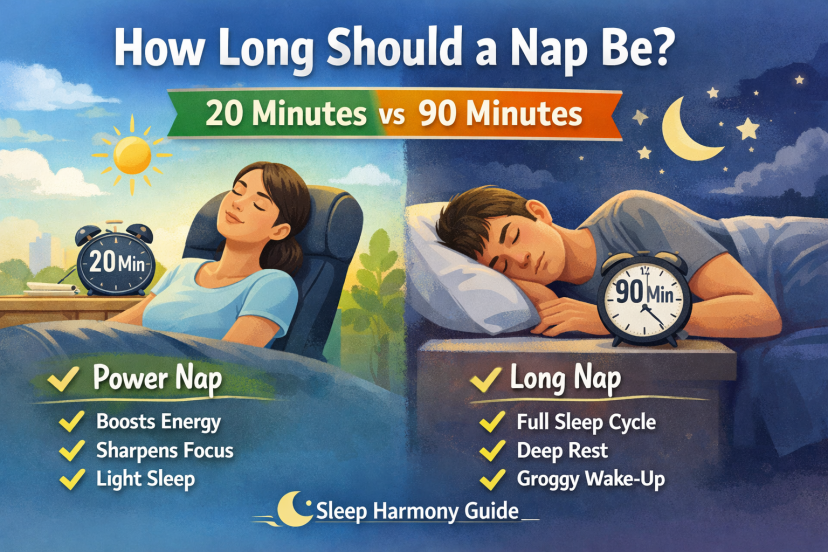
A power nap is usually 10–20 minutes.
This is the safest nap length for most people.
Benefits:
- Boosts alertness
- Improves mood
- Sharpens focus
- Reduces stress
Because you don’t enter deep sleep, you wake up refreshed — not groggy.
Best for:
- People with insomnia
- Light sleepers
- Anyone afraid of ruining night sleep
If you’re asking “how long should a nap be to avoid grogginess?” — the answer is: about 20 minutes.
🕘 The 60–90 Minute Long Nap
A longer nap lets you complete a full sleep cycle, including REM sleep.
Benefits:
- Improves creativity
- Supports memory
- Helps emotional balance
Risks:
- Waking from deep sleep causes sleep inertia (heavy grogginess)
- More likely to affect nighttime sleep
This type of nap is best only when:
- You’re severely sleep-deprived
- You had almost no sleep the night before
- You won’t go to bed late
So if you wonder how long should a nap be when you barely slept, a 60–90 minute nap can help — but use it carefully.
⏰ Best Time To Nap For Your Body Clock
Best Time To Nap Without Ruining Sleep
Timing matters just as much as nap length.
The best time to nap for most people is:
Between 1:00 PM and 3:00 PM
This matches your natural circadian dip.
Napping too late keeps your brain awake at bedtime.
Avoid naps after 4:00 PM.
Late naps:
- Delay melatonin
- Make it harder to fall asleep
- Weaken sleep pressure, the natural drive to sleep
So if you’re asking how long should a nap be and when, the safe combo is:
- 10–20 minutes
- Between 1–3 PM
🧠 20-Minute Nap Vs 90-Minute Nap
Comparing Short And Long Naps
| Nap Type | Nap Length | Best For | Risk |
|---|---|---|---|
| Power nap | 10–20 min | Focus, energy, mood | Very low |
| Long nap | 60–90 min | Recovery, creativity | Can disrupt night sleep |
Power nap wins for most people who struggle with insomnia.
Long naps are better used:
- Occasionally
- After extreme sleep loss
- When nighttime sleep is flexible
So when you ask how long should a nap be for everyday life, the power nap is your best friend.
🌿 How To Nap The Right Way
Nap Setup For Better Sleep
To make naps work, not hurt, follow these steps:
- Keep it short (10–20 minutes)
- Nap early afternoon
- Use a quiet, dark space
- Set an alarm
- Avoid naps in bed if you have insomnia
🛌 Create A Calm Nap Space
You don’t need a bedroom — just reduce stimulation:
- Use eye masks or blackout curtains
- Try white noise machines (like LectroFan or Hatch)
- Lower room temperature slightly
- Use a light blanket
⏱️ Always Set A Timer
Oversleeping turns a helpful nap into a sleep-destroyer.
Use:
- Phone timer
- Smart watch
- Sleep tracker like Fitbit or Apple Watch
😌 Naps, Anxiety, And Racing Thoughts
Using Naps To Calm The Nervous System
If your mind races, naps can still help — if done gently.
Before napping:
- Take 5 slow, deep breaths
- Relax your shoulders and jaw
- Let go of “I must sleep” pressure
Even light rest counts. Lying quietly with eyes closed still refreshes your nervous system.
💊 Supplements That Support Healthy Naps
Natural Sleep Support
You don’t need supplements for every nap, but some can help overall sleep health.
🌿 Herbal Teas
- Chamomile tea
- Lemon balm
- Passionflower
These calm the nervous system without heavy sedation.
💊 Magnesium
Magnesium helps muscles relax and supports sleep quality.
Common forms:
- Magnesium glycinate
- Magnesium citrate
🌙 Melatonin
Melatonin is best for nighttime use, not for naps. Using it for naps can disrupt your circadian rhythm.
🏃 Lifestyle Habits That Improve Nap Benefits
Daily Habits That Make Naps Work Better
- Get sunlight in the morning
- Keep a consistent sleep schedule
- Exercise regularly
- Limit caffeine after 12 PM
- Eat balanced lunches (not heavy sugar meals)
Heavy lunches make you sleepy — but not in a healthy way.
🚫 Common Nap Mistakes
What Ruins Naps
- Napping too late
- Napping too long
- Using naps to replace nighttime sleep
- Sleeping in bed every nap (trains the brain wrong)
- Skipping sunlight exposure
🩺 When To See A Doctor
If you constantly feel exhausted and rely on naps just to survive, it may be time to talk to a professional.
See a doctor or sleep specialist if:
- You can’t stay awake during the day
- Naps never refresh you
- You have loud snoring or breathing pauses
- Insomnia lasts longer than 3 months
- You feel anxious or depressed about sleep
Conditions like sleep apnea, restless legs, or chronic insomnia need medical care.
❓ FAQs About Napping
1. How long should a nap be for energy?
The best nap length for energy is 10–20 minutes. This power nap boosts focus without causing grogginess.
2. What is the best time to nap?
The best time to nap is between 1:00 PM and 3:00 PM, when your body naturally feels sleepy.
3. Is a 90-minute nap bad?
A 90-minute nap can help if you’re very sleep-deprived, but it may cause grogginess and affect nighttime sleep.
4. Can naps cause insomnia?
Yes — long or late naps can make it harder to fall asleep at night.
5. Should I nap if I didn’t sleep?
Yes, but keep it short. If you barely slept, a 30–60 minute nap can help — but don’t nap late.
6. Is it okay to nap every day?
Yes, daily power naps are safe if they’re short and early.
7. What if I can’t fall asleep during a nap?
That’s okay. Quiet rest still refreshes your brain.
🌟 Conclusion: Naps Can Help You Heal Sleep
If you’ve ever asked how long should a nap be, now you know:
- 10–20 minutes is best for most people
- 1–3 PM is the safest time
- Short naps boost energy without ruining nights
Naps aren’t lazy — they’re strategic rest. Used wisely, they can:
- Calm anxiety
- Sharpen focus
- Support better nighttime sleep
Start small. Try a gentle power nap. Let your body learn that rest is safe — and that good sleep is possible again.
⚠️ Disclaimer
This article is for educational purposes only and does not replace medical advice. Always consult a healthcare provider before using supplements or making major sleep changes, especially if you have medical conditions or take medications.
 Explore more:
- Best Bedroom Temperature For Deep Sleep
- How To Fix Your Sleep Schedule After Staying Up Late
- Blue Light And Sleep: Why Screens Keep You Awake