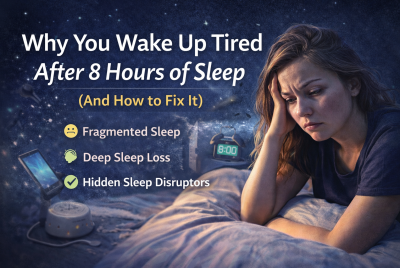
Why You Can’t Fall Asleep Even When You’re Tired: Understanding the Mental and Biological Reasons — and How to Fix Them

🌙 Exhausted… but Wide Awake
You’ve had a long day. Your body aches for rest, and your eyelids feel heavy. You crawl into bed ready to pass out — but suddenly, your mind turns on.
Your thoughts race. Your heart feels awake, and your brain becomes louder than ever.
If this sounds familiar, you’re not alone. Millions of U.S. adults experience the confusing and frustrating pattern of feeling exhausted but still unable to fall asleep. It feels unfair — and it is — but there are clear scientific and psychological reasons why you can’t fall asleep when tired, and even more importantly, there are practical, research-backed steps you can take to fix it.
This guide walks you through the real causes behind an overactive mind at night, the symptoms of mental overload, and actionable strategies to finally get the sleep you need.
😴 Why You Can’t Fall Asleep When You’re Tired
Many people believe sleeplessness is a lack-of-tiredness problem. But in most cases, it’s not your body that’s awake — it’s your brain.
Overactive Mind and Racing Thoughts
The most common reason people can’t fall asleep when tired is mental overactivity. You may be physically exhausted, but mentally overstimulated.
Common thought loops include:
-
Replaying conversations
-
Worrying about tomorrow
-
Thinking about deadlines
-
Planning future tasks
-
Emotional rumination
-
“What if?” scenarios
-
Fear of not sleeping
These racing thoughts trigger your brain’s alert system and block your natural ability to relax.
Anxiety at Night
Anxiety often intensifies at bedtime because it’s the first quiet moment of the day. Without distractions, your mind begins processing everything you didn’t have time to think about earlier.
Signs include:
-
Tight chest
-
Rapid breathing
-
Mental spiraling
-
Uneasy stomach
-
Feeling “on edge”
Nighttime anxiety raises cortisol levels, which conflicts with melatonin (your sleep hormone), making it harder to drift off.
Stress and Cortisol Spikes
If stress has been building all day, it can show up at night in the form of heightened alertness. Emotional stress, work pressure, arguments, overstimulation, and digital overload all contribute to cortisol spikes that can keep you awake.
Science shows that high cortisol in the evening prevents the brain from entering sleep mode, even when the body is tired.
Irregular Sleep Schedule
If you don’t sleep or wake up at consistent times, your circadian rhythm becomes confused. Even when you’re tired, your internal clock may not signal “sleep time.”
Late bedtimes
Shift work
Jet lag
Inconsistent routines
— all disrupt melatonin production and cause sleep delays.
Blue Light and Screen Exposure
Screens emit blue light that suppresses melatonin, which makes your brain think it’s daytime. Even “night mode” isn’t enough to fully stop the effect.
Most people watch TV, scroll their phone, or work on laptops right before bed — all of which overstimulate the mind and block sleep signals.
Mental Overload & “Rebound Thinking”
If your entire day was packed with tasks, noise, or responsibilities, nighttime becomes the only moment your brain feels free to think. This is why people experience “brain explosion” at bedtime — your mind is finally catching up.
Perfectionism and High-Pressure Lifestyles
People with high expectations for themselves often experience nighttime restlessness. Pressured minds struggle to shut down because they’re constantly anticipating the next day.
😩 Symptoms of “Tired but Can’t Sleep” Syndrome
If you can’t fall asleep when tired on a consistent basis, you may experience:
-
Feeling wired but exhausted
-
Muscle tension
-
Frustration around bedtime
-
Constant tossing and turning
-
Mental agitation
-
Difficulty staying asleep
-
Emotional irritability
-
Light, low-quality sleep
These symptoms feed each other, creating a cycle of sleeplessness and overthinking.
🌙 How to Fall Asleep When You’re Tired but Your Mind Won’t Stop
Here are the most effective, science-backed techniques to stop racing thoughts and calm an overactive mind.
The “Brain Dump” Method
Before bed, write down everything on your mind — worries, reminders, schedules, emotions.
This empties the mental clutter that fuels sleeplessness.
Deep Breathing to Lower Cortisol
Try the 4-7-8 breathing method:
-
Inhale for 4 seconds
-
Hold for 7 seconds
-
Exhale for 8 seconds
This reduces heart rate and activates deep relaxation.
Grounding Techniques for Anxiety
Use the 5-4-3-2-1 method to pull your mind away from spiraling thoughts and back into the present moment.
Progressive Muscle Relaxation
Tense and relax each muscle group from toes to head.
This releases physical tension that keeps the mind alert.
Mindfulness or Guided Meditation
Apps like Calm, Headspace, or Insight Timer are widely used in the U.S. They slow down mental chatter and promote stillness.
🌿 Natural Remedies That Help When You Can’t Fall Asleep
Magnesium Glycinate
A calming mineral that helps relax muscles and quiet the nervous system.
Popular U.S. brands: Pure Encapsulations, Nature Made, NOW Foods
Melatonin
Best for resetting circadian rhythm — especially if you stay up late unintentionally.
Stick to low doses (0.5–3 mg) to avoid grogginess.
Herbal Teas
Chamomile, lemon balm, and passionflower tea have compounds that reduce stress and support restful sleep.
Aromatherapy
Lavender, cedarwood, bergamot, and chamomile essential oils help lower anxiety and calm the mind.
Warm Bath or Shower
This lowers your core temperature afterward — a natural sleep signal.
🌙 Lifestyle Strategies to Prevent Nighttime Overthinking
Create a Consistent Wind-Down Routine
A predictable routine trains your brain to shift from alert to relaxed.
Example routine:
🕯️ turn off bright lights
🌿 Make herbal tea
📖 Read a calming book
🧘 light stretching
🛏️ bed at a consistent time
Reduce Stimulation Before Bed
Avoid:
-
Heavy meals
-
Caffeine after 2 p.m.
-
Late-night workouts
-
Stressful conversations
-
Doomscrolling
Use Sleep Tools That Support Rest
U.S. sleepers often rely on:
-
White noise machines
-
Weighted blankets
-
Blackout curtains
-
Cooling pillows
-
Sleep trackers (Fitbit, Oura, Apple Watch)
These tools help create a calm sleep environment.
Fix Your Sleep Environment
Make your bedroom:
-
Cool
-
Dark
-
Quiet
-
Clutter-free
-
Screen-free
-
Soothing (lavender, soft lighting)
Your brain needs environmental consistency to recognize it’s time for sleep.
🧘 Calming the Overactive Mind During the Day
If your mind is constantly on high alert throughout the day, it will stay active at night.
Helpful daily habits include:
-
Taking short breaks during work
-
Reducing multitasking
-
Setting boundaries
-
Practicing stress management
-
Journaling
-
Sunlight exposure in the morning
These habits regulate your nervous system and reduce nighttime mental overload.
🩺 When to See a Doctor About Not Falling Asleep
You should seek medical support if:
-
You can’t fall asleep at least 3 nights per week
-
This has lasted 3 months or more
-
Sleeplessness causes daytime exhaustion
-
You suspect sleep apnea
-
You wake up gasping for air
-
Anxiety prevents sleep regularly
-
You require alcohol or medication to sleep
A sleep specialist may recommend CBT-I therapy, a sleep study, lifestyle evaluation, or medication if needed.
❓ FAQs About Why You Can’t Fall Asleep When Tired
Why am I tired but can’t fall asleep?
Usually due to racing thoughts, anxiety, stress hormones, or disrupted circadian rhythm.
Why is my mind wide awake at bedtime?
Your brain uses the first quiet moment of the day to process thoughts, emotions, and stress.
Does anxiety cause sleeplessness even when exhausted?
Yes — anxiety activates your nervous system and keeps you alert.
What helps shut my mind off at night?
Breathing exercises, brain dumping, magnesium, and calming nighttime routines.
Why do screens make it harder to sleep?
Blue light blocks melatonin and overstimulates the mind.
Should I take melatonin?
It helps reset your internal clock, but it doesn’t directly stop racing thoughts.
What is “wired but tired”?
When your body is tired but your brain is overstimulated due to stress or hormones.
🌙 Conclusion: Your Mind Can Learn to Rest Again
If you can’t fall asleep when tired, it doesn’t mean something is wrong with you. It means your mind is overwhelmed, overstimulated, or out of sync. With the right tools — calming routines, natural remedies, environmental changes, and emotional support — you can retrain your brain to slow down at night.
You deserve deep, peaceful sleep, and tonight can be the first step toward getting it.
⚠️ Sleep Health Disclaimer
This article is for informational purposes only and does not provide medical advice. Always consult a healthcare professional before starting new treatments, supplements, or therapies, especially if you have chronic insomnia or underlying medical conditions.
 Explore more:
- How Long Does It Take for Sleep Supplements to Work?
- Muscle Relaxation for Sleep
- Best Essential Oils for Sleep