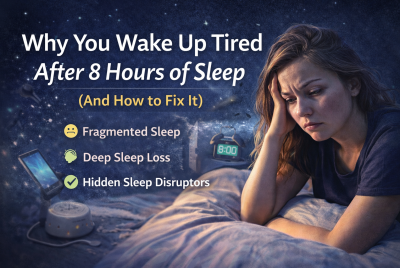
Why You Wake Up Tired Even After 8 Hours of Sleep – Understanding Poor Sleep Quality, Fragmented Sleep & Hidden Disruptors
🌙 “Why Am I Still Exhausted After a Full Night’s Sleep?”
You did everything “right.”
>You went to bed on time.
>You slept for 7–9 hours.
And still, you wake up groggy, foggy, and far from refreshed.
If you’ve ever wondered why you wake up tired after 8 hours of sleep, the answer isn’t just how long you sleep… It’s how well you sleep.
Many adults struggle with poor sleep quality, fragmented sleep, micro-awakenings, and low sleep efficiency — issues that make a full night of sleep feel like a nap.
This guide breaks down the real reasons you feel tired after 8 hours and gives you science-backed strategies to help you feel energized in the morning.
🌙 Why You Wake Up Tired After 8 Hours of Sleep
Even when you sleep a full 8 hours, several hidden factors can reduce your sleep quality.
Hidden Sleep Quality Disruptors
-
Micro-Awakenings You Don’t Remember
-
Stress And Racing Thoughts
-
Blue Light Exposure
-
Heavy Caffeine Use
-
Overheating At Night
-
Poor Air Quality
-
Noise Disruptions
-
Sleep Disorders You Don’t Realize You Have
If your brain keeps getting pulled out of deep or REM sleep, your rest isn’t restorative.
😴 Understanding Sleep Efficiency & Poor Sleep Quality
What Sleep Efficiency Means
Sleep efficiency is the percentage of time you sleep while in bed.
Healthy sleep efficiency = 85–95%.
If you spend 8 hours in bed but only truly sleep 6–6.5 hours, your quality is low — even if you don’t consciously wake up.
Signs of Poor Sleep Efficiency
-
Taking Over 25 Minutes To Fall Asleep
-
Waking Up Multiple Times
-
Tossing And Turning
-
Feeling Unrefreshed In The Morning
-
Dependence On Caffeine
These are red flags that your sleep architecture is disrupted.
🌙 The Role of Micro-Awakenings: The #1 Reason You Wake Up Tired
What Micro-Awakenings Are
Micro-awakenings are brief moments when your brain wakes up — often for 3–15 seconds — before returning to sleep.
Most adults experience 5–20 per night.
But adults with poor sleep quality can experience hundreds, without remembering a single one.
What Causes Micro-Awakenings
-
Stress
-
Anxiety Or Overthinking
-
Snoring Or Airway Resistance
-
Sleeping Too Hot
-
Late Alcohol Use
-
Screens Before Bed
-
Pets Moving In Bed
-
External Noise (Cars, Neighbors)
-
Pain Or Tension
Micro-awakenings pull you out of deep sleep — the stage responsible for physical recovery and feeling refreshed.
🌙 Stress & Racing Thoughts: A Major Hidden Culprit
Stress activates cortisol, the brain’s alertness hormone, making it harder to enter restorative sleep.
Signs Stress Disrupts Your Sleep Quality
-
Overthinking At Night
-
Waking At 3 A.M. With A Racing Mind
-
Trouble Falling Back Asleep
-
Light, Easily Disturbed Sleep
How Stress Impacts Sleep Stages
Stress reduces:
-
Deep sleep
-
REM sleep
-
Sleep cycle stability
Even if you stay in bed 8 hours, stress prevents high-quality sleep.
🌙 Blue Light & Your Brain’s Sleep Signals
Screen exposure (phones, laptops, TVs) after sunset suppresses melatonin — the hormone that regulates sleep timing.
How Blue Light Lowers Sleep Quality
-
Delays Melatonin Release
-
Reduces REM Sleep
-
Causes Late-Night Alertness
-
Makes Sleep Shallower
Many U.S. adults scroll in bed, unknowingly damaging their sleep architecture.
🌙 Caffeine, Alcohol & Late Meals: Hidden Disruptors
Even if you sleep for 8 hours, lifestyle factors can fragment your sleep.
Caffeine
Caffeine’s half-life is 6–10 hours.
-
Coffee after 2 p.m.
-
Pre-workout supplements
-
Energy drinks
These can block deep sleep even if you fall asleep easily.
Alcohol
Alcohol helps you fall asleep faster…
But it destroys REM sleep and increases micro-awakenings.
Heavy Late Meals
Eating too close to bedtime causes:
-
Digestive discomfort
-
Acid reflux micro-awakenings
-
Shallow breathing
All of these reduce sleep quality — even during 8-hour nights.
🌙 Overheating at Night Disrupts Sleep Stages
The body needs to drop its core temperature to fall asleep and stay asleep.
If your bedroom is warm, you experience:
-
More micro-awakenings
-
Less deep sleep
-
Restlessness
-
Sweaty sleep
Ideal temperature: 65–68°F.
🌙 Sleep Disorders That Cause Poor Restorative Sleep
Many adults suffer from undiagnosed sleep conditions.
Common Disorders That Reduce Restful Sleep
-
Sleep Apnea
-
Upper Airway Resistance Syndrome (UARS)
-
Restless Leg Syndrome
-
Chronic Insomnia
-
Circadian Rhythm Disorders
These conditions cause repeated sleep fragmentation — making 8 hours feel like 3 or 4.
🌙 How to Fix Poor Sleep Quality & Wake Up Refreshed
Strengthen Your Circadian Rhythm
Your internal clock controls sleep depth and timing.
-
Wake Up At The Same Time Daily
-
Get Morning Sunlight For 10–20 Minutes
-
Avoid Sleeping In On Weekends
-
Use A Bedtime Alarm To Stay Consistent
Improve Your Bedroom Environment
-
Keep Room Cool (65–68°F)
-
Use Blackout Curtains
-
Reduce Noise With Fans Or White Noise Machines
-
Use A Supportive Mattress Or a Cooling Pillow
Reduce Stress Before Bed
-
Limit Social Media After 8 P.M.
-
Use Deep Breathing Or Meditation
-
Journal For 5 Minutes
-
Try Lavender Aromatherapy
-
Take A Warm Shower
Fix Late-Night Habits
-
Avoid Caffeine After 2 P.M.
-
Limit Alcohol To 3+ Hours Before Bed
-
Eat Dinner 2–3 Hours Before Bedtime
Support Sleep Physiology With Supplements
-
Magnesium Glycinate For Relaxation
-
Chamomile Or Lemon Balm Tea For Calmness
-
Melatonin For Timing (Not For Daily Use)
Reduce Screen Exposure
-
Turn Off Screens 1 Hour Before Bed
-
Use Blue-Light Blockers If Needed
-
Set Phone To Night Mode After Sunset
🩺 When to See a Doctor
You should consult a sleep specialist if you:
-
Wake Up Tired Every Day Despite 7–9 Hours Of Sleep
-
Wake Up Gasping Or Choking
-
Snore Loudly
-
Experience Restless Legs Or Body Jerks
-
Have Chronic Insomnia
-
Feel Excessive Daytime Fatigue
-
Suspect Sleep Apnea
-
Wake Up With Chest Tightness Or Rapid Heart Rate
A doctor may recommend:
-
A Sleep Study (Polysomnography)
-
CBT-I Therapy
-
Breathing Evaluations For Airway Issues
-
Medication (If Appropriate)
-
Lifestyle Or Circadian Adjustments
❓ FAQs: Why Do I Wake Up Tired After 8 Hours of Sleep?
Why do I wake up tired after 8 hours of sleep?
Your sleep quality is low due to micro-awakenings, stress, poor sleep efficiency, or hidden sleep disorders.
Why am I still tired after sleeping all night?
You may be lacking deep sleep or REM sleep, even if total hours look normal.
Can anxiety make me wake up tired?
Yes — stress and anxiety reduce deep sleep and cause nighttime awakenings.
Does blue light make sleep quality worse?
Yes — screens suppress melatonin and reduce REM sleep.
What is sleep efficiency?
Sleep efficiency is how much time you actually sleep compared to the time you spend in bed.
What causes fragmented sleep?
Stress, caffeine, alcohol, pain, temperature changes, or disorders like sleep apnea.
How can I improve sleep quality naturally?
Reduce screens, lower caffeine, manage stress, optimize room temperature, and build a consistent bedtime routine.
🌙 Conclusion: Waking Up Refreshed Starts With Fixing the Quality of Your Sleep
If you’ve been wondering why you wake up tired after 8 hours of sleep, the answer often lies in hidden disruptors — not the number of hours you sleep.
By improving sleep efficiency, reducing micro-awakenings, managing stress, and supporting your circadian rhythm, you can finally wake up feeling energized, refreshed, and ready to take on the day.
Deep, restorative sleep is possible — and tonight can be your turning point.
⚠️ Sleep Health Disclaimer
This article is for informational purposes only and does not provide medical advice. Consult a healthcare professional before starting supplements, treatments, or therapies, especially if you have chronic insomnia or underlying health conditions.
 Explore more:
- Sleep Hygiene Checklist: 10 Habits For Restful Nights
- The Stages of Sleep Explained
- Why You Can’t Fall Asleep Even When You’re Tired