Natural Remedies for Insomnia That Actually Work (Science-Backed Sleep Support)
🌙 When Sleep Won’t Come—No Matter How Tired You Are
You turn off the lights, get into bed, and close your eyes—yet your mind keeps racing. Minutes turn into hours. You feel exhausted, frustrated, and worried about how tomorrow will feel after another sleepless night.
If this sounds familiar, you’re not alone. Millions of Americans struggle with insomnia, and many want relief without relying on prescription sleep medications. The good news? There are natural remedies for insomnia that actually work—when used correctly and consistently.
This guide walks you through evidence-based, non-prescription sleep aids, safety tips, and calming routines so you can find what truly supports your body’s natural ability to rest.
🧠 Understanding Insomnia: Why Sleep Becomes So Difficult
Insomnia isn’t just “trouble sleeping.” It’s often the result of several overlapping factors.
✅ Common Causes Of Insomnia
-
Stress and anxiety
-
Poor sleep hygiene
-
Irregular sleep schedule
-
Excess screen time
-
Hormone imbalances
-
Stimulants (caffeine, nicotine)
When your nervous system stays in “alert mode,” natural sleep signals get blocked—making it hard to fall or stay asleep.
⚠️ Signs That Insomnia Is Affecting Your Health
Occasional bad nights happen. Chronic insomnia creates a cycle.
😖 Common Symptoms
-
Trouble falling asleep most nights
-
Waking up frequently
-
Early morning awakenings
-
Daytime fatigue
-
Brain fog or irritability
That’s where natural remedies for insomnia can provide gentle but effective support.
🌿 Why Natural Remedies Can Be So Effective
Natural sleep aids work with your body—not by forcing sedation.

✅ Benefits Of Natural Approaches
-
Support normal sleep cycles
-
Lower risk of dependency
-
Fewer side effects than prescription drugs
-
Improve long-term sleep quality
When combined with good routines, natural remedies often outperform medication over time.
🌿 Herbal Sleep Aids: What Works And What Doesn’t
Herbal sleep aids are among the most popular non-prescription options—and some are backed by solid research.
🌿 Chamomile Tea: Gentle And Time-Tested
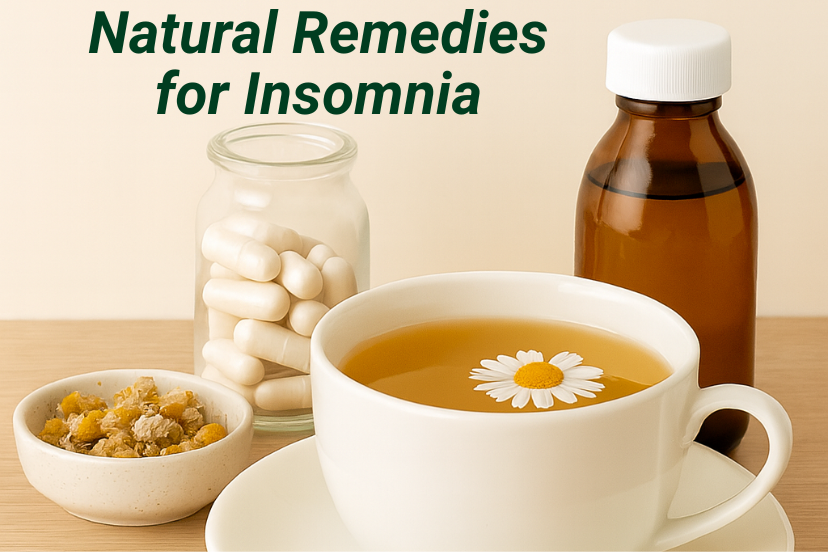
Chamomile tea is one of the most trusted natural remedies for insomnia.
✅ How Chamomile Helps
-
Promotes relaxation
-
Reduces mild anxiety
-
May shorten sleep onset time
✅ How To Use It
-
Drink 1 cup 30–60 minutes before bed
-
Choose U.S. brands with pure chamomile flowers
-
Avoid if allergic to ragweed
Chamomile works best for mild insomnia and restless minds.
🌿 Valerian Root: Stronger But Not For Everyone
Valerian is one of the most researched herbal sleep aids.
✅ Potential Benefits
-
Supports deeper sleep
-
May reduce nighttime awakenings
⚠️ Considerations
-
Effects vary widely
-
Can cause grogginess in some people
-
Avoid mixing with alcohol or sedatives
Valerian works better short-term or as part of a routine.
🌿 Lemon Balm And Passionflower
These herbs support the nervous system.
✅ Benefits
-
Reduce stress-related insomnia
-
Improve sleep quality when combined
Often found together in U.S. sleep formulas or teas.
💊 Magnesium: The Mineral Most People Are Deficient In
Magnesium is one of the most effective natural remedies for insomnia, especially when sleep issues are stress-related.
✅ How Magnesium Helps
-
Calms the nervous system
-
Relaxes muscles
-
Supports deep sleep stages
⭐ Best Forms For Sleep
-
Magnesium glycinate
-
Magnesium citrate
✅ How To Use
-
200–400 mg in the evening
-
Avoid magnesium oxide (poor absorption)
Many Americans feel noticeable improvement within 1–2 weeks.

💊 Melatonin: Useful—But Only When Used Correctly
Melatonin isn’t a sedative. It’s a timing hormone.
✅ When Melatonin Helps
-
Delayed sleep timing
-
Jet lag
-
Irregular schedules
✅ Proper Usage
-
Low doses work best (0.5–3 mg)
-
Take 30–60 minutes before bed
-
Short-term or occasional use
Using too much melatonin can backfire and worsen sleep.
🌿 Herbal Sleep Aids Vs. Supplements: Which Is Better?
Both categories can help—but they work differently.
✅ Herbal Sleep Aids
-
Best for stress-related insomnia
-
Gentle and calming
-
Slower onset
✅ Supplements (Magnesium, Melatonin)
-
Support biological processes
-
More targeted effects
-
Require correct dosing
Many people benefit from combining one supplement + one calming herb.
🧘 Relaxation Techniques That Make Remedies Work Better
Even the best natural remedies for insomnia struggle if your mind stays overstimulated.
✅ Proven Relaxation Techniques
-
4-7-8 breathing
-
Progressive muscle relaxation
-
Body scan meditation
-
Guided audio relaxation
Practicing these 10–15 minutes nightly increases success dramatically.
🛌 Sleep Environment: The Foundation Of Natural Sleep
No remedy works well in a poor sleep environment.
✅ Bedroom Optimization Tips
-
Cool room (65–68°F)
-
Blackout curtains
-
White noise machines are popular in the U.S.
-
No blinking lights or phone notifications
The environment sets the stage for sleep hormones to rise.
💡 Lifestyle Habits That Enhance Natural Remedies
Natural remedies are most effective when supported by daytime habits.
✅ Healthy Sleep Habits
-
Consistent sleep and wake times
-
Morning sunlight exposure
-
Caffeine cutoff by early afternoon
-
Gentle evening routines
These habits improve melatonin production naturally.
🔊 Helpful Sleep Products For Extra Support
Some non-medical tools can reinforce better sleep.
✅ Popular Tools
-
White noise machines
-
Sleep trackers (Fitbit, Oura, Apple Watch)
-
Blue-light blocking glasses
These don’t replace remedies—but they support consistency.
⚕️ When To See A Doctor Or Sleep Specialist
Natural remedies for insomnia work well for many people—but not all cases are simple.
⚠️ Seek Help If You Experience
-
Insomnia lasting over 3 months
-
Loud snoring or breathing pauses
-
Severe anxiety or depression
-
Daytime sleep attacks
Underlying sleep disorders require professional evaluation.
❓ FAQs: Natural Remedies For Insomnia
Do Natural Remedies For Insomnia Really Work?
Yes—especially when combined with consistent routines and proper dosing.
Which Natural Remedy Works Best?
Magnesium and chamomile are among the most effective and safest options.
Is Melatonin Safe Long-Term?
Melatonin is best used short-term or occasionally.
Can I Combine Herbal Sleep Aids?
Yes, but avoid combining multiple strong sedatives without guidance.

How Long Before I See Results?
Some remedies work the first night; others take 1–2 weeks.
Are Natural Sleep Aids Safer Than Prescription Drugs?
Generally yes, but they still require proper use.
Can Lifestyle Changes Replace Supplements?
For some people—yes. Others benefit from both.
🌈 Conclusion: Gentle Support For Restful Nights
You don’t need harsh medication to sleep better. When used wisely, natural remedies for insomnia can calm your body, quiet your mind, and help sleep return naturally.
Start simple. Choose one remedy. Build a relaxing routine. Give your body time to respond.
Restful nights are possible—and they often begin with gentle, natural steps.
⚠️ Sleep Health Disclaimer
This content is for educational purposes only and is not intended to diagnose or treat medical conditions. Always consult a qualified healthcare provider before using supplements or addressing persistent insomnia. Individual results may vary.
 Explore more: