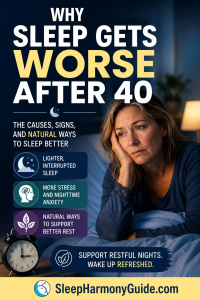
Why Sleep Gets Worse After 40 (And What May Help Naturally)
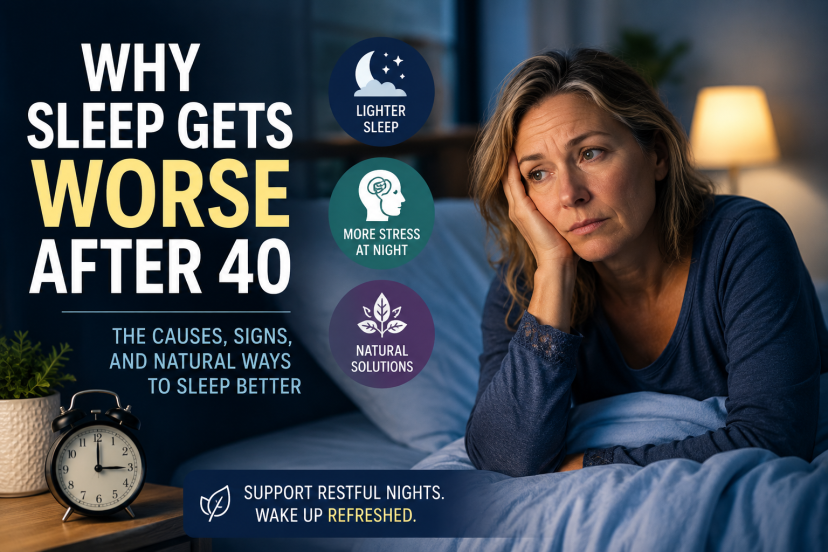
Many adults notice that their sleep changes after 40. You may wake up more often during the night, struggle to fall back asleep, or feel tired even after a full night in bed.
For some people, stress, hormonal changes, lighter sleep cycles, or nighttime anxiety may all play a role. The good news is that small lifestyle changes and healthy sleep habits may help support deeper, more refreshing sleep naturally.
In this guide, we’ll explain why sleep often becomes more difficult after 40 and what may help improve sleep quality naturally.
Quick Answer: Why Sleep Gets Worse After 40
Sleep often gets worse after 40 because the body naturally produces less melatonin, deep sleep becomes lighter, and stress or hormonal changes may increase nighttime waking. Many adults also become more sensitive to noise, anxiety, caffeine, pain, or sleep disruptions as they age. The good news is that healthy sleep habits, stress management, relaxation techniques, and natural lifestyle changes may help support deeper and more refreshing sleep.
🌙 Why Sleep Gets Worse After 40
As the body ages, sleep architecture naturally changes. Deep sleep often decreases, while lighter sleep becomes more common. This can make people more sensitive to noise, stress, temperature changes, or nighttime waking.
Common reasons sleep gets worse after 40 include:
- Hormonal changes
- Increased stress and anxiety
- Reduced melatonin production
- Sleep apnea
- Chronic pain or discomfort
- Nighttime bathroom trips
- Poor sleep habits
- Increased screen time
- Medication side effects
Many adults also notice racing thoughts or nighttime anxiety becoming more common during this stage of life.
💤 Signs Your Sleep Quality May Be Changing After 40
Sleep problems after 40 often develop gradually.

Common signs include:
- Waking up multiple times at night
- Feeling tired after 8 hours of sleep
- Difficulty falling asleep
- Early morning waking
- Light or restless sleep
- Brain fog during the day
- Increased snoring
- Feeling anxious at bedtime
- Needing naps more often
Some people also notice that stress affects their sleep more strongly than it did in their 20s or 30s.
🌡️ Hormonal Changes And Sleep After 40
One major reason sleep gets worse after 40 is hormonal fluctuation.
For women, perimenopause and menopause may cause:
- Night sweats
- Hot flashes
- Anxiety
- Restlessness
- Frequent waking
For men, lower testosterone levels may contribute to:
- Fatigue
- Reduced deep sleep
- Mood changes
- Sleep fragmentation
Melatonin production may also decline with age, making it harder to feel naturally sleepy at night.
😟 Stress And Racing Thoughts At Night
Adults over 40 often carry heavier responsibilities:
- Work stress
- Family obligations
- Financial concerns
- Caregiving responsibilities
- Health worries
These stressors can increase cortisol, the body’s stress hormone. High nighttime cortisol may keep the brain alert even when the body feels exhausted.
This is why many people wake up around 2–4 AM and struggle to fall back asleep.
📱 Lifestyle Habits That Can Make Sleep Worse After 40
Modern habits may quietly damage sleep quality over time.

⚠️ Common Sleep Disruptors
Excessive Screen Time
Blue light from phones, tablets, and TVs may reduce melatonin production.
Late-Night Eating
Heavy meals close to bedtime may increase reflux, discomfort, and nighttime waking.
Alcohol Before Bed
Alcohol may initially make people sleepy, but it often reduces deep restorative sleep later in the night.
Too Much Caffeine
Adults may become more sensitive to caffeine after 40, especially in the afternoon or evening.
🌿 Natural Ways To Support Better Sleep After 40
The good news is that many adults improve sleep quality naturally through simple lifestyle changes and healthy nighttime routines.
🛏️ Create A Consistent Sleep Routine
The body loves consistency.
Try to:
- Go to bed at the same time nightly
- Wake up at the same time daily
- Avoid dramatic weekend schedule changes
- Build a calming nighttime routine
Even small changes may help regulate the body’s internal clock.
🌙 Reduce Light Exposure Before Bed
Bright light tells the brain to stay awake.
Helpful strategies include:

- Dim lights 1–2 hours before bed
- Use warm lighting
- Avoid scrolling social media late at night
- Try blue-light blocking glasses
Many adults also benefit from limiting stressful news or emails before bedtime.
🍵 Herbal Teas And Relaxation Drinks
Some people find calming teas helpful before sleep.
Popular options include:
- Chamomile tea
- Lemon balm tea
- Passionflower tea
- Valerian root tea
These may help promote relaxation and support healthier bedtime routines.
Avoid highly caffeinated drinks in the evening, including energy drinks and strong coffee.
💊 Magnesium, Melatonin, And Natural Sleep Supplements
Many adults search for natural sleep remedies after 40.
🧂 Magnesium
Magnesium may help:
- Relax muscles
- Support calmness
- Reduce nighttime tension
Magnesium glycinate is commonly recommended because it is gentler on the stomach.

🌙 Melatonin
Melatonin supplements may help some adults:
- Fall asleep faster
- Adjust sleep schedules
- Support occasional insomnia
Lower doses are often preferred by sleep specialists.
🌿 Other Popular Supplements
Some adults also explore:
- Glycine
- L-theanine
- Ashwagandha
- Lavender supplements
Always speak with a healthcare professional before starting new supplements, especially if taking medications.
🔇 White Noise Machines And Sleep Technology
Many U.S. adults use sleep products to improve nighttime comfort.
Popular sleep tools include:
- White noise machines
- Cooling pillows
- Weighted blankets
- Sleep trackers
- Smart mattresses
White noise machines may help block:
- Traffic sounds
- Snoring
- Household noise
- Barking dogs
Popular brands in the U.S. include Hatch, LectroFan, and Yogasleep.
Sleep trackers from Fitbit, Apple Watch, and Oura Ring may also help people better understand sleep habits.
🧘 Relaxation Techniques For Better Sleep
Relaxation practices may help calm the nervous system before bedtime.
🌬️ Deep Breathing
Slow breathing may help lower stress levels.
Try:
- Inhale for 4 seconds
- Hold for 4 seconds
- Exhale slowly for 6 seconds
Repeat for several minutes.
🎵 Calm Audio Or Meditation
Many adults enjoy:
- Sleep meditations
- Gentle music
- Rain sounds
- Guided breathing apps
Apps like Calm and Headspace are commonly used in the U.S.
📖 Reading Before Bed
Reading a physical book may help the brain wind down more naturally than scrolling on a phone.
Choose calming or light reading instead of stressful material.
🏃 Daily Habits That Support Better Sleep After 40
Healthy daytime habits often improve nighttime rest.
Helpful lifestyle strategies include:
- Morning sunlight exposure
- Regular physical activity
- Reducing alcohol intake
- Maintaining a healthy weight
- Limiting naps
- Managing stress proactively
Even walking for 20–30 minutes daily may support better sleep quality.
😴 Could Sleep Apnea Be The Problem?
Sleep apnea becomes more common after 40.
Warning signs include:
- Loud snoring
- Waking up gasping
- Morning headaches
- Dry mouth
- Extreme daytime fatigue
Many adults do not realize they have sleep apnea.
A sleep study machine may help doctors diagnose breathing interruptions during sleep.
Treatment may greatly improve sleep quality and energy levels.
🩺 When To See A Doctor About Sleep Problems
Occasional restless nights are common. However, persistent sleep issues should not be ignored.
Consider speaking with a doctor or sleep specialist if you experience:
- Severe insomnia
- Loud snoring
- Pauses in breathing during sleep
- Chronic exhaustion
- Depression or anxiety affecting sleep
- Sleep problems lasting longer than several weeks
A healthcare professional can help identify underlying causes and recommend treatment options.
❓ FAQs About Why Sleep Gets Worse After 40
Why does sleep get worse after 40?
Sleep often becomes lighter and more fragmented due to hormonal changes, stress, reduced melatonin, and lifestyle factors.
Is it normal to wake up at 3 AM after 40?
Yes, many adults experience nighttime waking due to stress, hormonal changes, anxiety, or shifting sleep cycles.
Can menopause cause insomnia?
Yes. Hot flashes, anxiety, and hormonal fluctuations commonly affect sleep during perimenopause and menopause.
What is the best natural supplement for sleep after 40?
Magnesium and low-dose melatonin are popular choices, but results vary from person to person.
Why do I feel tired after sleeping 8 hours?
Poor sleep quality, sleep apnea, stress, or frequent nighttime waking may reduce restorative sleep.
Are sleep trackers accurate?
Sleep trackers provide estimates and trends, but they are not perfect medical devices.
How can I sleep more deeply naturally?
Consistent routines, reduced screen time, stress management, exercise, and healthy sleep habits may support deeper sleep.
🌟 Final Thoughts
If sleep gets worse after 40, you are far from alone. Many adults notice that falling asleep becomes harder, nighttime waking becomes more common, and mornings feel less refreshing than they once did.
The encouraging news is that small, consistent changes may make a meaningful difference over time.
By improving sleep habits, reducing stress, supporting relaxation, and creating a calming nighttime routine, many people begin sleeping better naturally and waking up with more energy and clarity.
Better sleep often starts with understanding what your body needs now — not what worked 20 years ago.
⚠️ Disclaimer
This article is for informational and educational purposes only and is not intended as medical advice. Always consult a qualified healthcare professional regarding sleep concerns, supplements, or medical conditions. Individual results may vary.
 Explore more: