Sleep Study Machine: What It Is, How It Works, And What To Expect
🌙 Why People Search For A Sleep Study Machine
If you’ve been struggling with poor sleep, loud snoring, or constant fatigue, you may have heard about a sleep study machine.
It often comes up when:
- You feel tired even after 7–8 hours of sleep
- Someone tells you that you snore loudly
- You wake up gasping or restless
- Your doctor mentions possible sleep apnea
At that point, many people ask:
👉 What exactly is a sleep study machine—and do I really need one?
This guide breaks it down in a simple, clear way so you know what to expect.
⚡ Quick Answer: What Is A Sleep Study Machine?
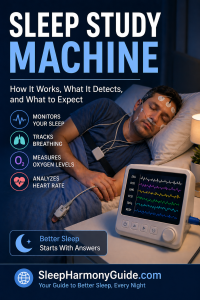
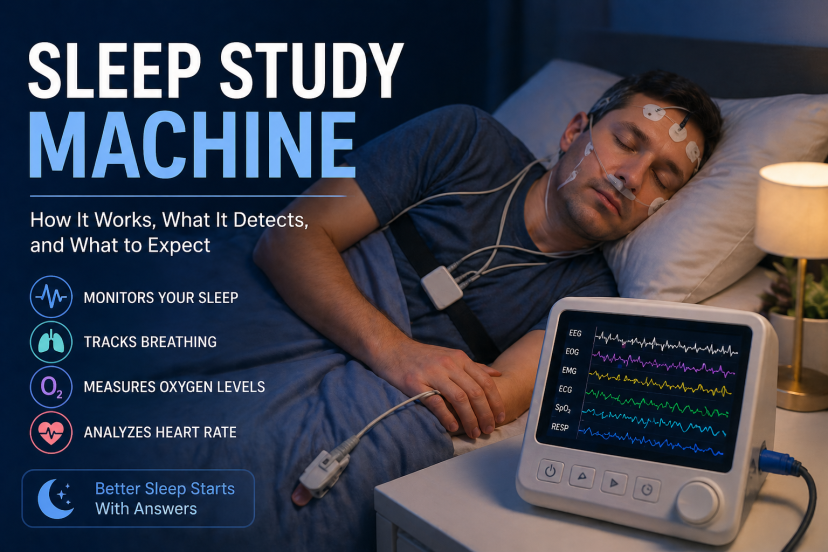
A sleep study machine is a medical device used during a sleep study (also called polysomnography) to monitor your body while you sleep.
It tracks key functions like:
- Brain activity
- Breathing patterns
- Heart rate
- Oxygen levels
- Body movements
👉 The goal is to identify sleep disorders and understand why your sleep isn’t working properly.

🧠 What Does A Sleep Study Machine Measure?
A sleep study machine collects multiple types of data at the same time.
Here’s what it typically tracks:
🧠 Brain Activity (EEG)
- Shows sleep stages (light, deep, REM)
- Helps detect disruptions in sleep cycles
💓 Heart Rate (ECG)
- Monitors your heart rhythm during sleep
- Detects irregularities
😮💨 Breathing Patterns
- Tracks airflow through your nose and mouth
- Detects pauses in breathing
🩸 Oxygen Levels
- Measures how much oxygen is in your blood
- Drops may indicate sleep apnea
🦵 Body Movements
- Tracks movement, restlessness, or limb activity
👉 All of this helps doctors understand how well you’re actually sleeping.
🛏️ Types Of Sleep Study Machines
There isn’t just one type—there are two main setups:
🏥 1. In-Lab Sleep Study Machine (Polysomnography)
This is the most detailed type.
What It Includes:
- Sensors attached to your head, chest, and legs
- Breathing monitors
- Oxygen sensors on your finger
Pros:
- Most accurate results
- Monitored by professionals
- Detects complex sleep issues
Cons:
- Requires staying overnight in a clinic
- A less natural sleep environment
🏠 2. At-Home Sleep Study Machine
This is a simplified version you can use at home.
What It Includes:
- Breathing sensor
- Finger oxygen monitor
- Chest strap
Pros:
- More comfortable
- Done in your own bed
- Convenient
Cons:
- Less detailed
- May miss certain sleep disorders
👉 Often used to diagnose sleep apnea.
😴 What Conditions Can A Sleep Study Machine Detect?
A sleep study machine helps diagnose several sleep disorders.
Common Conditions:
- Sleep Apnea
Pauses in breathing during sleep - Insomnia (in some cases)
Difficulty falling or staying asleep - Restless Leg Syndrome (RLS)
Uncomfortable urge to move legs - Narcolepsy
Sudden sleep episodes during the day - Periodic Limb Movement Disorder
Repetitive movements during sleep
👉 Sleep apnea is the most common reason for testing.
⚠️ Signs You May Need A Sleep Study Machine
You don’t need a sleep study just because you sleep poorly.

But certain symptoms are strong signals:
- Loud, chronic snoring
- Waking up gasping or choking
- Excessive daytime sleepiness
- Morning headaches
- Difficulty concentrating
- Partner notices breathing pauses
👉 If these sound familiar, a sleep study may help identify the cause.
🛠️ How A Sleep Study Machine Works (Step-By-Step)
Whether in a lab or at home, the process is simple.
⭐ Step 1: Setup
- Sensors are attached to your body
- Equipment is calibrated
🧩 Step 2: Sleep Monitoring
- You sleep normally
- The machine records data overnight
⭐ Step 3: Data Analysis
- Specialists review your results
- Patterns and disruptions are identified
🧩 Step 4: Diagnosis
- A report is created
- Treatment recommendations are provided
😬 What Does It Feel Like To Use One?
Many people worry about discomfort.
Here’s the reality:
- The sensors may feel unusual at first
- You can still move and sleep
- Most people adjust within minutes
👉 It’s not painful—just slightly unfamiliar.
⏳ How Accurate Is A Sleep Study Machine?
In-Lab Study:
- Highly accurate
- Gold standard for diagnosis
At-Home Study:
- Accurate for sleep apnea
- Less reliable for complex issues
👉 If results are unclear, doctors may recommend a lab study.
💰 How Much Does A Sleep Study Cost?
Costs vary depending on location and type.
Typical Range:
- In-lab study: $1,000–$3,000+
- Home test: $150–$500
Insurance often covers it if medically necessary.
🧩 What Happens After The Sleep Study?
Once results are analyzed, your doctor may recommend:
Common Treatments:
- CPAP Machine (for sleep apnea)
- Lifestyle changes (weight, sleep habits)
- Medication (in some cases)
- Behavioral therapy for insomnia
👉 The goal is to improve sleep quality and overall health.
🚫 Common Myths About Sleep Study Machines
❌ “I Won’t Be Able To Sleep With All The Wires”
Most people still sleep enough for accurate results.
❌ “It’s Only For Severe Problems”
Mild symptoms can still benefit from testing.
❌ “Home Tests Are Always Enough”
They’re useful—but not for every condition.
📊 Sleep Study Machine vs Sleep Tracker
Many people confuse these.
Sleep Study Machine:
- Medical-grade
- Highly accurate
- Diagnoses disorders
Sleep Tracker (Watch/App):
- Consumer device
- Estimates sleep patterns
- Not diagnostic
👉 Trackers are helpful—but not a replacement.
🛌 How To Prepare For A Sleep Study
To get accurate results:
Do This:
- Follow your normal routine
- Avoid caffeine late in the day
- Wash hair (for better sensor attachment)
Avoid:
- Napping beforehand
- Alcohol before the test
❓ FAQ: Sleep Study Machine
Is A Sleep Study Machine Safe?
Yes. It’s completely non-invasive and safe.

Can I Move During The Study?
Yes. The sensors allow movement during sleep.
How Long Does It Take?
Usually, one night is enough. See here what happens in a sleep study
Will I Get Results Immediately?
Results are typically reviewed within a few days.
🌟 Final Thoughts: Is A Sleep Study Machine Worth It?
If you’ve been struggling with unexplained sleep issues, a sleep study machine can provide answers you simply can’t get on your own.
It helps identify:
- Breathing problems
- Sleep disruptions
- Underlying conditions
And most importantly…
👉 It gives you a clear path to better sleep.
⚠️ Disclaimer
This content is for informational purposes only and is not intended as medical advice. Always consult a qualified healthcare professional if you have ongoing sleep problems or health concerns.
 Explore more: