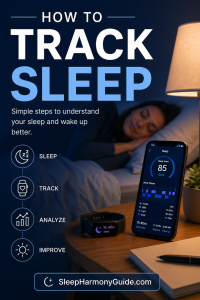
How To Track Sleep (Simple Methods That Actually Work)
🌙 Why Tracking Your Sleep Matters
You go to bed. You wake up.
But what actually happens in between?
If you feel tired, groggy, or low on energy during the day, the problem may not be how long you sleep—but how well you sleep.
That’s where learning how to track sleep becomes powerful.
Because once you see what’s really happening at night, you can:
- Identify poor sleep habits
- Spot patterns and disruptions
- Improve sleep quality over time
👉 You can’t improve what you don’t measure.
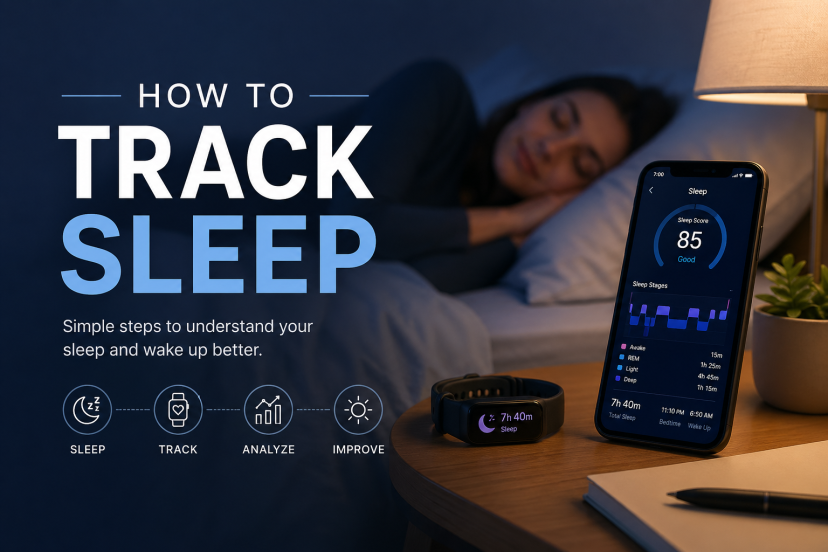
⚡ Quick Answer: How To Track Sleep
If you want to start tracking your sleep tonight, here are your main options:
- Use a sleep tracking app on your phone
- Wear a smartwatch or fitness tracker
- Use a smart ring or wearable device
- Keep a simple sleep journal
- Track your bedtime, wake time, and how you feel
Even basic tracking can help you improve sleep quickly.

🧠 What Should You Track In Your Sleep?
Before choosing a method, it helps to know what matters.
Key Sleep Metrics:
- Total sleep time – how long you sleep
- Sleep stages – light, deep, REM
- Sleep latency – how long it takes to fall asleep
- Wake-ups – how often you wake at night
- Sleep efficiency – time asleep vs time in bed
👉 You don’t need perfect data—just enough to see patterns.
📱 1. Sleep Tracking Apps (Simple And Accessible)
Sleep apps are one of the easiest ways to start.
How They Work:
- Use your phone’s sensors or microphone
- Detect movement and sound
- Estimate sleep cycles
Popular Features:
- Sleep score
- Snoring detection
- Smart alarms
Pros:
- Easy to use
- Low cost (often free)
- Good for beginners
Cons:
- Less accurate than wearables
- Depends on phone placement
👉 Best for: quick, low-effort tracking.
⌚ 2. Smartwatches And Fitness Trackers
Devices like Apple Watch, Fitbit, and Garmin offer more advanced tracking.
How They Work:
- Measure heart rate
- Track movement
- Estimate sleep stages
What They Show:
- Deep sleep vs light sleep
- REM sleep
- Resting heart rate
- Sleep score
Pros:
- More accurate than apps
- Automatic tracking
- Long-term insights
Cons:
- Requires wearing a device overnight
- Can be expensive
👉 Best for: consistent, detailed tracking.
💍 3. Smart Rings And Wearables
Smart rings are becoming popular for sleep tracking.
How They Work:
- Track heart rate, temperature, and movement
- Provide detailed sleep insights
Pros:
- Lightweight and comfortable
- Accurate trend tracking
- Less intrusive than watches
Cons:
- Higher cost
- Limited features beyond sleep
👉 Best for: comfort + high-quality data.
🛏️ 4. Bed-Based Sleep Trackers
These devices sit under your mattress or beside your bed.
How They Work:
- Detect movement and breathing patterns
- Monitor sleep without wearing anything
Pros:
- No need to wear a device
- Passive tracking
Cons:
- Less precise than wearables
- May miss detailed metrics
👉 Best for: people who don’t like wearing devices.
📓 5. Sleep Journal (Highly Underrated)
This is the simplest—and surprisingly effective—method.
What To Track:
- Bedtime
- Wake-up time
- The time it took to fall asleep
- Night awakenings
- How do you feel in the morning
Pros:
- Free
- Helps build awareness
- Great for spotting habits
Cons:
- Manual effort
- No detailed data
👉 Best for: improving habits and consistency.
🔍 How Accurate Are Sleep Trackers?
Let’s be honest:
👉 Most consumer sleep trackers are not 100% accurate.
What They Do Well:
- Track trends over time
- Estimate sleep duration
- Show general patterns
What They Don’t Do Perfectly:
- Precisely measure sleep stages
- Detect all sleep disruptions
👉 Only medical sleep studies provide clinical accuracy.
But for everyday use? Trackers are still very useful.
🧩 How To Actually Use Your Sleep Data
Tracking alone won’t improve your sleep.
👉 You need to use the data.
Look For Patterns:
- Do you sleep better on certain days?
- Does caffeine affect your sleep?
- Are you going to bed too late?
Ask Yourself:
- What improves my sleep score?
- What makes it worse?
🛠️ Simple Adjustments Based On Tracking
Once you see patterns, start making small changes.
Common Fixes:
- Go to bed at the same time every night
- Reduce screen time before sleep
- Limit caffeine after midday
- Improve your sleep environment
👉 Track → adjust → improve.
⏳ How Long Should You Track Sleep?
To get useful insights:
- Track for at least 7–14 days
- Longer tracking = better patterns
Sleep varies night to night—don’t judge based on one night.
🚫 Common Mistakes When Tracking Sleep
Avoid these if you want real results:
❌ Obsessing Over Numbers
Sleep isn’t perfect every night.
❌ Changing Too Many Things At Once
Make small adjustments.
❌ Ignoring How You Feel
Your energy matters more than a “sleep score.”
❌ Expecting Perfect Accuracy
Focus on trends—not exact numbers.
😵💫 What Is “Sleep Anxiety” From Tracking?
Tracking can sometimes backfire.

If you start worrying about your sleep data:
👉 You may create sleep anxiety.
This can make falling asleep harder.
Solution:
- Use tracking as a guide—not a judgment
- Focus on improvement—not perfection
🧘 Combine Tracking With Better Habits
Tracking works best when combined with good sleep habits.
Key Habits:
- Consistent sleep schedule
- Relaxing bedtime routine
- Comfortable sleep environment
- Reduced stimulation at night
📊 Example: How Tracking Improves Sleep
Let’s say your tracker shows:
- You go to bed at different times
- You wake up frequently
Fix:
- Set a consistent bedtime
- Reduce screen use before sleep
👉 After 1–2 weeks, you’ll likely see improvements.
❓ FAQ: How To Track Sleep
What Is The Best Way To Track Sleep?
A smartwatch or fitness tracker offers the best balance of accuracy and convenience.
Are Sleep Apps Worth It?
Yes—for beginners and basic tracking.
Can I Track Sleep Without Devices?
Yes—using a sleep journal.
How Accurate Are Sleep Trackers?
They’re good for trends—but not medical diagnosis.
🌟 Final Thoughts: Tracking Sleep The Smart Way
If you want to know how to track sleep, the key is simple:
👉 Start tracking—but don’t overcomplicate it.
You don’t need expensive tools or perfect data.
Focus on:
- Consistency
- Awareness
- Small improvements
Because better sleep doesn’t come from tracking alone…
👉 It comes from what you do with the information.
⚠️ Disclaimer
This content is for informational purposes only and is not intended as medical advice. Always consult a qualified healthcare professional if you have ongoing sleep problems or health concerns.
 Explore more: