Sleep Maintenance Insomnia: Waking Up At 3 AM Every Night (And How To Fix It)
🌙 When Sleep Breaks In The Middle Of The Night
You fall asleep just fine—then suddenly your eyes open. The room is quiet. The clock glows 3:00 AM. Your mind starts racing, your body feels alert, and sleep seems impossible to return to.
If you’re waking up at 3am every night, you’re not broken—and you’re not alone. This pattern is one of the most common forms of insomnia, known as sleep maintenance insomnia. It’s frustrating, exhausting, and often misunderstood.
The good news? Middle-of-the-night awakenings usually have clear biological and behavioral causes—and even better, they can be fixed. This guide explains why it happens and gives you practical, calming strategies to help you fall back asleep naturally.
😴 What Is Sleep Maintenance Insomnia?
Sleep maintenance insomnia refers to difficulty staying asleep, rather than falling asleep.
Common signs include:
-
Waking up between 2–4 AM most nights
-
Feeling alert or anxious upon waking
-
Trouble falling back asleep for 30 minutes or more
-
Light, fragmented sleep afterward
Unlike occasional bad nights, chronic sleep fragmentation disrupts energy, mood, focus, and stress resilience.
⏰ Why Waking Up At 3 AM Every Night Is So Common
This specific time window is not random. It aligns with natural circadian biology.
🧠 Circadian Rhythm Timing Explained
Your body clock regulates sleep using hormones—mainly melatonin and cortisol.

-
Melatonin promotes sleep and peaks early in the night
-
Cortisol prepares you to wake up and naturally rises in the early morning
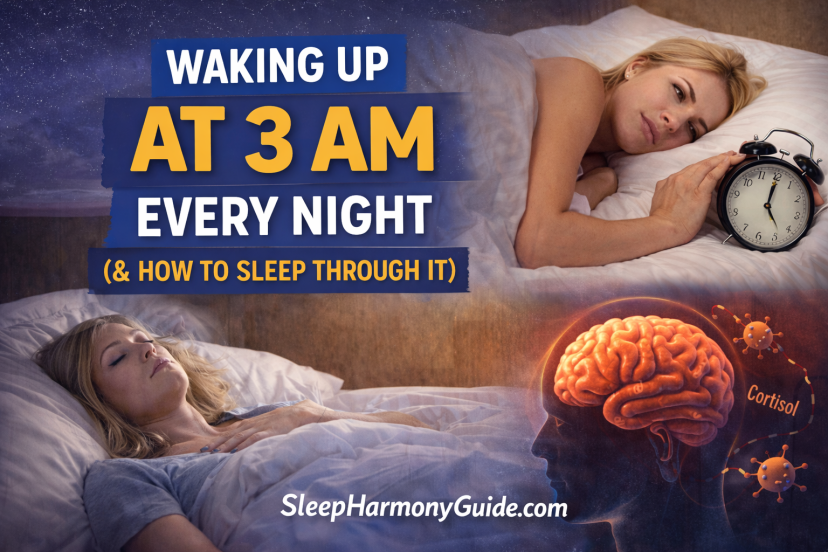
For many people, a premature cortisol spike occurs around 3 AM, pulling them out of sleep before the brain is ready.
⚠️ The Cortisol Spike: Your Hidden Wake-Up Alarm
Cortisol isn’t bad—it’s essential. But timing matters.
When stress, anxiety, or lifestyle habits disrupt regulation, cortisol can surge too early.
Triggers include:
-
Chronic stress or overthinking
-
Blood sugar dips overnight
-
Overtraining or late intense exercise
-
Poor sleep consistency
-
Excess caffeine or alcohol
This cortisol spike creates alertness, shallow breathing, and mental activity—classic stress wakeups.
🔄 Sleep Fragmentation And Its Effects
Repeated awakenings break the natural sleep cycle.
Sleep fragmentation can lead to:
-
Morning fatigue despite enough time in bed
-
Heightened anxiety about sleep
-
Increased nighttime awareness
-
Reduced deep and REM sleep
Over time, the brain starts expecting to wake up at 3 AM—turning it into a learned pattern.
🧠 Stress Wakeups And Racing Thoughts
Many people report that their body wakes first, then the thoughts begin.
Common mental patterns include:

-
Replaying conversations
-
Worrying about the next day
-
Monitoring how long you’ve been awake
-
Fear of not functioning tomorrow
This mental activation reinforces wakefulness and delays falling back asleep.
🌿 How To Fall Back Asleep After Waking At 3 AM
The goal is to lower arousal, not force sleep.
🌿 Immediate Re-Sleep Techniques
-
Slow Breathing: Inhale 4 seconds, exhale 6–8 seconds
-
Body Scan: Relax each muscle group progressively
-
Mental Anchors: Repeat a neutral phrase or visualize a calm place
Avoid checking the clock—time awareness increases cortisol.
💊 Supplements That May Support Nighttime Sleep
When used correctly, gentle supplements can help regulate sleep maintenance.
💊 Melatonin
-
Dose: 0.3–1 mg (very low dose)
-
Timing: 60–90 minutes before bed
-
Best for circadian rhythm misalignment
💊 Magnesium Glycinate
-
Dose: 200–400 mg in the evening
-
Helps calm the nervous system and muscles
🌿 Herbal Teas
-
Chamomile: Mild calming effect
-
Passionflower: Supports anxiety reduction
-
Lemon Balm: May reduce nighttime restlessness
Always start low and consult a professional if unsure.
🛏️ Lifestyle Fixes That Reduce 3 AM Wakeups
⭐ Evening Routine Adjustments
-
Dim lights 90 minutes before bed
-
Avoid news, emails, or stimulating content
-
Keep bedtime consistent—even on weekends
⭐ Nutrition Tweaks
-
Eat a protein-balanced dinner
-
Avoid heavy sugar or alcohol late at night
-
Consider a small bedtime snack if blood sugar dips
✅ Bedroom Environment
-
Cool temperature (65–68°F)
-
White noise machines to mask disruptions
-
Blackout curtains to block early light
Popular U.S. tools include white noise machines, sleep masks, and sleep trackers to identify patterns—not obsess over them.
🚫 What Makes Middle-Of-The-Night Insomnia Worse
-
Clock watching
-
Lying in bed, frustrated for long periods
-
Doom scrolling or bright screens
-
Trying to “force” sleep
-
Sleeping in after a bad night
Sleep pressure rebuilds naturally—interfering with it delays recovery.
💪 How To Prevent Waking Up At 3 AM Long-Term
⭐ Daytime Habits Matter
-
Get morning sunlight within 30 minutes of waking
-
Keep caffeine before 1 PM
-
Exercise earlier in the day
⭐ Stress Regulation
-
Short daily relaxation practices
-
Journaling worries earlier in the evening
-
Cognitive offloading before bed
Consistent days create calmer nights.
🩺 When To See A Doctor Or Sleep Specialist
Seek professional support if:
-
Waking up at 3am every night lasts over 4 weeks
-
Daytime fatigue affects work or safety
-
Anxiety or depression symptoms worsen
-
You rely on sleep medications regularly
-
Loud snoring or breathing issues occur
Sleep disorders, hormone imbalances, or mood conditions may need evaluation.

❓ FAQs: Waking Up At 3 AM Every Night
1. Is waking up at 3 AM a sign of stress?
Yes. Stress and anxiety often trigger early cortisol release.
2. Why does my mind race when I wake up?
Your brain enters a lighter sleep stage, making thoughts more accessible.
3. Should I get out of bed if I can’t sleep?
If awake over 20–30 minutes, do a calm activity in dim light.
4. Is this related to anxiety disorders?
It can be, but many cases are situational and reversible.
5. Does alcohol cause 3 AM wakeups?
Yes. Alcohol fragments sleep and increases nighttime awakenings.
6. Can naps make this worse?
Long or late naps reduce nighttime sleep pressure.
7. Will this ever go away?
Absolutely. With the right adjustments, most people recover fully.
✅ Conclusion: Your Sleep Can Become Whole Again
If you’re waking up at 3 am every night, your body is sending a message—not failing you. By understanding cortisol timing, calming your nervous system, and building consistent habits, you can restore deeper, uninterrupted sleep.

Be patient. Be gentle. And remember—your brain knows how to sleep. Sometimes it just needs reassurance.
⚠️ Disclaimer
This article is for educational purposes only and does not replace medical advice. Always consult a qualified healthcare provider before starting supplements or if sleep problems persist or worsen.
 Explore more: