How To Choose A Sleeping Bag (Complete Beginner-Friendly Guide)
Why Choosing The Right Sleeping Bag Matters
A sleeping bag can make or break your night.
Choose the right one… and you stay warm, comfortable, and well-rested.
Choose the wrong one… and you end up:
- Too cold or overheating
- Tossing and turning
- Waking up tired and uncomfortable
If you’re searching for how to choose a sleeping bag, you’re probably planning a trip—or just want better sleep outdoors.
The good news?
You don’t need to be an expert. You just need to understand a few key factors.
⚡ Quick Answer: How To Choose A Sleeping Bag
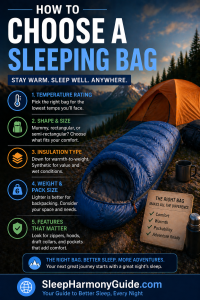
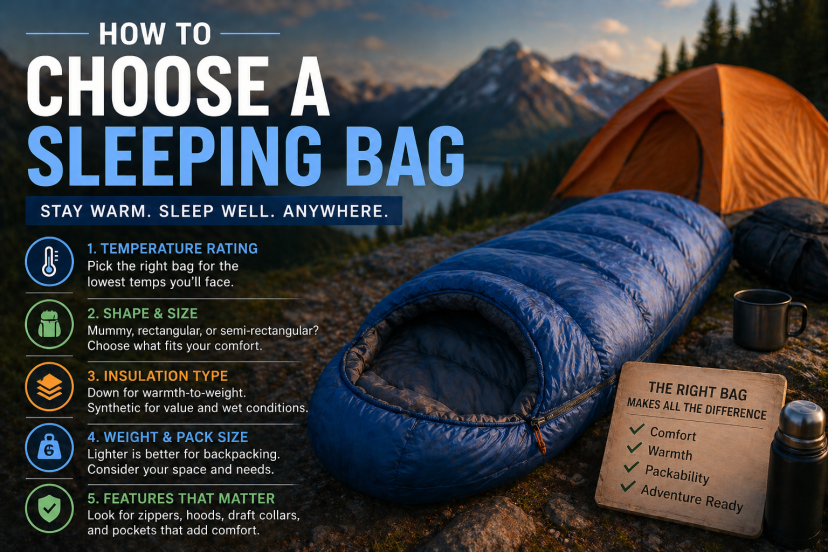
To choose the right sleeping bag, focus on:
- Temperature rating (most important)
- Sleeping bag shape (mummy vs rectangular)
- Insulation type (down vs synthetic)
- Weight and packability
- Size and fit
Get these right, and you’ll sleep comfortably in almost any situation.

🧠 Step 1: Understand Temperature Ratings (Critical)
The most important factor is the temperature rating.
This tells you the lowest temperature the sleeping bag is designed for.
Types Of Ratings:
- Comfort Rating: the temperature at which you’ll sleep comfortably
- Limit Rating: the lowest temperature you can tolerate
- Extreme Rating: survival level—not for normal use
Always focus on the comfort rating, not the extreme number.
🔥 Simple Rule:
- Choose a bag rated 5–10°C (10–15°F) lower than expected temperatures
Why?
Because:
- People feel cold differently
- Conditions can change at night
🛏️ Step 2: Choose The Right Shape
Sleeping bags come in different shapes, and each affects warmth and comfort.
🧱 Mummy Sleeping Bags
Features:
- Tapered shape
- Snug fit
- Hood for head warmth
Pros:
- Best for cold weather
- Excellent heat retention
- Lightweight
Cons:
- Less room to move
Best for: camping in cold conditions or backpacking
🛌 Rectangular Sleeping Bags
Features:
- Roomy, blanket-like design
Pros:
- More comfortable
- Easy to move
- Can unzip into a blanket
Cons:
- Less efficient at retaining heat
Best for: warm weather and casual camping
🔄 Semi-Rectangular (Hybrid)
Features:
- Balance between comfort and warmth
Best for: general use
🧵 Step 3: Pick The Right Insulation
Insulation determines warmth and performance.

🪶 Down Insulation
Made from duck or goose feathers.
Pros:
- Very warm for its weight
- Highly compressible
- Long-lasting
Cons:
- Expensive
- Loses insulation when wet
Best for: dry, cold conditions
🧪 Synthetic Insulation
Made from polyester fibers.
Pros:
- Works even when wet
- More affordable
- Easier to maintain
Cons:
- Heavier
- Less compact
Best for: wet or humid environments
⚖️ Step 4: Consider Weight And Packability
If you’re hiking or traveling:
Weight matters.
Lightweight Bags:
- Easier to carry
- Better for backpacking
Heavier Bags:
- Bulkier
- Better for car camping
📏 Step 5: Get The Right Size And Fit
A good fit improves warmth and comfort.
Why Fit Matters:
- Too large = heat loss
- Too tight = uncomfortable
What To Look For:
- Length matches your height
- Enough shoulder and leg room
- Snug but not restrictive
Many brands offer different sizes—use them.
🌡️ Step 6: Check Seasonal Ratings
Sleeping bags are often categorized by season.
🟢 Summer (1-Season)
- Warm conditions
- Lightweight
🟡 2–3 Season
- Spring, summer, fall
- Most versatile
🔵 Winter (4-Season)
- Cold and freezing temperatures
- Maximum insulation
Most people should choose a 3-season bag.
💡 Step 7: Look At Extra Features
Small features can make a big difference.
Useful Add-Ons:
- Hood – keeps your head warm
- Draft collar – prevents heat loss
- Zipper baffle – blocks cold air
- Double zippers – better ventilation
😴 Step 8: Think About Sleeping Comfort
Warmth is important—but comfort matters too.
Ask Yourself:
- Do you move a lot during sleep?
- Do you sleep hot or cold?
- Do you prefer space or a snug feel?
Choose based on how you actually sleep.
🏕️ Step 9: Match The Bag To Your Activity
Different trips require different bags.
Backpacking:
- Lightweight
- Compact
- Mummy shape
Car Camping:
- Comfort-focused
- Larger and roomier
Cold Weather Camping:
- High insulation
- Down or winter-rated
💰 Step 10: Set A Realistic Budget
Sleeping bags range widely in price.
Budget Range:
- Entry-level: $50–$100
- Mid-range: $100–$250
- Premium: $250+
You don’t need the most expensive—just the right features.
🚫 Common Mistakes To Avoid
Avoid these when choosing:
- Picking based only on price
- Ignoring the temperature rating
- Choosing the wrong size
- Overlooking the insulation type
- Buying too heavy for your needs
🧩 Quick Checklist: How To Choose A Sleeping Bag
Use this before buying:
- ✔️ Correct temperature rating
- ✔️ Suitable shape
- ✔️ Right insulation type
- ✔️ Proper size and fit
- ✔️ Matches your activity
⏳ How Long Does A Sleeping Bag Last?
With proper care:
- Synthetic: 5–10 years
- Down: 10–20+ years
Tips To Extend Life:
- Store loosely (not compressed)
- Keep it clean and dry
- Use a liner
❓ FAQ: How To Choose A Sleeping Bag
What Is The Best Sleeping Bag For Beginners?
A 3-season synthetic sleeping bag is the most versatile option.
Should I Choose Down Or Synthetic?
Down for lightweight warmth, synthetic for wet conditions.
How Do I Know If A Sleeping Bag Is Warm Enough?
Check the comfort rating—not the extreme rating.
Is A Bigger Sleeping Bag Better?
Not always—too much space reduces warmth.
🌟 Final Thoughts: Choose Smart, Sleep Better
If you’ve been wondering how to choose a sleeping bag, it all comes down to a few key decisions.
Focus on:
- Temperature rating
- Fit and shape
- Insulation type
- Your specific needs
You don’t need the perfect bag—just the right one for your situation.
Choose wisely, and you’ll sleep better wherever you go.
⚠️ Disclaimer
This content is for informational purposes only and is not intended as professional or medical advice. Always choose gear based on your specific needs and conditions.
 Explore more: