Why Does My Mattress Sleep Hot? 11 Reasons And Easy Ways To Keep Your Bed Cooler
Mattress Making You Too Hot At Night? Here’s Why And How To Fix It
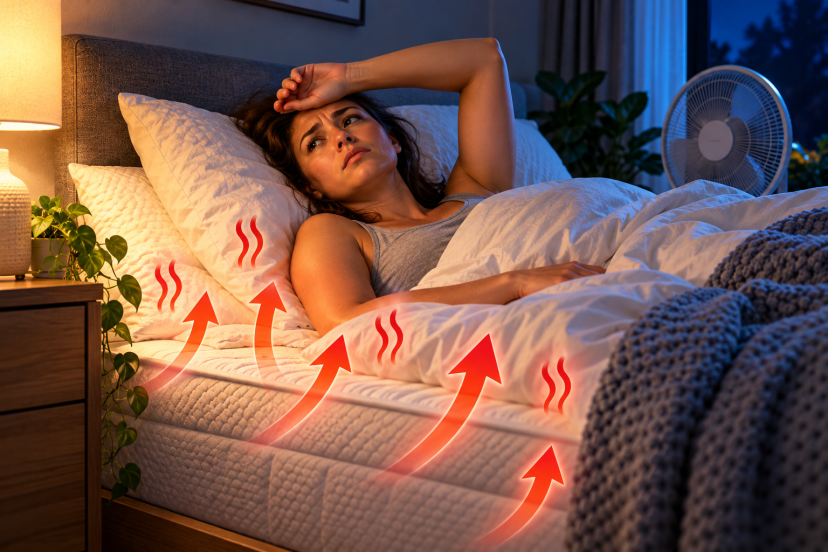
You climb into bed feeling comfortable, but an hour later, you’re tossing and turning, pushing away the blankets, or searching for a cool spot on your pillow. Your bedroom doesn’t seem particularly warm, yet the surface beneath you feels surprisingly hot. If you’ve been wondering, “Why does my mattress sleep hot?”, the answer may have more to do with your mattress materials and bedding than the temperature of your bedroom.
Some mattresses retain body heat, restrict airflow, or create a warm pocket around your body. Others feel comfortable initially but become noticeably warmer after you’ve been lying in the same position for a while.
The good news is that sleeping hot doesn’t automatically mean you need to replace your mattress.
Often, simple changes to your sheets, mattress protector, room temperature, or bed setup can make a meaningful difference.
Understanding what causes heat buildup is the first step toward creating a cooler, more breathable, and more comfortable sleeping environment.
⚡ Quick Answer: Why Does My Mattress Sleep Hot?
Your mattress may sleep hot because it retains body heat, restricts airflow, or works together with bedding that traps warmth and moisture.
Dense memory foam, thick comfort layers, waterproof mattress protectors, and heavy bedding can all contribute.
Your bedroom temperature, humidity, bed foundation, and sleeping position may also affect how warm the mattress feels.
The best first step is to check your bedding and mattress protector before considering a replacement. Breathable materials, lighter covers, and better room ventilation may improve comfort.
Key Takeaways
Most Likely Cause: Heat retention in mattress comfort layers, combined with bedding that limits airflow and moisture evaporation.
Usually Serious? No. Wondering “why does my mattress sleep hot?” usually points to a sleep-environment issue rather than a medical problem.
First Thing To Check: Your mattress protector, sheets, blankets, and bedroom temperature.
Best Solution: Use breathable bedding, improve temperature and humidity control, and consider a more breathable mattress only if simpler changes don’t help.
🔍 Why Some Mattresses Trap More Heat Than Others
Your body naturally produces heat throughout the night.
When you lie on a mattress, some of that heat transfers into the surface beneath you.
How quickly the heat dissipates depends on the mattress materials, construction, surrounding air, and bedding.
Dense foam can limit air movement around your body. Deep contouring may also increase contact between your skin and the mattress surface, reducing opportunities for heat to escape.
By contrast, some mattresses with coil support systems and breathable comfort layers allow greater internal airflow.
However, no mattress material guarantees a cool sleeping experience.
A breathable mattress can still feel hot when covered with thick bedding or placed in a warm, humid bedroom.
Identifying which part of your sleeping setup contributes most to the problem can help you avoid unnecessary purchases.
🔥 11 Common Reasons Your Mattress Sleeps Too Hot
1. Your Mattress Contains Dense Memory Foam
Memory foam is designed to contour around your body and relieve pressure.
However, some traditional memory foam constructions retain warmth and restrict airflow.
As the foam conforms to your body, it can create a close-fitting sleeping surface that feels warmer over time.
What helps: Try lighter bedding and a breathable mattress protector before considering a different mattress.
2. Your Mattress Has Thick Comfort Layers
A mattress doesn’t need to be made entirely of memory foam to feel warm.
Thick layers of foam, fiberfill, or cushioning materials may reduce airflow around your body.
Pillow-top mattresses can sometimes create a particularly insulated sleeping surface.
What helps: Remove unnecessary mattress pads or toppers that add extra insulation.
3. Your Mattress Protector Traps Heat
Waterproof mattress protectors are useful for protecting against spills and moisture.
However, some use films or coatings that reduce moisture vapor transmission and make the sleeping surface feel warmer.
This doesn’t mean every waterproof protector makes you sleep hot.
What helps: Look for a breathable protector with clear material specifications and reviews addressing heat buildup.
4. Your Sheets Don’t Release Heat And Moisture Well
Sheets play an important role in how warm your mattress feels.
Certain tightly woven fabrics and synthetic materials may reduce airflow or feel less comfortable when you perspire.
Fabric weight, weave, and moisture management often matter more than thread count alone.
What helps: Experiment with lightweight cotton percale, linen, or other breathable sheets suited to your preferences.
5. Your Mattress Topper Adds Too Much Insulation
A thick mattress topper can make a firm bed feel softer, but it may also increase heat retention.
Dense foam toppers can create additional body contouring and reduce ventilation near the sleeping surface.
What helps: Temporarily remove the topper for several nights to see whether your sleeping temperature improves.
6. Your Bedroom Temperature Is Too High
Sometimes the mattress isn’t the main problem.
A warm bedroom reduces the temperature difference between your body and the surrounding environment, making it harder to release heat.
Even a breathable mattress may feel uncomfortable when room temperatures remain high.
What helps: Adjust your thermostat gradually and use a fan or air conditioning when appropriate.
7. High Humidity Makes Your Bed Feel Warmer
Humidity affects how efficiently sweat evaporates from your skin.
When indoor humidity is high, your body may have more difficulty cooling itself through evaporation.
This can make bedding feel damp, sticky, or unusually warm.
What helps: Monitor bedroom humidity and aim for a comfortable range, often around 30–50% relative humidity.
8. Your Bed Foundation Restricts Airflow
The support beneath your mattress can influence ventilation.
Some solid platforms limit airflow underneath the bed compared with appropriately spaced slatted foundations.
However, the effect on surface temperature varies with mattress construction.
What helps: Follow the mattress manufacturer’s foundation requirements and avoid blocking recommended ventilation areas.
9. Heavy Blankets Trap Too Much Warmth
Your mattress may feel hot because the bedding above you is preventing heat from escaping.
Thick comforters, multiple blankets, and heavily insulated duvets can create a warm sleeping environment.
What helps: Use lighter layers that can be adjusted throughout the night.
10. Your Mattress Contours Too Closely Around Your Body
A very soft mattress may allow your body to sink deeply into its comfort layers.
This can increase contact with surrounding materials and reduce air circulation near your skin.
The effect depends on the mattress design and your body position.
What helps: Evaluate whether the mattress offers appropriate support and whether a different firmness or construction might improve comfort.
11. Your Mattress Materials Have Aged Or Changed
Over time, mattress comfort layers can soften, compress, or develop body impressions.
These changes may alter how closely the mattress surrounds your body.
An older mattress doesn’t automatically become hotter, but changes in support and contouring can affect comfort.
What helps: Inspect the mattress for sagging, deep impressions, and deteriorating comfort layers.
🧪 How To Confirm What’s Making Your Mattress Sleep Hot
Before buying cooling products, try a simple bedroom experiment.
Change one part of your sleeping setup at a time.
For example:
-
Night 1–2: Use your normal bedding and note when you become uncomfortable.
-
Night 3–4: Replace heavy blankets with lighter bedding.
-
Night 5–6: Remove a nonessential topper or switch to a more breathable protector.
-
Night 7–8: Adjust the bedroom temperature slightly while keeping other conditions consistent.
Record whether you wake feeling hot, sweaty, or uncomfortable.
Also note whether the heat seems concentrated beneath your body or throughout the bedroom.
If changing your bedding improves comfort, your mattress may not be the primary cause.
If the sleeping surface remains unusually warm despite a comfortable room and breathable bedding, mattress construction may be contributing.
🛏️ How To Make A Hot Mattress Feel Cooler
Choose Breathable Sheets
Lightweight cotton percale and linen are worth considering because they often allow good airflow and moisture management.
Avoid assuming that expensive sheets or very high thread counts automatically provide better cooling.
Use A Lighter Mattress Protector
If your current protector feels thick or plastic-like, consider a breathable alternative.
Make sure it still provides the protection your mattress requires.
Improve Bedroom Air Circulation
A ceiling fan, portable fan, or suitable HVAC system can help improve comfort.
Fans cool people primarily by supporting heat transfer and sweat evaporation, rather than lowering the room’s actual air temperature.
Reduce Heavy Bedding
Replace thick comforters with lighter blankets or adjustable layers.
This allows you to adapt your bedding when temperatures change during the night.
Consider A Breathable Mattress Topper
Some latex, wool, and specially designed cooling toppers may improve comfort for certain sleepers.
However, adding any topper changes the mattress surface, and cooling claims vary widely.
Choose based on material construction, return policies, and credible testing rather than marketing promises.
Evaluate Your Mattress If Nothing Else Works
If your mattress consistently feels hot despite reasonable bedroom conditions, a replacement may eventually make sense.
Consider mattresses with breathable comfort layers, suitable support, and construction that allows airflow.
Hybrid and innerspring designs may offer ventilation advantages over some dense all-foam models, although individual performance varies.
⚠️ Common Mistakes To Avoid
Trying to cool your bed can become expensive when you focus on the wrong solutions.
-
Buying a new mattress immediately: Bedding and room temperature may be the real problem.
-
Assuming gel-infused foam stays cool all night: Some materials improve initial cooling without preventing long-term heat buildup.
-
Adding multiple cooling toppers: Extra layers can increase insulation.
-
Ignoring humidity: A cooler thermostat setting may not solve discomfort caused by damp air.
-
Choosing sheets by thread count alone: Weave and fabric construction matter.
-
Blocking mattress ventilation: Follow manufacturer instructions for foundations and airflow.
-
Trusting every “cooling” label: Look for meaningful material information, independent testing, and reasonable return policies.
🌿 How To Prevent Your Mattress From Becoming Too Hot
Long-term comfort comes from managing the entire sleeping environment.
Keep your bedroom at a temperature that feels comfortably cool, and use ventilation or air conditioning when needed.
Choose bedding appropriate for the season.
During warmer months, lightweight sheets and blankets may provide enough coverage without excessive insulation.
Wash bedding according to care instructions to remove accumulated body oils and maintain fabric comfort.
Inspect your mattress protector periodically, especially if its materials have become stiff or damaged.
Keep the bed foundation compatible with the mattress and maintain appropriate airflow.
Finally, reassess your bedding when seasonal temperatures change.
A setup that feels comfortable in winter may become too warm during summer.
❓ Frequently Asked Questions
1. Why Does My Memory Foam Mattress Get So Hot?
Some memory foam mattresses retain heat because dense foam and close body contouring restrict airflow around the sleeping surface. Bedding, room temperature, and mattress construction also influence the result.
2. Can A Mattress Protector Make My Bed Hotter?
Yes. Some protectors reduce airflow or moisture vapor transmission, particularly those with less breathable waterproof layers. A well-designed breathable protector may feel more comfortable.
3. Are Hybrid Mattresses Cooler Than Memory Foam Mattresses?
Some hybrid mattresses provide better internal airflow because of their coil support systems. However, thick foam comfort layers can still retain heat, so construction matters more than the mattress category alone.
4. Do Cooling Mattress Toppers Actually Work?
Some toppers may improve initial surface comfort or moisture management. However, results vary, and passive cooling materials don’t necessarily keep a bed cool throughout the night.
5. What Type Of Sheets Are Best For A Hot Mattress?
Lightweight cotton percale, linen, and other breathable fabrics are popular options. The best choice depends on fabric construction, personal preference, and how well the sheets manage moisture.
6. What Bedroom Temperature Is Best For Hot Sleepers?
Many adults prefer a relatively cool bedroom, often somewhere around 60–67°F (15.5–19.5°C), but this isn’t a universal requirement. Choose a temperature that supports comfort without making the room excessively cold.
7. Can A Mattress Become Hotter As It Gets Older?
It can feel warmer if aging comfort layers soften or develop impressions that increase body contact. However, aging doesn’t necessarily increase heat retention in every mattress.
💭 Final Thoughts On Why Does My Mattress Sleep Hot
If your mattress feels uncomfortably hot at night, the problem may come from a combination of mattress materials, bedding, humidity, and bedroom temperature.
Start with the easiest changes.
Try lighter sheets, remove unnecessary toppers, inspect your mattress protector, and improve room ventilation.
These adjustments may make your bed noticeably more comfortable without requiring an expensive replacement.
If heat buildup continues despite these improvements, evaluate whether your mattress construction is suited to your sleeping preferences.
The goal isn’t to find a mattress that feels cold all night. It’s to create a balanced sleeping environment that allows your body to release heat comfortably and enjoy more restful sleep.
Disclaimer
This article is intended for general educational and informational purposes only. It does not replace professional medical advice, diagnosis, or treatment. Mattress temperature and sleep comfort vary depending on individual preferences, health, room conditions, and bedding materials. Persistent or unexplained night sweats, fever, or other concerning symptoms should be discussed with a qualified healthcare professional. Always follow mattress manufacturer instructions when changing protectors, toppers, or bed foundations.
Explore more:
- How To Block Traffic Noise In Bedroom
- Best Humidity For Sleeping: The Ideal Range
- Why Do I Wake Up Congested Every Morning?