Why Is My Bedroom Cold Even With The Heat On? 11 Common Causes And Easy Fixes
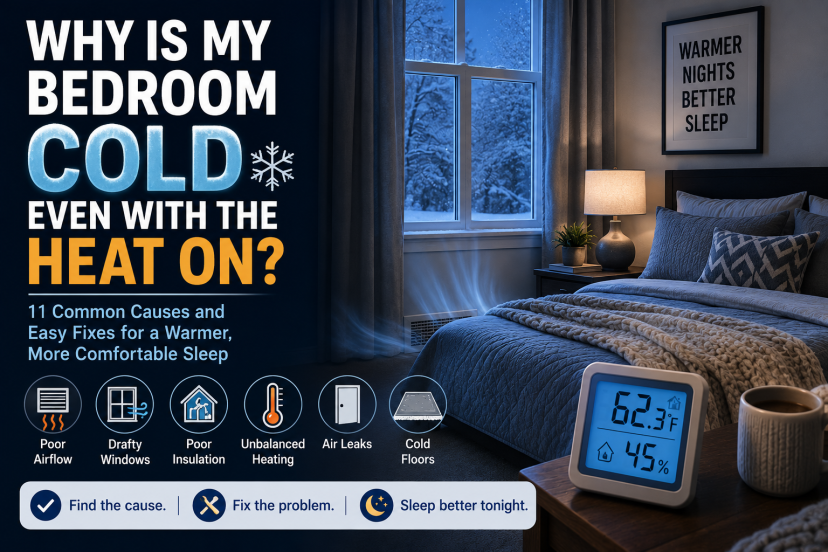
If you’ve been wondering, why is my bedroom cold even with the heat on, you’re not alone. It’s frustrating when the rest of your home feels warm and comfortable, yet your bedroom remains chilly no matter how high you set the thermostat. A cold bedroom can make it difficult to fall asleep, leave you waking up feeling uncomfortable, and even increase your heating bills as you try to compensate.
Fortunately, a bedroom that stays cold usually isn’t caused by one major problem. Poor airflow, blocked vents, drafty windows, inadequate insulation, or an unbalanced heating system are among the most common reasons. In many cases, simple improvements can make a noticeable difference.
This guide explains why your bedroom stays cold despite the heating being on, how to identify the underlying cause, and practical ways to create a healthier, quieter, warmer, cleaner, and more comfortable bedroom for better sleep.
Why Is My Bedroom Cold Even With The Heat On?
If your bedroom stays cold even with the heat on, the most likely causes are restricted airflow, blocked or closed heating vents, poor insulation, air leaks around windows or doors, or an HVAC system that isn’t distributing warm air evenly. Checking airflow first and sealing drafts can often solve the problem without major repairs.
❄️ Why This Happens – How To Identify The Problem
A bedroom can remain cold even when the heating system is working normally because not every room receives the same amount of warm air. Rooms farther from the furnace or heat pump often receive less airflow, while drafts and poor insulation allow warm air to escape faster than it can be replaced.
Start by asking yourself:
- Is only one bedroom cold?
- Is the room colder near windows?
- Does warm air come from the heating vent?
- Does the room improve after opening the bedroom door?
- Is the bedroom above a garage or near an exterior wall?
- Does the problem only happen during very cold weather?
These observations can help narrow down the cause.
🔥 The Most Common Causes
1. Poor Airflow From The Heating System
The most common reason a bedroom stays cold is insufficient warm airflow.

Possible causes include:
- Dirty HVAC filters
- Long duct runs
- Closed dampers
- Blocked ducts
- Airflow imbalance
If warm air barely reaches the room, the temperature may never catch up with the rest of the house.
2. The Heating Vent Is Blocked
Furniture can accidentally block warm air from circulating.
Check whether the vent is covered by:
- A bed
- A dresser
- Curtains
- Storage boxes
- Rugs
Even partial blockage reduces heating efficiency.
3. Drafty Windows
Older windows often allow cold outdoor air to leak inside.
Signs include:
- Cold air near the glass
- Curtains moving slightly
- Condensation
- Cold window frames
Drafts can make the room feel much colder than the thermostat reading.
4. Air Leaks Around Doors
Warm air escapes surprisingly quickly through small gaps.
Common leak locations include:

- Door frames
- Window frames
- Baseboards
- Electrical outlets on exterior walls
Sealing these gaps often provides immediate improvement.
5. Poor Wall Or Attic Insulation
Bedrooms on upper floors or exterior corners lose heat faster when insulation is inadequate.
Poor insulation allows warm indoor air to escape while cold outdoor temperatures penetrate the room.
6. The Bedroom Is Far From The Furnace
Bedrooms located at the end of the duct system often receive less heated air.
By the time warm air reaches the room, airflow and temperature may have decreased considerably.
7. Closed Or Dirty HVAC Dampers
Some duct systems use adjustable dampers to control airflow.
If a damper is partially closed, your bedroom may receive far less heated air than other rooms.
A professional HVAC inspection can identify this problem.
8. Cold Floors Make The Room Feel Colder
Even if the air temperature is acceptable, cold flooring affects comfort.
Hardwood, tile, and laminate flooring often feel much colder than carpet during winter.

Area rugs can significantly improve comfort.
9. Your Bedroom Door Is Closed
Keeping the bedroom door closed may reduce warm air circulation in certain homes.
Opening the door slightly can improve airflow and help equalize temperatures between rooms.
10. The Heating System Needs Maintenance
A poorly maintained furnace or heat pump may struggle to deliver consistent warmth.
Possible issues include:
- Dirty burners
- Blower problems
- Worn components
- Dirty filters
Annual maintenance helps maintain efficient heating.
11. Your Thermostat Doesn’t Reflect Bedroom Temperature
Most thermostats are installed in central hallways or living rooms.
If those areas warm up first, the heating system may shut off before your bedroom reaches a comfortable temperature.

✅ How To Confirm The Cause
Start with a few simple checks.
Place a thermometer in the bedroom and compare it with temperatures in other rooms.
Hold your hand near the heating vent to confirm warm airflow.
Inspect windows and doors for noticeable drafts.
Replace the HVAC filter if it appears dirty.
Open the bedroom door for several hours to see whether the room becomes warmer.
If the bedroom remains several degrees colder than nearby rooms despite these checks, the problem may involve insulation or ductwork.
🛠️ How To Fix It
Many cold bedrooms improve with a combination of simple upgrades.
Helpful solutions include:
- Open all heating vents completely.
- Move furniture away from vents.
- Replace HVAC filters every 1–3 months.
- Seal air leaks with weatherstripping or caulk.
- Install insulated curtains.
- Add area rugs over cold flooring.
- Improve attic or wall insulation if necessary.
- Schedule annual HVAC maintenance.
- Have your ductwork inspected for leaks or balancing issues.
- Consider a smart vent or zoned heating system if temperature differences persist.
Most homeowners notice better comfort after addressing airflow and draft issues.

⚠️ Mistakes To Avoid
Avoid these common mistakes:
- Closing vents in warmer rooms.
- Blocking heating vents with furniture.
- Ignoring dirty HVAC filters.
- Increasing the thermostat dramatically instead of fixing airflow problems.
- Overlooking small drafts around windows and doors.
- Assuming the furnace is failing before checking simpler causes.
These mistakes often waste energy without solving the underlying issue.
🌿 How To Prevent It
Keeping your bedroom warm throughout winter is much easier with regular maintenance.
Helpful habits include:
- Replace HVAC filters regularly.
- Keep vents clean and unobstructed.
- Seal drafts before winter arrives.
- Maintain attic insulation.
- Schedule annual furnace maintenance.
- Use insulated curtains during cold weather.
- Keep indoor humidity between 30% and 50% for improved comfort.
- Rearrange furniture so airflow remains unrestricted.
These simple steps help maintain a warmer, healthier, and more comfortable sleeping environment.
❓ Frequently Asked Questions
Why is only my bedroom cold?
Usually because of reduced airflow, poor insulation, blocked vents, or drafts affecting that specific room.
Can dirty HVAC filters make one bedroom colder?
Yes. Dirty filters reduce airflow throughout the system, and rooms farthest from the furnace often experience the biggest drop in heating.
Should I close vents in warmer rooms?
No. Closing vents can disrupt airflow and reduce heating efficiency throughout the home.
Can poor insulation make my bedroom cold?
Yes. Heat escapes much faster through poorly insulated walls, ceilings, and attics.
What is a comfortable bedroom temperature during winter?
Most people sleep comfortably with a bedroom temperature between 60°F and 67°F (15.5°C to 19.5°C), although individual preferences vary.
📌 Final Thoughts
If you’ve been asking why is my bedroom cold even with the heat on, the problem is usually related to airflow, insulation, drafts, or uneven heating rather than a major heating system failure.
Begin by checking the easiest fixes first: ensure vents are open, replace dirty HVAC filters, seal drafts, and improve insulation where needed. If your bedroom still stays much colder than the rest of the house, an HVAC professional can inspect the ductwork and balance your heating system.
Creating a consistently warm bedroom helps improve sleep comfort, reduces unnecessary heating costs, and makes your bedroom a more relaxing place to unwind during colder months.
⚠️ Disclaimer
This article is intended for informational and educational purposes only and should not be considered professional HVAC, construction, or medical advice. Every home is different, and heating problems may have multiple causes. If your bedroom remains unusually cold despite trying these recommendations, or if you suspect a furnace, heat pump, or ductwork issue, consult a qualified HVAC professional for a complete evaluation.
Explore more:
- Why Does My Mattress Sleep Hot?
- Best Humidity For Sleeping: The Ideal Range
- Why Do I Wake Up Congested Every Morning?