Why Is My Bedroom Too Bright At Night? 10 Common Causes And Easy Ways To Make It Darker
Too Much Light In Your Bedroom? Here’s Why It Happens And How To Fix It
Have you ever turned off your bedroom lights, climbed into bed, and realized the room still isn’t dark enough? Maybe a streetlight shines through your curtains, your alarm clock glows across the room, or headlights occasionally sweep across the ceiling. If you’re wondering, “Why is my bedroom too bright at night?” the problem may be coming from several sources you haven’t noticed.
Even small amounts of unwanted light can make a bedroom feel less restful, especially if you’re sensitive to brightness when trying to fall asleep.
Your sleeping environment plays an important role in supporting your body’s natural sleep-wake cycle. Darkness helps signal that it’s nighttime, while certain types of light exposure can interfere with the normal timing of melatonin release.
Fortunately, you don’t need an expensive bedroom renovation to reduce nighttime brightness.
By identifying where unwanted light enters your room and making a few practical changes, you can create a darker, calmer, and more comfortable place to sleep.
Why Is My Bedroom Too Bright At Night?
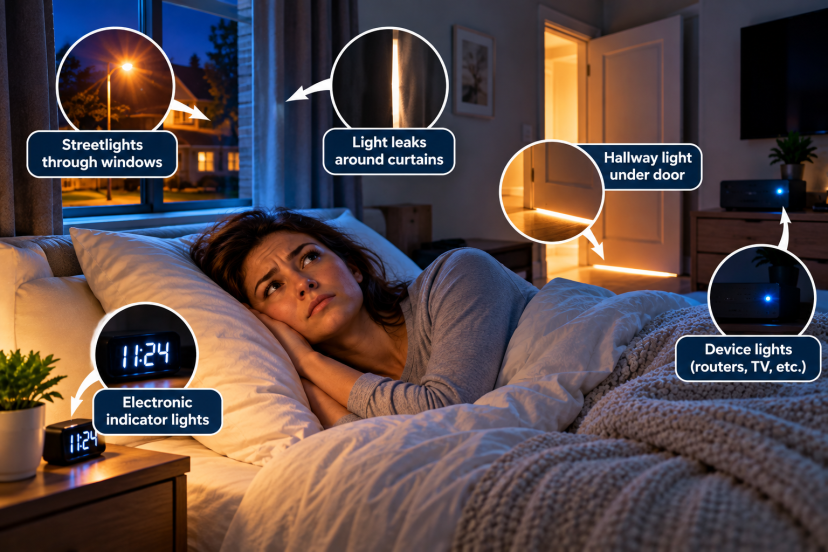
Your bedroom may be too bright at night because of outdoor streetlights, poorly fitted curtains, electronic displays, hallway lighting, neighboring buildings, or reflective surfaces.
Even when your main lights are switched off, small gaps around windows and doors can allow unwanted light into the room.
The most effective solutions include properly fitted blackout window coverings, reducing electronic indicator lights, sealing light gaps, and using dim, warm-colored lighting before bedtime.
Key Takeaways
Most Likely Cause: Outdoor lighting entering through windows, combined with indoor electronic lights and poorly fitted window coverings.
Usually Serious? No. Wondering “why is my bedroom too bright at night?” usually points to an environmental comfort issue rather than a serious problem.
First Thing To Check: Look for light leaking around curtains, windows, bedroom doors, and electronic devices.
Best Solution: Install effective blackout coverings, eliminate unnecessary light sources, and create a dimmer evening environment.
🔍 Why Bedroom Brightness Matters For Sleep
Your body follows an internal approximately 24-hour rhythm called the circadian rhythm.
Light is one of the strongest environmental signals influencing this rhythm.
During the day, natural light helps support alertness and reinforces your sleep-wake schedule.
At night, reduced light exposure helps your body prepare for sleep.
Bright light, particularly light containing substantial short-wavelength blue light, can suppress melatonin and affect circadian timing.
However, the effects depend on brightness, timing, duration, and individual sensitivity.
A small indicator light isn’t equivalent to a bright overhead lamp, but it may still be visually distracting.
The goal isn’t necessarily perfect darkness. It’s to reduce unnecessary light and create an environment that feels comfortable and supports restful sleep.
💡 10 Common Reasons Your Bedroom Is Too Bright At Night
1. Streetlights Shine Through Your Windows
Streetlights are among the most common sources of unwanted bedroom illumination.
If your window faces a road, parking lot, or sidewalk, outdoor lighting may enter throughout the night.
The problem can become more noticeable when your bed faces the window.
What helps: Install well-fitted blackout curtains or shades and address gaps around their edges.
2. Your Curtains Don’t Block Enough Light
Not all curtains are designed to darken a bedroom.
Lightweight fabrics, decorative curtains, and some room-darkening panels allow noticeable light transmission.
Even blackout fabric may perform poorly when the curtain doesn’t cover the entire window.
What helps: Choose blackout-lined curtains that extend beyond the window frame on all sides.
3. Light Leaks Around The Curtain Edges
You may have blackout curtains but still notice bright strips of light along the sides or top.
This happens when window coverings don’t fit closely enough.
The gap between the curtain rod and wall can be particularly troublesome.
What helps: Consider wraparound curtain rods, side channels, or closely fitted blackout roller shades.
4. Electronic Devices Have Bright Indicator Lights
Alarm clocks, televisions, chargers, routers, and air purifiers often contain small LEDs.
In a dark bedroom, these lights can become surprisingly noticeable.
Some devices also illuminate their displays whenever they detect movement.
What helps: Dim displays, turn off unnecessary indicators, or use manufacturer-approved light-blocking covers.
Never cover ventilation openings or safety warning lights.
5. Hallway Light Enters Under Your Door
A bright hallway, bathroom, or living room can illuminate your bedroom through the gap beneath the door.
This is especially common in apartments and homes with open floor plans.
What helps: Install a suitable door sweep or light-blocking draft stopper, provided it doesn’t interfere with door operation or required ventilation.
6. Passing Cars Create Sudden Flashes
Headlights can produce moving patterns of light across bedroom walls and ceilings.
These brief changes may be particularly distracting when you’re trying to fall asleep.
Ground-floor bedrooms and rooms facing driveways are often more exposed.
What helps: Use blackout shades that fit tightly against the window opening.
7. Neighboring Buildings Have Bright Exterior Lights
Security floodlights, balcony lights, illuminated signs, and neighboring windows can create unwanted brightness.
Unlike passing headlights, these lights may remain on for hours.
What helps: Improve window coverings and, when appropriate, discuss persistent light intrusion respectfully with neighbors or property management.
8. Your Bedroom Has Reflective Surfaces
Mirrors, glossy furniture, pale walls, and glass surfaces can reflect incoming light.
These surfaces don’t create light themselves, but they can spread existing illumination around the room.
A mirror facing a window may make an outdoor light source more noticeable.
What helps: Reposition mirrors and reflective objects that direct light toward your bed.
9. Your Nightlight Is Too Bright
Nightlights can improve visibility when walking through a bedroom at night.
However, a bright nightlight positioned near the bed may create unnecessary illumination.
What helps: Choose a dim, warm-colored nightlight positioned low to the floor, preferably with motion activation.
Keep pathways and potential obstacles safely visible when needed.
10. Your Bedroom Faces Early Morning Sunlight
Sometimes the problem isn’t artificial light but sunrise.
East-facing windows may allow strong morning light into the room, especially during summer.
This can be disruptive if your preferred wake-up time is later.
What helps: Use blackout window coverings and consider a sleep mask if additional darkness is needed.
🧪 How To Identify Where Unwanted Bedroom Light Comes From
Before buying new curtains or shades, perform a simple nighttime light inspection.
Wait until it’s dark outside and switch off your bedroom lights.
Allow your eyes a few minutes to adjust.
Then examine the room systematically:
-
Check the windows. Look for streetlights, neighboring buildings, and light leaking around curtains.
-
Inspect electronic devices. Identify glowing displays and indicator lights.
-
Look around the bedroom door. Check whether hallway lighting enters through gaps.
-
Observe reflective surfaces. Notice whether mirrors or glossy furniture redirect light.
-
Lie in your normal sleeping position. Identify which light sources are visible from your pillow.
You can also take a photograph using consistent camera settings to compare the room before and after making improvements.
Remember that automatic camera exposure can make a dark bedroom appear brighter than it really is.
🛏️ How To Make Your Bedroom Darker At Night
Install Properly Fitted Blackout Curtains
Blackout curtains are often the simplest solution for windows exposed to outdoor lighting.
Choose panels wide enough to extend beyond the window frame.
Mounting the curtain rod above the window and using a wraparound design can help reduce light leakage.
Consider Blackout Roller Shades
Roller shades can provide a neat, compact alternative to curtains.
For better light control, consider models with side channels or a close-fitting frame.
Standard roller shades may still allow light around their edges.
Reduce Electronic Light Sources
Turn off unnecessary displays and use dimming features where available.
If a device doesn’t need to remain in the bedroom, consider relocating it.
Rearrange Your Bed
Moving your bed away from direct light exposure may improve comfort without requiring major changes.
Avoid placing your pillow directly opposite a bright window or illuminated doorway when possible.
Use A Comfortable Sleep Mask
A soft, properly fitted sleep mask can provide additional darkness, particularly when traveling or renting a home where window modifications aren’t possible.
Choose one that doesn’t place uncomfortable pressure on your eyes.
Choose Better Evening Lighting
Use dimmable bedside lamps instead of bright overhead lighting before bed.
Warm-colored bulbs may feel more comfortable in the evening, but brightness and exposure duration also matter.
Keep lighting sufficient for safe movement.
⚠️ Common Mistakes To Avoid
Trying to darken your bedroom can lead to disappointing results if you overlook important details.
-
Buying blackout curtains that are too narrow: Light may continue entering around the sides.
-
Ignoring the top of the window: A large gap above curtains can allow significant light leakage.
-
Using dark-colored curtains without blackout lining: Fabric color alone doesn’t guarantee light-blocking performance.
-
Covering electronics unsafely: Blocking vents or warning indicators can create hazards.
-
Making nighttime pathways completely invisible: Some low-level lighting may be necessary for safe movement.
-
Relying only on blue-light filters: Screen brightness and overall light exposure still matter.
Focus on controlling actual light sources rather than simply choosing darker bedroom decorations.
🌿 How To Prevent Nighttime Brightness From Becoming A Problem
Once you’ve improved your bedroom lighting, a few consistent habits can help maintain a comfortable environment.
Close blackout curtains before bedtime and check that the edges are properly positioned.
Keep unnecessary electronic displays switched off.
Use warm, dim lighting during your evening routine, and avoid leaving bright overhead lights on immediately before sleep.
If outdoor lighting changes seasonally, inspect your bedroom again when sunrise and sunset times shift.
For renters, removable blackout shades, tension-mounted curtains, and comfortable sleep masks can provide practical alternatives to permanent installations.
Also remember that daytime light exposure is beneficial for maintaining a regular circadian rhythm.
The goal is to enjoy appropriate light during the day and reduce unnecessary brightness at night.
❓ Frequently Asked Questions
1. Is It Better To Sleep In Complete Darkness?
A dark bedroom generally supports healthy sleep conditions by reducing unnecessary nighttime light exposure. However, complete darkness isn’t essential for everyone, and low-level lighting may be appropriate for safety.
2. Can Streetlights Outside My Window Affect My Sleep?
Yes. Outdoor lighting can enter bedrooms and create unwanted nighttime illumination. Its effects depend on brightness, exposure, timing, and individual sensitivity.
3. Do Blackout Curtains Really Make A Difference?
Properly installed blackout curtains can significantly reduce incoming light. Their effectiveness depends on the fabric, window coverage, and gaps around the edges.
4. What Is The Best Color Light For A Bedroom At Night?
Dim, warm-colored lighting is generally preferable to bright, cool-white lighting before bedtime. However, keeping light levels low is important regardless of color.
5. Can A Small LED Light Keep Me Awake?
A small LED may be distracting, particularly when directly visible from your pillow. Its physiological effects are generally much smaller than those of bright room lighting, but reducing unnecessary light can improve comfort.
6. How Can I Darken My Bedroom Without Buying New Curtains?
Try dimming electronic displays, repositioning your bed, blocking safe-to-cover indicator lights, adjusting existing curtains, or using a comfortable sleep mask.
7. Should I Use Blackout Curtains If I Work Night Shifts?
Blackout curtains may be particularly helpful for people who need to sleep during daylight hours. Combining effective light control with consistent sleep scheduling and a quiet bedroom can support daytime sleep.
💭 Final Thoughts
If your bedroom remains too bright after switching off the lights, the problem is usually a combination of outdoor illumination, light leaks, electronic devices, and window coverings that don’t provide enough protection.
Start by identifying the brightest sources visible from your bed.
Then make targeted improvements, such as installing better-fitting blackout curtains, dimming electronic displays, or reducing hallway light.
You don’t need to redesign your entire bedroom.
A few thoughtful changes can create a darker, calmer sleeping environment that feels more comfortable and better supports your natural sleep-wake cycle.
Disclaimer
This article is provided for general educational and informational purposes only. It is not intended to replace professional medical advice, diagnosis, or treatment. Sleep quality depends on multiple factors, and reducing bedroom light may not resolve every sleep problem. If you experience persistent insomnia, excessive daytime sleepiness, or other significant sleep disturbances, consult a qualified healthcare professional. Always maintain adequate lighting for safe nighttime movement and follow electrical and fire-safety recommendations when modifying bedroom lighting.
Explore more:
- Why Does My Mattress Sleep Hot?
- Why Is My Bedroom Cold Even With The Heat On?
- Why Do I Wake Up Congested Every Morning?