Why Is My Bedroom Humid? 10 Common Causes And Easy Ways To Fix It
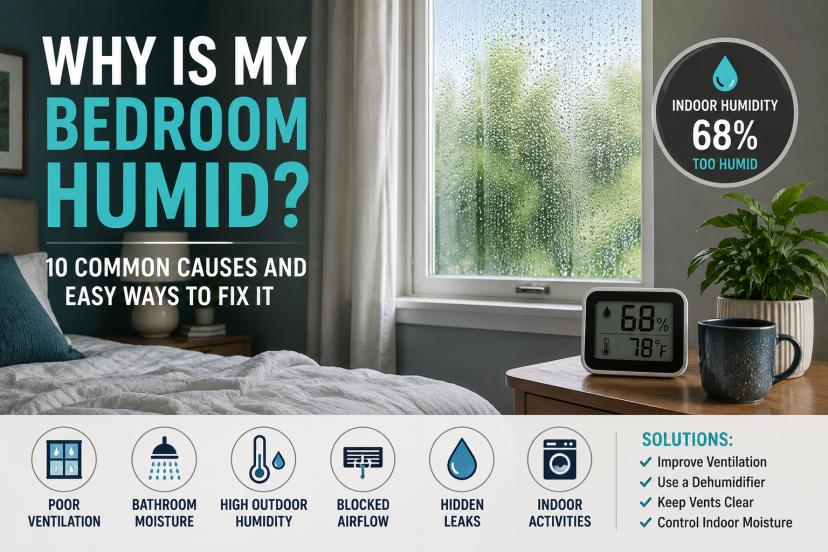
If you’ve been asking why is my bedroom humid? You’re not alone. A humid bedroom can make it difficult to sleep comfortably, leaving you feeling hot, sticky, and restless throughout the night. High humidity can also contribute to musty odors, condensation on windows, mold growth, and poor indoor air quality if left unchecked.
The good news is that most bedroom humidity problems have practical solutions. Whether the moisture comes from poor ventilation, outdoor weather, your HVAC system, or everyday household activities, identifying the source is the first step toward creating a healthier sleep environment.
This guide explains why your bedroom feels humid, how to identify the most likely cause, and what you can do to make your room cooler, drier, cleaner, and more comfortable for better sleep.
⭐ Quick Answer: Why Is My Bedroom Humid?
A humid bedroom is usually caused by poor ventilation, high outdoor humidity, inadequate air conditioning, or moisture becoming trapped inside the room. Improving airflow, controlling indoor humidity, fixing moisture sources, and maintaining your HVAC system can usually make your bedroom feel cooler, fresher, and much more comfortable.
Key Takeaways
| Most likely cause | Poor ventilation trapping warm, moist air |
| Usually serious? | No, but persistent humidity can encourage mold and dust mites |
| First thing to check | Indoor humidity level, windows, vents, and HVAC airflow |
| Best solution | Improve ventilation, lower indoor humidity, and eliminate moisture sources |
💧 Why This Happens – How To Identify The Problem
Humidity refers to the amount of moisture in the air. While some humidity is necessary for comfort, too much moisture makes the air feel warmer, heavier, and stuffier than it actually is.
Most people feel comfortable when indoor humidity stays between 30% and 50%. Once humidity rises above about 60%, many bedrooms begin feeling uncomfortable.
Common signs include:
- The room feels sticky or clammy.
- You wake up sweaty despite moderate temperatures.
- Windows develop condensation.
- Bedding feels slightly damp.
- A musty smell develops.
- Clothes or towels feel slow to dry.
- The bedroom feels warmer than other rooms.
If several of these symptoms occur regularly, excess humidity is likely contributing to your discomfort.
🌡️ The 10 Most Common Causes
1. Poor Bedroom Ventilation
The most common reason a bedroom becomes humid is that moist air has nowhere to go.
Bedrooms often stay closed for many hours with:
- Closed doors
- Closed windows
- Limited airflow
- Minimal air exchange
Without fresh air entering and stale air leaving, moisture gradually builds up.
2. High Outdoor Humidity
Sometimes the problem isn’t inside your home.
During warm, humid weather, outside air already contains a large amount of moisture. Every time doors or windows are opened, that humid air enters the bedroom.
This is especially noticeable during:
- Summer
- Rainy weather
- Coastal climates
- Tropical regions
3. Air Conditioner Isn’t Removing Enough Moisture
Many people assume the air conditioner only cools the room.
In reality, it also removes humidity.
If your AC system is:
- Dirty
- Oversized
- Undersized
- Low on refrigerant
- Not running long enough
it may struggle to remove enough moisture from the air.
4. Blocked HVAC Vents
Supply and return vents need clear airflow.
Furniture, rugs, curtains, or storage boxes covering vents reduce air circulation and make humidity worse.
Check around:
- Beds
- Dressers
- Nightstands
- Closets
5. Moisture From Nearby Bathrooms
Bathrooms produce large amounts of steam.
If the bathroom exhaust fan isn’t working properly, moisture can easily drift into nearby bedrooms.
Humidity often increases after:
- Hot showers
- Long baths
- Washing floors
6. Too Many Moisture Sources Inside The Room
Bedrooms naturally generate moisture every day.
Common sources include:
- People breathing while sleeping
- Wet towels
- Indoor plants
- Drying clothes indoors
- Humidifiers running continuously
Several small moisture sources together can noticeably raise humidity.
7. Poor Attic Or Roof Ventilation
Heat and moisture can collect in the attic above the bedroom.
Without proper roof ventilation, that trapped heat may transfer downward, making the bedroom feel warmer and more humid.
8. Air Leaks Around Windows And Doors
Warm outdoor air can enter through:
- Worn weatherstripping
- Gaps around windows
- Poorly sealed doors
- Small wall openings
Humid outdoor air continually leaking inside makes climate control more difficult.
9. Water Leaks Or Hidden Moisture
A slow leak behind walls or under flooring may not be immediately visible.
Possible sources include:
- Roof leaks
- Plumbing leaks
- Window leaks
- Condensation inside walls
Persistent humidity combined with musty odors should always be investigated.
10. Dirty Air Filters
A clogged HVAC filter reduces airflow throughout the home.
Reduced circulation often causes:
- Poor cooling
- Uneven temperatures
- Higher humidity
- Increased dust
Replacing a dirty filter is one of the simplest maintenance tasks homeowners can perform.
🔍 How To Confirm The Cause
Finding the source usually takes a few simple observations.
Start by checking:
- Indoor humidity using a hygrometer.
- Whether windows frequently develop condensation.
- HVAC airflow at each bedroom vent.
- Bathroom exhaust fan performance.
- Whether the room feels more humid after showers.
- Signs of water stains or mold.
- Whether humidity is worse during rainy weather.
If humidity consistently measures above 60%, improving moisture control should become a priority.
🛠️ How To Fix It
Fortunately, most bedroom humidity problems can be improved without major renovations.
Improve Ventilation
Allow fresh air to circulate whenever outdoor humidity is lower than indoor humidity.
Open windows when conditions are favorable and create cross-ventilation by opening windows on opposite sides of the home.
Use A Dehumidifier
If your home naturally stays humid, a portable dehumidifier can remove excess moisture efficiently.
Many homeowners notice immediate improvements in:
- Comfort
- Air freshness
- Sleep quality
- Musty odors
Keep HVAC Filters Clean
Replace filters according to the manufacturer’s recommendations.
Improved airflow helps both cooling performance and humidity removal.
Keep Air Vents Unblocked
Move furniture several inches away from supply and return vents.
Allow conditioned air to circulate freely throughout the room.
Run Bathroom Exhaust Fans
Use exhaust fans during and after showers for at least 20 minutes.
This prevents excess moisture from spreading into nearby bedrooms.
Reduce Indoor Moisture
Small adjustments help lower humidity naturally:
- Don’t dry clothes inside the bedroom.
- Limit overwatering houseplants.
- Remove damp towels promptly.
- Fix plumbing leaks quickly.
Seal Air Leaks
Weatherstrip doors and seal window gaps to reduce humid outdoor air entering your bedroom.
Service The Air Conditioner
If your AC no longer removes humidity effectively, professional maintenance may restore proper performance.
⚠️ Mistakes To Avoid
Many homeowners accidentally make humidity problems worse by:
- Running a humidifier unnecessarily.
- Blocking HVAC vents with furniture.
- Ignoring dirty HVAC filters.
- Leaving bathroom doors open after hot showers.
- Assuming colder temperatures automatically remove humidity.
- Overlooking hidden plumbing leaks.
- Never measuring indoor humidity.
Avoiding these habits often leads to noticeable improvements.
🌿 How To Prevent It
Maintaining a comfortable bedroom is much easier than solving chronic humidity problems.
Helpful habits include:
- Keep indoor humidity between 30% and 50%.
- Replace HVAC filters regularly.
- Open windows when outdoor conditions are favorable.
- Use bathroom exhaust fans consistently.
- Clean air vents frequently.
- Repair leaks promptly.
- Maintain your HVAC system annually.
- Avoid unnecessary indoor moisture sources.
These simple practices help keep your bedroom cooler, fresher, and healthier year-round.
❓ Frequently Asked Questions
Is a humid bedroom unhealthy?
Occasional humidity isn’t harmful, but consistently high humidity can encourage mold growth, dust mites, and musty odors while making sleep less comfortable.
What humidity level is best for sleeping?
Most experts recommend maintaining indoor humidity between 30% and 50% for comfort and indoor air quality.
Can a fan reduce humidity?
Fans don’t remove moisture from the air, but they improve air circulation, making the room feel cooler and less stuffy.
Should I leave my bedroom door open?
Leaving the door slightly open may improve airflow if your HVAC system depends on return-air circulation.
Why is only my bedroom humid?
The bedroom may have poorer ventilation, blocked vents, nearby moisture sources, or receive less conditioned air than the rest of the home.
When should I worry about humidity?
If humidity stays above 60%, condensation appears regularly, or you notice mold, water stains, or persistent musty odors, it’s important to identify and address the underlying cause promptly.
🎯 Final Thoughts On Why Is My Bedroom Humid?
If you’ve been wondering why is my bedroom humid, the answer is often a combination of trapped moisture, poor ventilation, and inadequate air circulation. Fortunately, most causes are straightforward to identify and fix.
Simple steps like improving airflow, keeping HVAC filters clean, using bathroom exhaust fans, controlling indoor moisture, and maintaining healthy humidity levels can make a dramatic difference in bedroom comfort. A drier bedroom not only feels cooler and fresher but also supports better sleep, healthier indoor air, and a more pleasant living environment.
📋 Disclaimer
This article is intended for general educational purposes only and should not be considered professional HVAC, building, or medical advice. If your bedroom has persistent high humidity, visible mold, ongoing water damage, or unexplained moisture problems, consult a qualified HVAC technician or home inspection professional to determine and correct the underlying cause.
 Explore more: