Why Do I Wake Up Sweating But My Room Is Cool? 10 Common Causes And What May Help
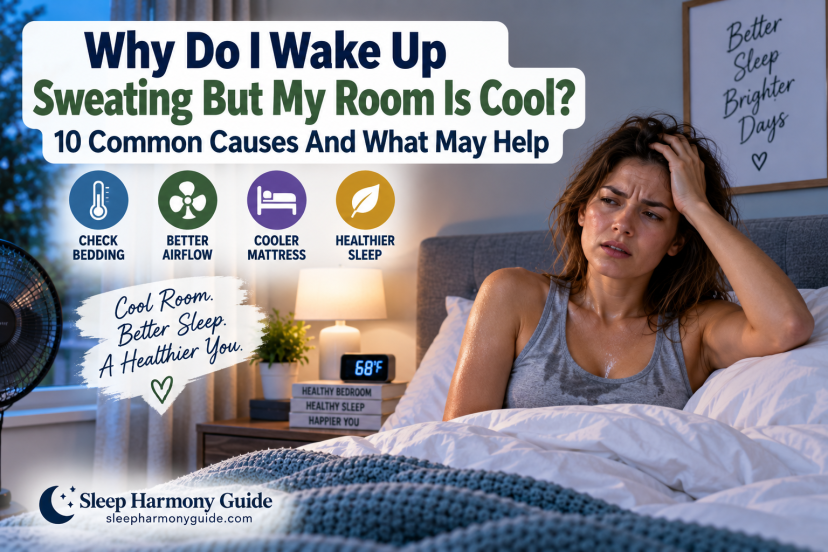
Waking up sweaty can be confusing when your thermostat says the bedroom is already cool. If you’re wondering, why do I wake up sweating but my room is cool, the answer may have less to do with room temperature than with what’s happening underneath your bedding—or inside your body while you sleep.
A cool bedroom doesn’t guarantee that your immediate sleep environment is cool. Heavy comforters, foam mattresses, mattress protectors, pajamas, and limited airflow can trap heat and moisture around your body. Alcohol, stress, hormonal changes, medications, illness, and certain medical conditions may also contribute to nighttime sweating.
Occasional mild sweating after using a heavy blanket usually isn’t alarming. Repeated episodes that soak your clothes or bedding deserve more attention, especially when accompanied by other unexplained symptoms.
Here’s how to troubleshoot your sleep environment first, recognize other possible causes, and know when it’s worth talking with a healthcare professional.
🌡️ Quick Answer: Why Do I Wake Up Sweating But My Room Is Cool?
You can wake up sweating in a cool bedroom if your bedding, mattress, sleepwear, or body is trapping or producing excess heat. Heavy blankets and less-breathable materials are common environmental contributors. Alcohol, stress, hormonal changes, medications, fever, and some health conditions can also cause nighttime sweating. Start by adjusting your bedding and sleepwear, then track whether the sweating continues despite a comfortable bedroom environment.
Key Takeaways
Most likely cause: Your bedding, mattress, mattress protector, or sleepwear is trapping heat even though the surrounding bedroom feels cool.
Usually serious? Occasional mild sweating usually isn’t concerning, but frequent drenching night sweats can sometimes have a medical cause.
First thing to check: Try lighter bedding and breathable sleepwear for several nights and note whether the sweating improves.
Best solution: If you’re asking why do I wake up sweating but my room is cool, optimize the microclimate around your body first and seek medical advice if significant sweating persists.
🔍 Why This Happens – How To Identify The Problem
Your thermostat measures the room, not the temperature underneath your blankets.
Once you get into bed, your body creates its own small microclimate between your skin, pajamas, sheets, mattress, and comforter. Those layers can retain heat and moisture even when the surrounding air feels pleasantly cool.
That’s why someone can feel cold when getting into bed but wake several hours later feeling overheated and sweaty.

The amount of sweating matters too.
Feeling slightly damp after sleeping beneath a heavy comforter is different from repeatedly waking with pajamas or sheets soaked despite sleeping in a comfortably cool environment. The latter is often described as night sweats and may deserve medical evaluation if it continues.
To narrow down the cause, look for patterns involving your bedding, mattress, sleepwear, food and alcohol intake, medications, stress, illness, and other symptoms.
🛏️ The 10 Most Common Causes Of Waking Up Sweaty In A Cool Room
1. Your Bedding Is Too Warm
Your comforter may be the first thing to investigate.
Thick down-style comforters, multiple blankets, flannel sheets, and other insulating bedding can create a warm pocket of air around your body.
This may be helpful on cold winter nights but excessive in a climate-controlled bedroom.
Instead of lowering the thermostat further, experiment with removing one layer.
Choose bedding appropriate for the season and consider using several lighter layers rather than one extremely warm comforter. Layers make it easier to adjust warmth during the night.
2. Your Mattress Is Retaining Heat
Your mattress can affect how warm the bed feels.
Some materials and mattress designs allow less airflow around the sleeper or conform closely to the body, which can make heat feel more noticeable.

Foam mattresses are frequently associated with concerns about sleeping warm, although performance varies considerably by mattress construction.
Before replacing your mattress, test less expensive variables.
Try lighter bedding, breathable sheets, a different mattress protector, and cooler sleepwear. If overheating continues primarily where your body contacts the mattress, the mattress may be contributing.
3. Your Mattress Protector Traps Heat
Waterproof mattress protectors are valuable because they protect a mattress from spills, perspiration, and other moisture.
However, different protectors have different levels of breathability.
If your sweating began after adding a new mattress protector, topper, or pad, remove or replace that item temporarily—while still protecting your mattress appropriately—and compare the results.
Look for a protector designed to balance waterproofing with breathability.
4. Your Pajamas Are Too Insulating
Heavy pajamas can trap heat close to your skin.
Fleece sleepwear, thick socks, sweatpants, and multiple layers may become uncomfortable once your body warms the bed.
Experiment with lighter, loose-fitting sleepwear appropriate for your comfort and climate.

The goal isn’t necessarily to sleep with fewer clothes. It’s to choose layers that help your body remain comfortable without trapping excessive heat and moisture.
5. Humidity Is Making Sweat Feel Worse
Temperature is only one part of bedroom comfort.
High humidity can make perspiration evaporate less efficiently, leaving your skin and bedding feeling damp even when the room isn’t particularly hot.
Use a digital hygrometer to check bedroom humidity.
The U.S. Environmental Protection Agency generally recommends keeping indoor relative humidity below 60%, ideally between 30% and 50% when practical.
If the bedroom feels clammy, look for sources of excess moisture and consider appropriate air conditioning, ventilation, or dehumidification.
6. Alcohol Before Bed
Alcohol can affect sleep and body temperature regulation.
Some people notice increased warmth or sweating after drinking, particularly when alcohol is consumed relatively close to bedtime.

It can also disrupt sleep later in the night even if it initially makes you feel sleepy.
If nighttime sweating tends to occur after drinking, try tracking your intake and symptoms. Reducing or avoiding alcohol near bedtime may help determine whether there’s a connection.
7. Stress, Anxiety, Or Intense Dreams
Your nervous system remains active while you sleep.
Stress, anxiety, nightmares, and emotionally intense dreams can sometimes be accompanied by sweating, a racing heart, or sudden awakening.
If you wake sweaty primarily after vivid dreams or during periods of unusually high stress, the connection may be worth noting.
A consistent wind-down routine, reduced stimulation before bed, relaxation exercises, and addressing ongoing sources of stress may help improve overall sleep comfort.
Persistent anxiety or recurring distressing nighttime episodes can also be discussed with a healthcare professional.
8. Hormonal Changes
Changes in hormones can cause episodes of warmth and sweating regardless of bedroom temperature.
Hot flashes and night sweats are common during the menopausal transition, for example. Other hormonal or endocrine factors can also influence body-temperature regulation.
Environmental improvements such as lighter bedding and breathable sleepwear may make these episodes easier to manage, but they don’t address the underlying cause.
If nighttime sweating is new, persistent, or disruptive, discuss it with a healthcare professional.
9. Medications
Night sweats can occur as a side effect of some medications.
Potential examples can include certain antidepressants and other prescription or over-the-counter medicines, although the likelihood varies by medication and individual.
Don’t stop taking a prescribed medication simply because you suspect it’s causing sweating.
Instead, review the timing of your symptoms and medications and discuss the issue with your doctor or pharmacist. They can help determine whether a medication may be contributing and whether any adjustment is appropriate.
10. Illness Or Another Medical Condition
Sometimes nighttime sweating has little to do with the bedroom.
Fever and infections can cause sweating as the body regulates temperature. Other medical conditions may also be associated with recurrent night sweats.
This doesn’t mean that frequent sweating automatically indicates something serious. Night sweats are a relatively nonspecific symptom with many possible explanations.
However, repeated drenching sweats despite a comfortably cool environment deserve medical attention, particularly when they’re unexplained or accompanied by symptoms such as fever or unintended weight loss.
🧪 How To Confirm The Cause
Begin with a simple sleep-environment experiment.
For several nights, keep the bedroom at your normal comfortable temperature but switch to lighter bedding and breathable sleepwear.
If you use a particularly thick mattress topper or protector, consider whether it corresponds with when the problem began.
Check bedroom humidity with a hygrometer. A room can be cool but still excessively humid.
Next, track the sweating for a week or two.
Record approximately when it happens and whether you had alcohol, unusual stress, an intense dream, illness, or a medication change. Also note whether the sweating is mild or severe enough to soak your pajamas or bedding.
This information can help you identify patterns and can be useful if you eventually discuss the problem with a healthcare professional.
🛠️ How To Reduce Nighttime Sweating And Sleep More Comfortably
Start with your bed rather than your thermostat.
Remove one blanket and see how you sleep. If you use an extremely warm comforter year-round, consider switching to a lighter seasonal option.
Choose breathable sheets and sleepwear that feel comfortable against your skin.
If your mattress feels warm, test your mattress protector or topper before assuming you need an entirely new mattress.
Air movement can also improve comfort. A ceiling or portable fan can circulate bedroom air, although you don’t necessarily need to aim it directly at your body.
If humidity is elevated, address the moisture source and use air conditioning or a dehumidifier when appropriate.
Keep a fresh set of sleepwear nearby if sweating is occasional so you don’t have to remain in damp clothing.
For recurrent sweating that doesn’t respond to environmental adjustments, shift your focus from bedroom troubleshooting to medical evaluation.
🚫 Mistakes To Avoid
One common mistake is continually lowering the thermostat.
If your comforter is trapping heat directly around your body, making the entire bedroom colder may increase energy use without solving the underlying problem.
Another mistake is buying “cooling” products without changing anything else. A cooling pillow or sheet won’t necessarily compensate for an extremely heavy comforter.
Don’t assume every episode of sweating means you have a medical problem, but don’t dismiss persistent drenching night sweats either.
Avoid stopping prescription medications without medical guidance.
And don’t focus only on temperature while ignoring humidity. A cool but humid bedroom can still feel clammy and uncomfortable.
🌿 How To Prevent Waking Up Sweaty
Build your sleep environment around adjustability.
Instead of one extremely heavy blanket, use lighter layers that can be added or removed according to the season.
Choose sleepwear suitable for your body’s normal nighttime temperature rather than dressing according to how cold you feel immediately before getting into bed.
Monitor bedroom humidity periodically, particularly during humid summer weather.
Maintain good airflow around the bed and avoid blocking HVAC vents with furniture or curtains.
Pay attention to habits as well. If alcohol, heavy late meals, stress, or particular bedtime routines consistently coincide with sweating, changing those patterns may help.
Most importantly, notice when your normal sleep pattern changes. New and unexplained recurrent sweating is worth tracking rather than simply accepting.
❓ Frequently Asked Questions
Why Do I Sweat At Night When My Bedroom Is Cold?
Your bedding and clothing can trap body heat even when the surrounding air is cold. Hormonal changes, medications, alcohol, illness, and other factors can also cause sweating independently of bedroom temperature.
Can A Mattress Make You Sweat?
A mattress can contribute to feeling warm if its construction retains heat around your body or provides limited airflow. Before replacing it, test your bedding, mattress protector, topper, and sleepwear.
Can A Mattress Protector Cause Night Sweats?
Some mattress protectors may feel warmer or less breathable than others. If sweating began after changing your protector, temporarily testing another appropriate option can help determine whether it’s contributing.
Why Do I Wake Up Sweaty At 3 A.M.?
The timing alone usually isn’t enough to determine the cause. Your sleep stages, bedding temperature, hormones, alcohol, medications, dreams, or illness could potentially contribute. Look for repeated patterns rather than focusing solely on the clock.
Does High Humidity Cause Night Sweats?
High humidity doesn’t necessarily cause your body to produce excessive sweat, but it can make evaporation less efficient and leave you feeling wetter and more uncomfortable.
What Bedding Is Best If I Sleep Hot?
Look for lightweight bedding that allows you to adjust insulation easily. Breathability and moisture management can also improve comfort. Individual preferences vary, so there isn’t one material that’s best for everyone.
Can Stress Make Me Sweat While Sleeping?
Stress and anxiety can activate physiological responses that may contribute to sweating in some people. Nightmares and intense dreams can also be associated with waking up hot or sweaty.
Are Night Sweats Normal?
Occasional mild sweating can happen, particularly when bedding is too warm or during temporary illness. Frequent, unexplained, or drenching night sweats should be discussed with a healthcare professional.
When Should I Be Concerned About Night Sweats?
Consider medical evaluation if night sweats repeatedly soak your sleepwear or bedding, persist without an obvious environmental explanation, begin after a medication change, or occur with other symptoms such as persistent fever or unexplained weight loss.
Seek prompt medical attention if sweating occurs with serious symptoms such as chest pain, significant breathing difficulty, fainting, or another acute medical concern.
🎯 Conclusion: Why Do I Wake Up Sweating But My Room Is Cool?
If you’re asking why do I wake up sweating but my room is cool, don’t automatically turn the thermostat down another five degrees.
Start with the environment immediately surrounding your body.
Your comforter, sheets, mattress, mattress protector, pajamas, and bedroom humidity can create a surprisingly warm and damp microclimate even while the rest of the room feels cool.
Try lighter layers, breathable sleepwear, improved airflow, and comfortable humidity. Track when the sweating happens and whether alcohol, stress, medications, hormonal changes, or illness seem connected.
Occasional sweating often has a straightforward explanation. But recurrent, drenching, or unexplained night sweats deserve a conversation with a healthcare professional.
The goal is not simply to create the coldest bedroom possible. It’s to create a cool, dry, breathable, and comfortable sleep environment while paying attention to what your body may be telling you.
Disclaimer
This article is for general educational and sleep-environment information only and is not medical advice. Nighttime sweating can have environmental, lifestyle, medication-related, hormonal, or medical causes. Consult a qualified healthcare professional for persistent, severe, worsening, or unexplained night sweats or other concerning symptoms. Never stop or change a prescribed medication without appropriate medical guidance.
 Explore more:
- Why Can’t I Sleep When My Room Is Too Hot?
- Why Do I Feel More Tired After Sleeping?
- Morning Fatigue Causes You Shouldn’t Ignore