Best Humidity For Sleeping: The Ideal Range For Cooler, Healthier, More Comfortable Nights
The Ideal Bedroom Humidity
If you’re wondering about the best humidity for sleeping, you’re already taking an important step toward improving your sleep environment. While many people focus on mattresses, pillows, or room temperature, indoor humidity can have just as much impact on how comfortable you feel throughout the night. Air that’s too dry may leave you with a sore throat, dry skin, or irritated sinuses, while overly humid air can make your bedroom feel hot, sticky, and uncomfortable.
Fortunately, achieving the right humidity level is usually simple once you know what to look for. In this guide, you’ll learn the ideal humidity range for better sleep, why humidity matters, how to recognize when levels are too high or too low, and practical ways to create a healthier, quieter, cooler, cleaner, and more comfortable bedroom.
⭐ Quick Answer: Best Humidity For Sleeping
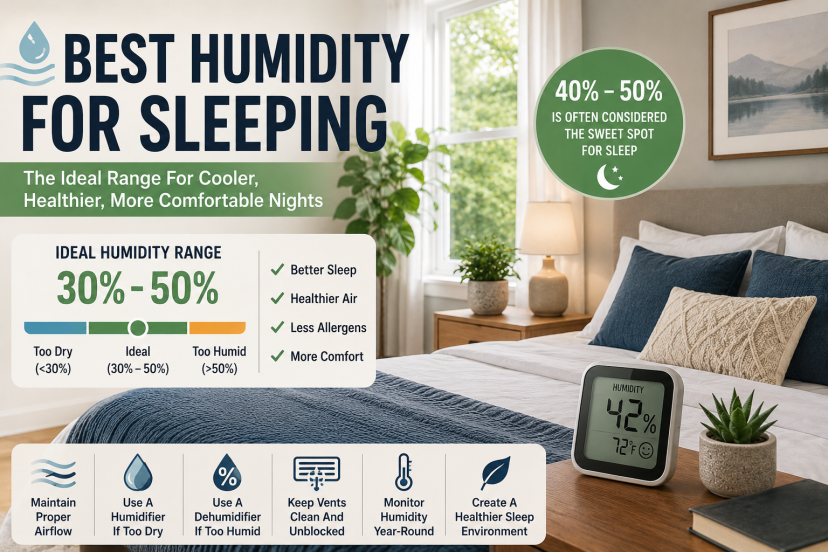
The best humidity for sleeping is generally between 30% and 50%, with many sleep experts recommending 40% to 50% as the ideal range for most people. This level helps keep the air comfortable without encouraging excess moisture, mold growth, or overly dry conditions. Maintaining balanced humidity can improve sleep comfort, breathing, and overall bedroom air quality.
Key Takeaways
| Most likely cause | Indoor humidity is outside the recommended 30–50% range |
| Usually serious? | No, but prolonged high or low humidity can reduce sleep comfort and affect indoor air quality |
| First thing to check | Measure your bedroom humidity using a hygrometer |
| Best solution | Keep indoor humidity between 30% and 50% through proper ventilation, HVAC maintenance, and humidity control |
🌙 Why The Best Humidity For Sleeping Matters
Humidity affects much more than how warm or cool your bedroom feels.
When humidity is balanced, your body can regulate temperature more efficiently while you sleep. Air also feels fresher, bedding stays more comfortable, and the bedroom is less likely to develop moisture-related problems.
You may notice humidity is outside the ideal range if:
- You wake up sweaty.
- The room feels sticky.
- Your throat feels dry each morning.
- Static electricity increases.
- Windows develop condensation.
- You notice musty odors.
- Your skin feels unusually dry.
- Your nose feels congested overnight.
These symptoms often indicate that your bedroom humidity needs adjustment.
🌡️ 10 Factors That Affect The Best Humidity For Sleeping
1. Outdoor Weather
The weather outside has one of the biggest influences on indoor humidity.

During humid summer months, moisture naturally enters your home whenever doors or windows are opened.
During winter, indoor heating often removes moisture, making bedrooms feel dry.
2. Air Conditioning Performance
Air conditioners don’t only cool the air—they also remove moisture.
If your system isn’t working efficiently, your bedroom may remain humid even when the temperature feels comfortable.
Possible reasons include:
- Dirty filters
- Low refrigerant
- Oversized equipment
- Lack of maintenance
3. Heating Systems
Heating systems commonly reduce indoor humidity during colder months.
This often causes:
- Dry skin
- Dry eyes
- Scratchy throat
- Static electricity
Many homeowners notice these symptoms every winter.
4. Bedroom Ventilation
Poor airflow allows moisture to accumulate.
Closed windows and doors reduce fresh air exchange, causing humidity to remain trapped inside.

Bedrooms with poor ventilation often feel:
- Stuffy
- Warm
- Damp
- Less comfortable
5. Moisture Produced While Sleeping
Even while sleeping, people naturally release moisture through breathing and perspiration.
In smaller bedrooms occupied by two people, humidity can gradually increase overnight, especially if airflow is limited.
6. Bathroom Steam
Bedrooms connected to bathrooms often experience increased humidity after showers.
If the bathroom exhaust fan isn’t used properly, steam can easily migrate into nearby bedrooms.
7. Indoor Plants
Houseplants add beauty to a bedroom, but they also release small amounts of moisture through transpiration.
A few plants typically aren’t a problem, but many large plants may contribute to slightly higher humidity.
8. Humidifiers And Dehumidifiers
These appliances directly affect indoor humidity.
Humidifiers help when the air is too dry, while dehumidifiers remove excess moisture when humidity becomes too high.
Using either appliance without monitoring humidity may create the opposite problem.

9. Air Leaks
Small gaps around windows and doors allow outdoor air to enter continuously.
Depending on the season, this may introduce:
- Warm humid air
- Cold dry air
- Outdoor allergens
Proper sealing improves humidity control.
10. HVAC Maintenance
A well-maintained heating and cooling system helps regulate both temperature and humidity.
Neglected systems often struggle to maintain comfortable indoor conditions.
Routine maintenance supports healthier indoor air year-round.
🔍 How To Confirm Your Bedroom Humidity
The easiest way to know whether your bedroom humidity is comfortable is by using a digital hygrometer.
These inexpensive devices display:

- Relative humidity
- Indoor temperature
You can also look for clues around the room.
Humidity may be too high if:
- Windows regularly fog.
- Bedding feels damp.
- Mold appears.
- Musty odors develop.
- The room feels sticky.
Humidity may be too low if:
- Skin becomes dry.
- Lips crack.
- Nose bleeds occur.
- Static electricity increases.
- Wood furniture begins shrinking or cracking.
Measuring humidity provides much more reliable information than simply judging how the room feels.
🛠️ How To Maintain The Best Humidity For Sleeping
Keeping your bedroom within the recommended humidity range doesn’t have to be difficult.
Monitor Humidity Regularly
Use a hygrometer to check humidity throughout the year.
Seasonal changes often require different approaches.
Improve Airflow
Good ventilation helps maintain balanced humidity.
You can improve airflow by:
- Opening windows when outdoor conditions allow.
- Using ceiling fans.
- Running bathroom exhaust fans.
- Keeping HVAC vents unobstructed.
Use A Dehumidifier When Necessary
If humidity regularly exceeds 50–60%, a portable dehumidifier can quickly make the room more comfortable.

Benefits include:
- Reduced stickiness
- Better airflow
- Less condensation
- Lower mold risk
Use A Humidifier During Dry Weather
When humidity falls below 30%, adding moisture may improve comfort.
Many people notice:
- Better breathing
- Less dry skin
- Reduced throat irritation
- More comfortable sleep
Always follow the manufacturer’s cleaning recommendations to help prevent microbial growth inside the unit.
Maintain Your HVAC System
Regular HVAC maintenance improves:
- Airflow
- Cooling
- Heating
- Moisture removal
Replacing air filters regularly also helps the system perform efficiently.
Eliminate Moisture Sources
Reduce unnecessary indoor moisture by:
- Fixing plumbing leaks.
- Running exhaust fans after showers.
- Avoiding drying clothes indoors.
- Removing damp towels promptly.
⚠️ Mistakes To Avoid
Avoid these common humidity-control mistakes:
- Guessing humidity without measuring it.
- Running a humidifier continuously.
- Ignoring dirty HVAC filters.
- Blocking air vents.
- Leaving bathroom steam trapped indoors.
- Assuming colder temperatures automatically reduce humidity.
- Forgetting seasonal humidity changes.
Small adjustments often produce noticeable improvements.
🌿 How To Prevent Bedroom Humidity Problems
The best way to maintain healthy humidity is through consistent habits.
Try to:
- Keep humidity between 30% and 50%.
- Check humidity regularly.
- Replace HVAC filters on schedule.
- Keep air vents clean.
- Use exhaust fans after showers.
- Repair leaks promptly.
- Improve bedroom airflow.
- Schedule annual HVAC maintenance.
These simple practices help create a healthier and more comfortable bedroom throughout the year.
❓ FAQs: Best Humidity For Sleeping
What is the best humidity for sleeping?
Most experts recommend maintaining indoor humidity between 30% and 50%, with 40% to 50% often providing the best balance of comfort and indoor air quality.
Is 60% humidity too high for sleeping?
It can be. While short periods at 60% may not cause problems, consistently high humidity can make the room feel warmer and encourage mold growth and dust mites.
Can humidity affect sleep quality?
Yes. Air that’s too humid or too dry can make it harder to sleep comfortably by affecting temperature regulation, breathing, and overall bedroom comfort.
How do I know if my bedroom is too dry?
Signs include dry skin, irritated eyes, sore throat, static electricity, nosebleeds, and cracked lips.
Should I sleep with a humidifier every night?
Only if your bedroom humidity consistently falls below the recommended range. Monitor humidity with a hygrometer instead of running a humidifier continuously.
Does opening a window reduce humidity?
Sometimes. If outdoor air is drier than indoor air, opening windows can improve ventilation and lower indoor humidity. If it’s humid outside, opening windows may have the opposite effect.
🎯 Final Thoughts
Maintaining the best humidity for sleeping is one of the easiest ways to create a healthier, quieter, cooler, cleaner, and more comfortable bedroom. While many people focus only on temperature, balanced humidity plays a major role in sleep comfort, breathing, and indoor air quality.
By keeping your bedroom between 30% and 50% humidity, monitoring conditions with a hygrometer, improving ventilation, and maintaining your HVAC system, you can enjoy a fresher sleep environment throughout every season.
📋 Disclaimer
This article is for general educational purposes only and should not be considered medical, HVAC, or indoor air quality advice. If your home has persistent humidity problems, mold growth, water damage, or ongoing respiratory concerns, consult a qualified HVAC technician, home inspection professional, or healthcare provider for personalized guidance.
 Explore more:
- How To Block Traffic Noise In Bedroom
- Why Does My Bedroom Feel Damp?
- Why Do I Keep Waking Up In The Middle Of The Night?