Why Is My Upstairs Bedroom Always Hot? 11 Common Causes And Easy Fixes
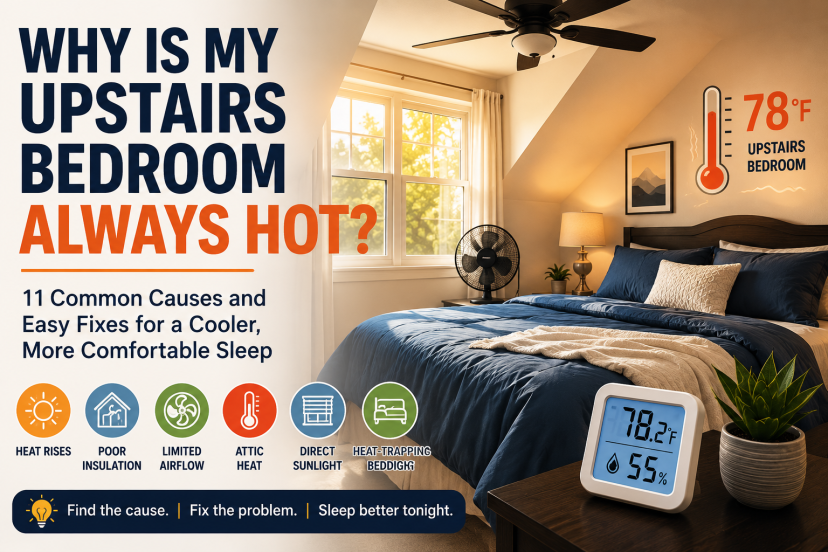
If you’ve been wondering, why is my upstairs bedroom always hot, you’re not imagining it. Many homeowners notice that bedrooms on the second floor stay several degrees warmer than the rest of the house, especially during summer or after a sunny day. This extra heat can make it difficult to fall asleep, cause restless nights, and leave you waking up feeling tired instead of refreshed.
In most cases, an overheated upstairs bedroom isn’t caused by a single problem. Instead, it’s often the result of heat naturally rising, attic heat buildup, limited airflow, poor insulation, or an HVAC system that isn’t distributing cool air evenly. Fortunately, many of these issues can be identified and improved without major renovations.
In this guide, you’ll discover the most common reasons an upstairs bedroom stays hot, how to determine the exact cause, and practical ways to create a healthier, quieter, cooler, cleaner, and more comfortable bedroom for better sleep.
⚡ Quick Answer: Why Is My Upstairs Bedroom Always Hot
An upstairs bedroom is usually hotter because heat naturally rises, attic temperatures transfer through the ceiling, and upper-floor rooms often receive less cooling from the HVAC system. Poor insulation, direct sunlight, blocked vents, humidity, and heat-producing electronics can make the problem worse. Improving airflow, reducing heat gain, and maintaining your cooling system are often the most effective solutions.
Key Takeaways
Most likely cause: Heat rising combined with poor attic insulation or limited HVAC airflow.
Usually serious? No. Most cases can be improved with better airflow and insulation.
First thing to check: Make sure the bedroom vents are fully open and producing strong airflow.
Best solution: Improve attic insulation, increase airflow, block sunlight, and reduce indoor heat sources.
🌡️ Why This Happens – How To Identify The Problem
Upstairs bedrooms naturally experience more heat than lower floors because warm air rises throughout the home. During the day, your roof and attic absorb large amounts of solar heat. If insulation isn’t sufficient, that heat gradually transfers into the bedroom below.
At the same time, your air conditioner may struggle to deliver enough cool air to upstairs rooms, especially if they’re farther from the HVAC unit or have poorly balanced ductwork.
Ask yourself these questions:
- Is the bedroom directly beneath the attic?
- Does the room receive afternoon sunlight?
- Is the upstairs significantly warmer than downstairs?
- Does the bedroom cool down quickly after sunset?
- Is airflow from the vent weaker than in other rooms?
- Does opening the bedroom door improve comfort?
Your answers can help narrow down the cause.

🔥 The Most Common Causes
1. Heat Naturally Rises
Warm air always moves upward.
Even if your entire home starts at the same temperature, heat generated downstairs gradually rises to the upper floor, making upstairs bedrooms warmer than rooms below.
This natural process is one of the biggest reasons second-floor bedrooms overheat.
2. A Hot Attic Transfers Heat
Attics often reach temperatures well above the outdoor air temperature during summer.
Without adequate insulation or ventilation, that heat radiates through the ceiling into your bedroom for hours—even after sunset.
Common signs include:
- Warm ceilings
- Hot upper walls
- Room remains hot late into the evening
3. Poor Attic Insulation
Insulation acts as a barrier that slows heat transfer.
If attic insulation is old, compressed, or insufficient, heat easily enters your bedroom.
This can also increase cooling costs throughout the home.
4. Your HVAC System Doesn’t Deliver Enough Cool Air Upstairs
Many HVAC systems cool lower floors more effectively than upper floors.

Possible reasons include:
- Long duct runs
- Airflow imbalance
- Dirty filters
- Closed dampers
- Leaky ductwork
Rooms farthest from the air handler often receive the least cooled air.
5. Direct Afternoon Sun
South- and west-facing upstairs bedrooms receive intense afternoon sunlight.
Large windows absorb solar heat, warming:
- Walls
- Flooring
- Furniture
- Curtains
- Bedding
That stored heat continues warming the room long after sunset.
6. Blocked Or Closed Air Vents
Supply vents hidden behind furniture or closed accidentally reduce cooling efficiency.
Likewise, blocked return vents prevent proper air circulation.
Always check that both supply and return vents remain unobstructed.
7. High Indoor Humidity
Humidity makes warm rooms feel even hotter.
Moist air slows your body’s ability to cool itself through sweating, causing discomfort during sleep.

Signs include:
- Sticky air
- Damp bedding
- Condensation
- Feeling hot despite air conditioning
8. Electronics Produce Extra Heat
Bedrooms often contain:
- Televisions
- Gaming systems
- Desktop computers
- Monitors
- Chargers
- Wi-Fi routers
Running several electronics overnight can noticeably increase room temperature.
9. Heat-Trapping Bedding
Sometimes the room isn’t much warmer—you simply feel hotter while sleeping.
Heat-retaining materials include:
- Thick memory foam mattresses
- Heavy comforters
- Polyester blankets
- Waterproof mattress protectors
Breathable bedding often improves comfort immediately.
10. Poor Air Circulation Inside The Room
Even with air conditioning running, stagnant air can make the room feel warmer.
Without sufficient circulation, cool air remains near the floor while warm air collects near the ceiling.

A ceiling or portable fan helps mix the air more evenly.
11. Your Bedroom Door Stays Closed
Keeping the bedroom closed throughout the day may trap warm air.
Depending on your HVAC system, opening the door can improve circulation and allow cooler air to move through the room.
✅ How To Confirm The Cause
Start with a few simple observations.
Measure the bedroom temperature with a digital thermometer and compare it with downstairs rooms.
Check airflow from the supply vent and compare it to other bedrooms.
Inspect the attic if it’s safe to do so. Excessive attic heat often indicates poor ventilation or insufficient insulation.
Feel the ceiling during the evening. If it remains warm after sunset, attic heat transfer may be contributing.
Finally, close blinds during the day for several days to see whether temperatures improve.
❄️ How To Fix It
Fortunately, most upstairs bedrooms become noticeably cooler after a few practical improvements.

Try these solutions:
- Keep supply and return vents fully open.
- Replace HVAC filters every 1–3 months.
- Install blackout or thermal curtains.
- Improve attic insulation if needed.
- Add attic ventilation where appropriate.
- Use ceiling fans in the counterclockwise direction during summer.
- Seal air leaks around windows and doors.
- Reduce unnecessary electronics overnight.
- Choose breathable cotton or linen bedding.
- Consider HVAC balancing if upstairs airflow remains weak.
- Use a portable air conditioner or mini-split system if cooling remains inadequate.
Many homeowners see significant improvement after combining several of these strategies.
⚠️ Mistakes To Avoid
Avoid these common errors:
- Closing vents in cooler rooms.
- Blocking air vents with furniture.
- Ignoring dirty HVAC filters.
- Leaving electronics running unnecessarily overnight.
- Using heavy winter bedding during summer.
- Assuming you need a larger air conditioner before checking airflow and insulation.
Many hot upstairs bedrooms result from airflow issues rather than an undersized cooling system.
🌿 How To Prevent It
A few simple habits can help keep your upstairs bedroom cooler year after year.
- Replace HVAC filters regularly.
- Schedule annual HVAC maintenance.
- Keep vents clean and unobstructed.
- Close blinds before afternoon sunlight enters.
- Maintain attic insulation.
- Improve attic ventilation if necessary.
- Use breathable bedding.
- Reduce unnecessary heat-producing electronics.
- Keep indoor humidity between 30% and 50%.
These steps help create a cooler, healthier, and more comfortable sleeping environment.
❓ Frequently Asked Questions
Why is my upstairs bedroom hotter than downstairs?
Heat naturally rises, and attic heat often transfers through the ceiling. Upstairs rooms may also receive less cool air from the HVAC system.
Does attic insulation really make a difference?
Yes. Proper attic insulation slows heat transfer into upstairs bedrooms and helps maintain more consistent indoor temperatures.
Can a ceiling fan cool an upstairs bedroom?
A ceiling fan doesn’t lower the room’s temperature, but it improves airflow and helps your body feel cooler.
Should I keep my bedroom door open?
In many homes, leaving the bedroom door slightly open improves airflow and helps distribute conditioned air more evenly.
What temperature should an upstairs bedroom be at night?
Most sleep experts recommend keeping bedrooms between 60°F and 67°F (15.5°C to 19.5°C) for comfortable sleep.
📌 Conclusion: Why Is My Upstairs Bedroom Always Hot
If you’ve been asking why is my upstairs bedroom always hot, the answer usually comes down to a combination of natural heat movement, attic heat, and limited cooling airflow. Fortunately, these issues are often easier to improve than many homeowners expect.
Start with the simple fixes first—check airflow, replace HVAC filters, block afternoon sunlight, and use breathable bedding. If the room continues overheating, inspecting your attic insulation and HVAC system may provide the long-term solution.
A cooler upstairs bedroom not only improves comfort but can also support deeper, more refreshing sleep and make your bedroom a more relaxing place to end each day.
⚠️ Disclaimer
This article is intended for informational and educational purposes only and should not be considered professional HVAC, construction, or medical advice. Every home is different, and upstairs temperature differences can have multiple causes. If your bedroom remains excessively hot despite trying these recommendations, or if you suspect an HVAC, insulation, or ventilation problem, consult a qualified professional for a thorough evaluation.
 Explore more: