Sleep But Still Tired? Why You Can Sleep 8 Hours But Still Feel Tired
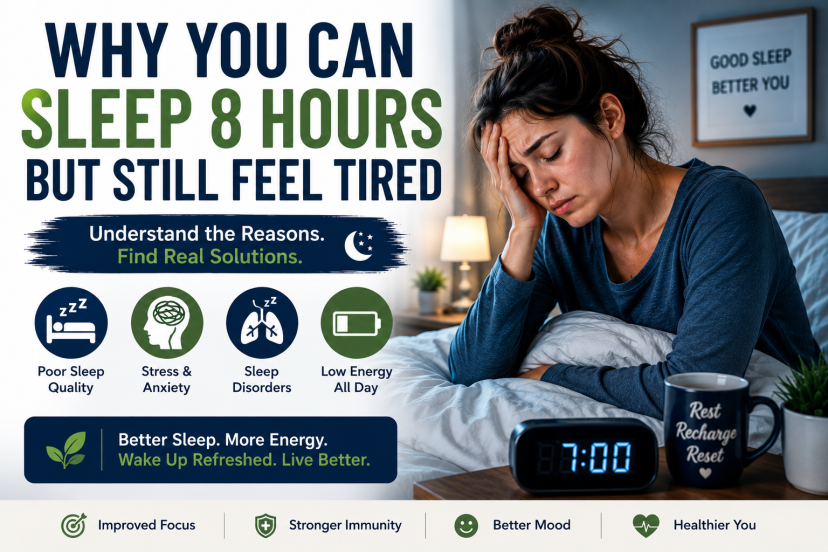
Have you ever looked at the clock, realized you slept a full eight hours, and still felt like you barely slept at all? If you’ve been searching for answers because you sleep but still tired, you’re far from alone. Many adults wake up feeling sluggish, foggy, and low on energy despite spending what should be enough time in bed.
Feeling tired after a full night’s sleep can be frustrating. It may leave you reaching for extra coffee, struggling to stay focused at work, or wondering why your body never seems fully rested. While many people assume they simply need more sleep, the real issue is often sleep quality rather than sleep quantity.
The encouraging news is that there are many possible explanations for waking up tired after sleeping eight hours, and many of them can be improved with healthy sleep habits, stress management, and identifying underlying sleep problems.
This guide explains why you may sleep but still be tired, common causes, practical solutions, and when it’s time to seek professional help.
⭐ Quick Answer: Sleep But Still Tired?
If you sleep but are still tired, poor sleep quality is often the reason. Interrupted sleep, stress, anxiety, sleep apnea, restless legs syndrome, poor sleep hygiene, medications, or certain health conditions can prevent your body from getting the deep, restorative sleep it needs—even if you spend eight hours in bed.
Key Takeaways
- Most likely cause: Poor sleep quality, frequent nighttime awakenings, an inconsistent sleep schedule, stress, or habits that prevent you from getting enough deep, restorative sleep.
- Usually serious? Usually not, especially when occasional. However, persistent daytime fatigue can sometimes be related to sleep apnea, restless legs syndrome, medications, or an underlying health condition that should be evaluated.
- First thing to check: If you sleep but are still tired, look at the quality and consistency of your sleep—not just the number of hours you spend in bed. Consider snoring, nighttime awakenings, screen use, caffeine, alcohol, and irregular sleep times.
- Best solution: Improve sleep quality with a consistent schedule, a comfortable bedroom, regular daytime activity, less late-day caffeine and alcohol, and a relaxing bedtime routine. If fatigue continues despite adequate sleep, talk with a healthcare professional.
🌙 Why Can You Sleep 8 Hours But Still Feel Tired?
Many people believe sleeping eight hours automatically means they’ll wake refreshed.
However, your body depends on completing multiple sleep cycles each night. These cycles include light sleep, deep sleep, and REM sleep.
Deep sleep is especially important because it’s when your body repairs tissues, restores energy, supports immune function, and helps your brain process memories. If those stages are interrupted, you may wake up exhausted even after a full night in bed.

Some people also experience non-restorative sleep, meaning they sleep long enough but never feel refreshed.
If you’d like a more complete overview of morning fatigue, read our guide:
Why Do I Wake Up Tired? 15 Common Causes And What May Help
https://sleepharmonyguide.com/why-do-i-wake-up-tired-15-common-causes-and-what-may-help
😴 12 Reasons You Sleep But Still Tired
1. Poor Sleep Quality
One of the biggest reasons people sleep but are still tired is poor-quality sleep.
Even if you remain asleep for eight hours, repeated brief awakenings may prevent restorative sleep.
Common signs include:
- Morning grogginess
- Brain fog
- Difficulty concentrating
- Low energy throughout the day
2. Stress And Anxiety
Stress keeps your brain alert even while you’re sleeping.
Common symptoms include:
- Racing thoughts
- Restless sleep
- Frequent waking
- Feeling mentally drained after waking
A calming bedtime routine may help improve sleep quality.

3. Sleep Apnea
Sleep apnea repeatedly interrupts breathing during sleep.
Many people don’t remember waking, but their sleep becomes fragmented throughout the night.
Symptoms include:
- Loud snoring
- Morning headaches
- Dry mouth
- Excessive daytime sleepiness
A sleep study may be recommended if sleep apnea is suspected.
4. Restless Legs Syndrome
An uncomfortable urge to move your legs can repeatedly interrupt restorative sleep.
Many people don’t realize these movements continue throughout the night.
5. Poor Sleep Hygiene
Your evening habits have a major impact on sleep quality.
Poor sleep hygiene includes:
- Scrolling on your phone in bed
- Watching television late at night
- Bright lights before bedtime
- Inconsistent sleep schedules
- Heavy meals before bed
Improving these habits often improves sleep.
6. Too Much Caffeine
Caffeine remains in your body for hours.

Coffee, tea, soda, energy drinks, and chocolate consumed later in the day may reduce deep sleep without preventing you from falling asleep.
Try avoiding caffeine after lunch.
7. Alcohol Before Bed
Alcohol may make you sleepy at first, but it often causes fragmented sleep later in the night.
As a result, you may spend enough time asleep yet still wake tired.
8. Irregular Sleep Schedule
Going to bed at different times every night can disrupt your circadian rhythm.
A consistent schedule supports healthier sleep cycles.
9. Depression Or Low Mood
Depression doesn’t always reduce sleep.
Some people sleep much longer than usual, but continue waking exhausted because sleep quality is reduced.

Speak with your healthcare provider if symptoms persist.
10. Vitamin Or Mineral Deficiencies
Certain nutrient deficiencies may contribute to fatigue.
Examples include:
- Iron
- Vitamin D
- Vitamin B12
- Magnesium
Your healthcare provider can determine whether testing is appropriate.
11. Certain Medications
Some medications may interfere with restorative sleep.
Examples include:
- Steroids
- ADHD medications
- Decongestants
- Certain antidepressants
Never stop prescription medications without consulting your healthcare provider.
12. Chronic Medical Conditions
Several health conditions may contribute to poor-quality sleep, including:
- Thyroid disorders
- Diabetes
- Chronic pain
- Fibromyalgia
- Heart disease
Managing these conditions may improve sleep quality.
🌿 Natural Ways To Improve Sleep Quality
Many adults find improvement through simple lifestyle changes.
Magnesium
Magnesium may support muscle relaxation and healthy sleep for some individuals.
Always discuss supplements with your healthcare provider first.
Melatonin
Melatonin may help people with jet lag, shift work, or certain sleep timing disorders.
Higher doses aren’t necessarily more effective.
Herbal Tea
Many people enjoy calming herbal teas such as:
- Chamomile
- Lemon balm
- Lavender
- Passionflower
These caffeine-free teas may help create a relaxing bedtime routine.
Relaxation Techniques
Helpful relaxation methods include:
- Deep breathing
- Meditation
- Progressive muscle relaxation
- Gentle stretching
- Guided sleep meditation
Practicing relaxation consistently may improve sleep quality.
🛏️ Lifestyle Habits That May Help If You Sleep But Still Tired
Small improvements often produce meaningful long-term results.
Healthy Sleep Habits
- Go to bed at the same time every night.
- Wake up at the same time every morning.
- Exercise regularly.
- Get morning sunlight.
- Keep your bedroom cool, quiet, and dark.
- Limit caffeine later in the day.
- Avoid alcohol before bedtime.
- Reserve your bed for sleep rather than scrolling social media.
📱 Sleep Products That May Support Better Rest
Some sleep products may complement healthy habits.
Popular U.S. options include:
- White noise machines from Hatch, Yogasleep, and LectroFan
- Sleep trackers such as Fitbit, Apple Watch, Garmin, and Oura Ring
- Cooling pillows
- Blackout curtains
- Sunrise alarm clocks
- Weighted blankets for adults who enjoy gentle pressure
Remember that sleep trackers estimate sleep stages and should not replace professional medical advice.
🌅 Morning Habits That Help You Feel More Awake
The way you start your day matters.
Helpful habits include:
- Open your curtains immediately.
- Drink water after waking.
- Spend time in natural sunlight.
- Stretch gently.
- Eat a balanced breakfast if you’re hungry.
- Avoid repeatedly pressing the snooze button.
These habits reinforce your body’s natural sleep-wake cycle.
⚠️ When To See A Doctor
Occasionally feeling tired after sleeping is normal.
However, consult your healthcare provider or a sleep specialist if you:
- Sleep but still tired for several weeks.
- Snore loudly or stop breathing during sleep.
- Wake with frequent headaches.
- Fall asleep unexpectedly during the day.
- Experience severe insomnia.
- Have fatigue affecting daily activities.
- Suspect an underlying health condition.
A sleep study or additional evaluation may help identify treatable causes.
❓ FAQs: Sleep But Still Tired?
Why do I sleep 8 hours but still feel tired?
Poor sleep quality, stress, interrupted sleep, sleep disorders, medications, or underlying medical conditions may prevent restorative sleep.
Is it normal to sleep all night and still feel exhausted?
No. Regularly waking exhausted may indicate poor sleep quality or another health concern that deserves evaluation.
Can anxiety make me sleep but still tired?
Yes. Anxiety often disrupts deep sleep and increases nighttime awakenings, reducing restorative sleep.
Does magnesium help improve sleep?
Some adults find magnesium supports relaxation and healthy sleep, although results vary.
Can sleep apnea make you tired even after sleeping?
Yes. Sleep apnea repeatedly interrupts breathing during sleep, reducing sleep quality and causing daytime fatigue.
What is non-restorative sleep?
Non-restorative sleep means you sleep enough hours but still wake feeling unrefreshed because your sleep quality is poor.
How can I stop feeling tired after sleeping?
Improve your sleep hygiene, reduce stress, maintain a consistent sleep schedule, limit caffeine and alcohol, and seek medical advice if symptoms continue.
🌙 Final Thoughts
If you sleep but still tired, remember that sleeping longer isn’t always the solution. In many cases, improving the quality of your sleep has a much greater impact than simply increasing the number of hours you spend in bed.
Start by making small changes to your bedtime routine, creating a more sleep-friendly bedroom, and paying attention to habits that may interfere with deep sleep. Over time, these adjustments may help you wake feeling more refreshed and energized. If fatigue continues despite healthy habits, don’t hesitate to consult a healthcare provider or sleep specialist to identify any underlying causes.
Disclaimer
This article is for educational purposes only and should not be considered medical advice. It is not intended to diagnose, treat, cure, or prevent any medical condition. Always consult a qualified healthcare provider before starting supplements, making significant lifestyle changes, or if you experience persistent fatigue, loud snoring, breathing pauses during sleep, or ongoing sleep concerns.
 Explore more:
- Why Is My Bedroom So Dry?
- Why Don’t I Feel Rested After Sleeping?
- How To Improve Airflow In A Bedroom