How To Improve Airflow In A Bedroom: 12 Simple Ways To Sleep Cooler And Breathe Better
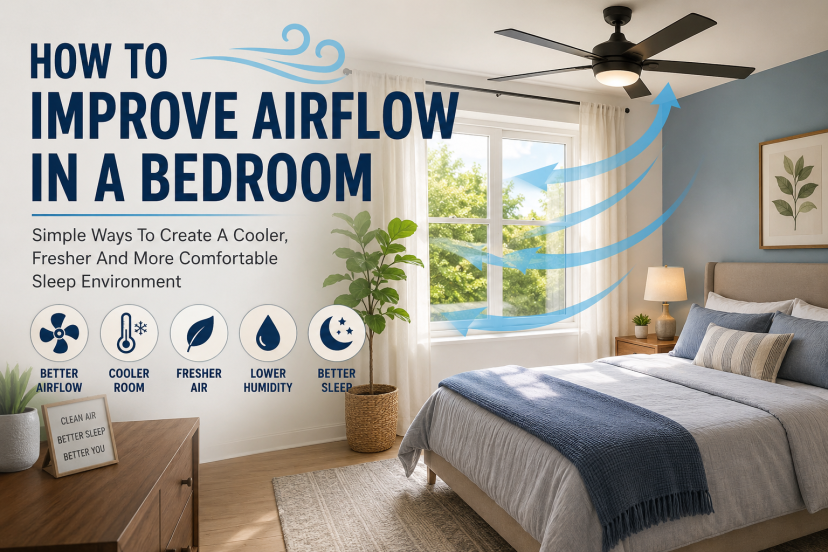
If you’ve been searching for how to improve airflow in a bedroom, you’re probably tired of waking up feeling hot, stuffy, or uncomfortable. Poor bedroom airflow doesn’t just make your room feel unpleasant—it can also affect temperature, humidity, air quality, and overall sleep comfort.
The good news is that most airflow problems have simple solutions. Whether you live in a house, apartment, or rental, improving air circulation often requires only a few small changes to how air enters, moves through, and exits your bedroom.
In this guide, you’ll learn why bedroom airflow matters, how to identify what’s reducing air circulation, and the most effective ways to create a healthier, quieter, cooler, cleaner, and more comfortable bedroom for better sleep.
⭐ Quick Answer: How To Improve Airflow In A Bedroom
The best way to improve airflow in a bedroom is to remove anything blocking air movement, open windows when weather allows, use fans strategically, keep HVAC vents unobstructed, and reduce clutter that traps warm, stagnant air. Improving ventilation helps regulate temperature, lower humidity, reduce odors, and create a fresher sleeping environment.
Key Takeaways
| Most likely cause | Poor ventilation or blocked airflow around the room |
| Usually serious? | No. Most airflow problems are easy to improve. |
| First thing to check | Make sure vents, windows, and fans aren’t blocked. |
| Best solution | Create continuous air movement using natural ventilation or properly positioned fans. |
🌬️ Why This Happens – How To Identify The Problem
Bedrooms often have less airflow than other rooms because doors stay closed for long periods, windows remain shut, and furniture blocks natural air circulation.
Signs your bedroom may have poor airflow include:
- The room feels warmer than the rest of the house.
- Air feels stale or stuffy.
- You notice lingering odors.
- Humidity feels high.
- Windows frequently develop condensation.
- Bedding feels damp.
- You wake up sweaty despite moderate temperatures.
- The room feels uncomfortable even when the HVAC system is running.
If several of these symptoms sound familiar, improving airflow is likely one of the easiest ways to improve your sleep environment.
🌡️ The 10 Most Common Causes
1. Closed Windows All Day
Modern homes are built to be energy efficient, but that also means they trap indoor air.
Without occasional fresh air exchange, carbon dioxide, humidity, and odors slowly build up.
2. Blocked HVAC Supply Or Return Vents
Many bedrooms have furniture placed directly over floor vents or in front of return vents.
Common airflow blockers include:
- Beds
- Dressers
- Curtains
- Storage bins
- Area rugs
Even partial blockage can reduce airflow significantly.
3. Ceiling Fans Rotating The Wrong Direction
Many people don’t realize ceiling fans have seasonal settings.
During summer, blades should rotate counterclockwise to push cool air downward.
During winter, they should rotate clockwise on a low speed to circulate warm air without creating a draft.
4. Furniture Restricting Air Movement
Large furniture placed tightly against walls can create “dead air” zones where warm air becomes trapped.
Try leaving a small gap behind:
- Beds
- Dressers
- Bookshelves
- Nightstands
This helps air circulate more freely.
5. Dirty HVAC Filters
A clogged air filter reduces airflow throughout the entire home.
Besides lowering airflow, dirty filters may increase:
- Dust
- Allergens
- Odors
- HVAC strain
Replacing filters regularly often improves both airflow and indoor air quality.
6. Closed Interior Doors
Keeping the bedroom door closed for long periods limits air exchange.
If your HVAC system depends on return airflow, a closed door may reduce circulation considerably.
Leaving the door slightly open can help.
7. Poor Fan Placement
Simply turning on a fan isn’t always enough.
Fans work best when they move existing air rather than blow into walls or furniture.
Good placement includes:
- Near a window
- Across the room
- Facing outward to exhaust warm air
- Creating cross ventilation
8. High Humidity
Humid air often feels heavier and warmer even when temperatures are comfortable.
Excess moisture can come from:
- Bathrooms nearby
- Cooking
- Laundry
- Weather
- Poor ventilation
Reducing humidity often makes the room feel fresher immediately.
9. Excess Bedroom Clutter
Large amounts of clutter reduce open air pathways.
Items stored under the bed or stacked against walls can prevent proper circulation.
Keeping pathways open allows air to move more naturally.
10. HVAC System Needs Maintenance
Sometimes the bedroom isn’t the problem.
The entire heating and cooling system may have:
- Dirty ducts
- Leaks
- Weak airflow
- Unbalanced air distribution
If one bedroom consistently feels stuffy while the rest of the home is comfortable, the HVAC system may need inspection.
✅ How To Confirm The Cause
You don’t need specialized equipment to identify many airflow problems.
Try these simple checks:
- Stand near vents and feel for steady airflow.
- Compare your bedroom temperature with another room.
- Open two windows on opposite sides of the home and see if airflow improves.
- Check whether curtains or furniture block vents.
- Replace an old HVAC filter.
- Use a tissue near vents or windows to observe air movement.
- Notice whether humidity decreases after running a bathroom exhaust fan or dehumidifier.
If airflow noticeably improves after one of these changes, you’ve likely identified the primary cause.
🛠️ How To Fix It
Most bedrooms become noticeably more comfortable after making a few practical improvements.
Improve Natural Ventilation
Whenever outdoor conditions are comfortable:
- Open windows for 15–30 minutes daily.
- Create cross ventilation by opening windows in different parts of the home.
- Allow fresh air to replace stale indoor air.
Position Fans Strategically
Instead of pointing a fan directly at the bed:
- Place it near a window.
- Aim it toward the center of the room.
- Use two fans to create continuous airflow when possible.
Keep Vents Completely Open
Avoid placing:
- Beds
- Dressers
- Boxes
- Laundry baskets
- Curtains
over HVAC vents.
Even a small obstruction reduces airflow.
Replace HVAC Filters
Replace disposable filters according to the manufacturer’s recommendations or sooner if they become dirty.
Cleaner filters improve airflow while helping reduce dust and allergens.
Reduce Humidity
If humidity is consistently high:
- Run bathroom exhaust fans after showers.
- Use a dehumidifier if needed.
- Avoid drying clothes inside the bedroom.
- Fix leaks promptly.
Lower humidity often makes the room feel cooler without lowering the thermostat.
Rearrange Furniture
Leave several inches of space between large furniture and walls whenever possible.
This allows conditioned air to circulate around the room rather than becoming trapped.
Keep Air Pathways Open
Avoid storing:
- Boxes
- Shoes
- Storage bins
- Blankets
under beds if they block airflow.
An open room allows air to circulate more efficiently.
⚠️ Mistakes To Avoid
Many people accidentally reduce bedroom airflow by making these common mistakes:
- Blocking supply or return vents.
- Closing every window year-round.
- Running ceiling fans in the wrong direction.
- Forgetting to replace HVAC filters.
- Overfilling the room with furniture.
- Ignoring excess indoor humidity.
- Assuming a stronger fan always fixes poor ventilation.
- Closing the bedroom door continuously without adequate return airflow.
Avoiding these habits can noticeably improve comfort.
🌿 How To Prevent It
Keeping good airflow is easier than fixing chronic ventilation problems later.
Helpful habits include:
- Replace HVAC filters regularly.
- Dust vents frequently.
- Keep furniture clear of air registers.
- Open windows when weather permits.
- Maintain indoor humidity between approximately 30% and 50% for comfort and to discourage mold growth.
- Clean ceiling fans regularly.
- Avoid excessive bedroom clutter.
- Schedule routine HVAC maintenance.
Small maintenance tasks can keep your bedroom feeling fresher throughout the year.
❓ Frequently Asked Questions
Does opening a bedroom door improve airflow?
Yes. If your HVAC system relies on return airflow, opening the door slightly can improve air circulation throughout the room.
Is a ceiling fan enough to improve airflow?
A ceiling fan circulates existing air but doesn’t bring in fresh outdoor air. Combining a fan with ventilation is usually more effective.
Why does my bedroom feel stuffy even with the air conditioner on?
Possible reasons include blocked vents, dirty filters, high humidity, poor air circulation, or insufficient fresh air entering the room.
Can plants improve bedroom airflow?
Plants may contribute modestly to the overall indoor environment, but they do not significantly increase airflow. Ventilation and proper air circulation have a much greater impact.
Does poor airflow affect sleep?
Yes. A stuffy bedroom can feel hotter, more humid, and less comfortable, which may make it harder to fall asleep or stay asleep.
What’s the ideal bedroom humidity?
For most homes, an indoor humidity level between 30% and 50% provides a comfortable balance for sleep while helping reduce excess moisture.
🎯 Final Thoughts On How To Improve Airflow In A Bedroom
Learning how to improve airflow in a bedroom doesn’t require expensive renovations or complicated equipment. In many cases, simple adjustments—such as clearing blocked vents, positioning fans more effectively, opening windows when possible, replacing HVAC filters, and reducing clutter—can make a noticeable difference.
Better airflow helps create a bedroom that feels cooler, fresher, cleaner, and more comfortable, supporting a healthier sleep environment night after night. If your room continues to feel unusually stuffy despite these changes, it may be worth having your home’s heating, cooling, or ventilation system inspected to identify any underlying issues.
📋 Disclaimer
This article is for general educational purposes only and is not a substitute for professional HVAC, indoor air quality, or medical advice. If you notice persistent mold growth, water damage, unusual odors, or experience ongoing breathing difficulties, consult a qualified professional to identify and address the underlying cause.
 Explore more: