Why Is My Bedroom So Dry? 10 Common Causes And Simple Ways To Add Moisture
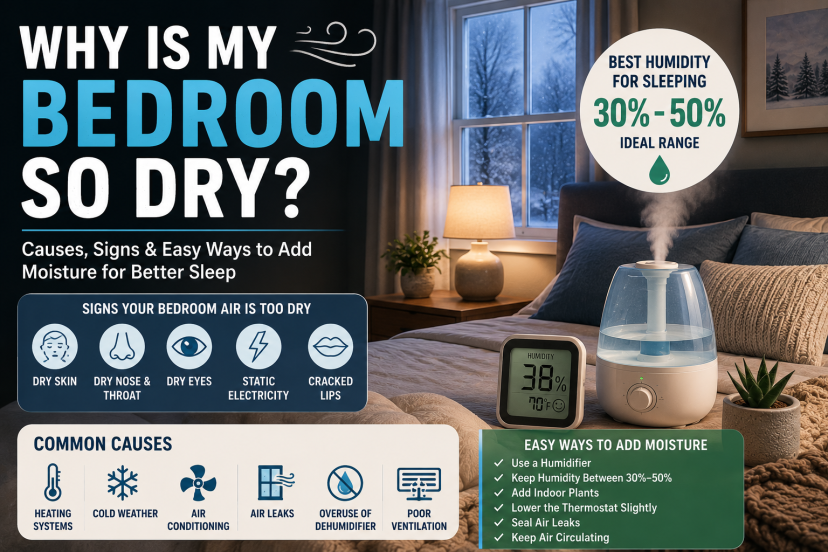
If you’ve been asking why is my bedroom so dry? you’re not alone. A dry bedroom can make it difficult to sleep comfortably, causing dry skin, irritated eyes, a scratchy throat, congestion, and even static electricity. While dry indoor air is especially common during winter, it can happen year-round depending on your home’s heating, cooling, ventilation, and climate.
The good news is that dry air is usually easy to identify and improve. By understanding what’s lowering the humidity in your bedroom, you can make a few practical changes that help create a healthier, quieter, cooler, cleaner, and more comfortable sleep environment.
In this guide, you’ll learn the most common reasons your bedroom feels so dry, how to confirm the cause, and simple solutions to restore comfortable humidity levels for better sleep.
⭐ Quick Answer: Why Is My Bedroom So Dry?
A dry bedroom is most often caused by indoor heating, air conditioning, cold outdoor weather, or low indoor humidity. Most experts recommend keeping bedroom humidity between 30% and 50%. Measuring humidity with a hygrometer and using simple solutions like a humidifier, improved ventilation, or adjusting your HVAC system can usually make your bedroom much more comfortable.
Key Takeaways
| Most likely cause | Low indoor humidity caused by heating or dry outdoor air |
| Usually serious? | No, but prolonged dry air can affect comfort and sleep quality |
| First thing to check | Measure bedroom humidity with a hygrometer |
| Best solution | Maintain indoor humidity between 30% and 50% |
🌬️ Why Your Bedroom Is So Dry
Indoor air naturally becomes drier when moisture is removed faster than it’s replaced.
During colder months, outdoor air contains less moisture. When that air enters your home and is heated, its relative humidity drops even further.
Dry air may also occur during summer if air conditioning removes excess moisture.
Common signs of overly dry air include:
- Dry skin
- Chapped lips
- Scratchy throat
- Dry nose
- Frequent static electricity
- Dry eyes
- Increased snoring
- Nosebleeds
- Wooden furniture shrinking or cracking
If several of these symptoms occur regularly, your bedroom humidity may be too low.
🌡️ The 10 Most Common Causes
1. Indoor Heating
The most common reason bedrooms become dry is central heating.
Furnaces, baseboard heaters, and space heaters warm the air but significantly lower its relative humidity.
This is why many homes feel noticeably drier during winter.
2. Cold Winter Weather
Cold outdoor air naturally contains less moisture.
Once this air enters your home and warms up, humidity levels often fall below the recommended range.
Winter is the season when dry bedrooms are most common.
3. Air Conditioning
Although air conditioners improve comfort during summer, they also remove moisture from indoor air.
If your AC runs for long periods, especially in already dry climates, the bedroom may become too dry.
4. Low Indoor Humidity
Sometimes the entire home simply has humidity below the recommended level.
Most experts recommend maintaining:
- 30%–50% relative humidity
- Around 40%–50% for optimal sleep comfort
Anything consistently below 30% may begin causing noticeable dryness.
5. Excessive Ventilation
Good ventilation improves indoor air quality, but too much ventilation during cold, dry weather may continuously replace indoor air with very dry outdoor air.
This is especially common in winter.
6. Air Leaks Around Windows And Doors
Small gaps around windows, doors, and exterior walls allow dry outdoor air to enter continuously.
Common problem areas include:
- Window frames
- Door seals
- Attic access points
- Electrical outlets on exterior walls
7. Whole-House Dehumidifier Settings
Some HVAC systems include built-in humidity controls.
If these are set too low, your bedroom may become unnecessarily dry.
Checking your HVAC settings may solve the problem.
8. Running A Dehumidifier Too Often
Dehumidifiers are useful during humid weather but can make conditions uncomfortable if used unnecessarily.
Running one continuously may reduce humidity well below healthy levels.
9. High Indoor Temperatures
Warmer air can hold more moisture, but if extra moisture isn’t added, heated rooms often feel much drier.
Overheating your bedroom can make dry air feel even more noticeable.
10. Naturally Dry Climate
If you live in an area with low humidity year-round, your bedroom may naturally stay dry without supplemental humidity.
Dry climates often require humidity management throughout much of the year.
🔍 How To Confirm The Cause
Instead of guessing, measure your bedroom humidity.
A digital hygrometer provides a quick reading of:
- Indoor humidity
- Room temperature
Humidity below 30% generally indicates air that’s too dry for optimal comfort.
You can also look for signs such as:
- Frequent static shocks
- Dry nasal passages
- Dry skin after sleeping
- Cracked lips every morning
- Shrinking wood floors or furniture
- Houseplants drying out quickly
These symptoms often point toward low indoor humidity.
🛠️ How To Fix It
Fortunately, dry bedroom air is usually easy to improve.
Use A Humidifier
Adding moisture is often the fastest solution.
Portable humidifiers work well for individual bedrooms.
Keep humidity within the recommended range rather than running the humidifier continuously.
Monitor Humidity
A hygrometer helps prevent both overly dry and overly humid conditions.
Check humidity regularly, especially during seasonal changes.
Lower The Thermostat Slightly
Very warm rooms often feel drier.
Many sleep experts recommend keeping bedrooms around 60°F to 67°F (15.5°C to 19.5°C) for comfortable sleep.
Seal Air Leaks
Weatherstripping and caulking around windows and doors help reduce the amount of dry outdoor air entering your home.
This also improves energy efficiency.
Adjust HVAC Settings
If your HVAC system includes humidity controls, ensure they aren’t set too low.
Replacing dirty filters also improves overall airflow and comfort.
Reduce Unnecessary Dehumidifier Use
Only run a dehumidifier when indoor humidity exceeds recommended levels.
During winter, many homes don’t need one at all.
Keep Houseplants Healthy
While plants shouldn’t be relied upon to humidify an entire room, healthy houseplants can contribute a small amount of natural moisture through transpiration.
⚠️ Mistakes To Avoid
Avoid these common mistakes:
- Running a humidifier without measuring humidity.
- Keeping humidity above 50–60%.
- Ignoring dirty HVAC filters.
- Overheating the bedroom.
- Using a dehumidifier year-round without checking humidity.
- Assuming dry skin is always caused by personal care products.
- Forgetting seasonal humidity changes.
Balanced humidity is more important than simply adding moisture.
🌿 How To Prevent A Dry Bedroom
Keeping your bedroom comfortable year-round is easier with a few simple habits.
Try to:
- Maintain humidity between 30% and 50%.
- Use a hygrometer to monitor conditions.
- Service your HVAC system regularly.
- Replace air filters as recommended.
- Seal drafts around windows and doors.
- Use a humidifier only when necessary.
- Avoid overheating the bedroom.
- Check humidity whenever seasons change.
These practices help create a healthier and more comfortable sleep environment.
❓ FAQs: Why Is My Bedroom So Dry?
What humidity is too low for sleeping?
Humidity below 30% is generally considered too dry for optimal comfort and may contribute to dry skin, irritated airways, and poor sleep.
Can dry air make it harder to sleep?
Yes. Dry air can irritate your nose, throat, eyes, and skin, making it more difficult to sleep comfortably.
Is it better to sleep with a humidifier?
If your bedroom humidity consistently falls below 30%, using a properly maintained humidifier may improve comfort. Always monitor humidity to avoid excessive moisture.
How do I know if my bedroom is too dry?
Common signs include dry skin, sore throat, static electricity, nosebleeds, cracked lips, and low humidity readings on a hygrometer.
Can air conditioning dry out a bedroom?
Yes. Air conditioners remove moisture while cooling the air, especially during long periods of operation.
What’s the ideal humidity for sleeping?
Most experts recommend keeping indoor humidity between 30% and 50%, with many people finding 40% to 50% the most comfortable.
🌙 Final Thoughts
If you’ve been wondering why is my bedroom so dry, the answer usually comes down to low indoor humidity caused by heating, cooling, seasonal weather, or excessive moisture removal. Fortunately, the solution is often straightforward.
By measuring humidity, maintaining levels between 30% and 50%, sealing air leaks, properly maintaining your HVAC system, and using a humidifier only when needed, you can create a bedroom that feels healthier, fresher, and much more comfortable for restful sleep.
📋 Disclaimer
This article is intended for general educational purposes only and should not be considered medical, HVAC, or indoor air quality advice. If you experience persistent respiratory symptoms, frequent nosebleeds, or ongoing indoor air quality concerns, consult a qualified healthcare provider or HVAC professional to identify and address the underlying cause.
 Explore more: