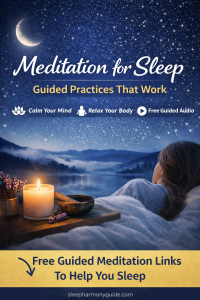
Meditation for Sleep: Guided Practices That Work

🌙 When Your Mind Won’t Let You Sleep
If you’ve ever crawled into bed exhausted—only to have your mind suddenly wake up—you’re not alone. Racing thoughts, muscle tension, and nighttime anxiety are some of the most common reasons people struggle with falling asleep and staying asleep.
You might replay conversations, worry about tomorrow, or feel your body refusing to fully relax. The harder you try to sleep, the more alert you feel. This frustrating cycle is exactly where meditation for sleep can help.
Meditation isn’t about “emptying your mind” or forcing sleep to happen. Instead, it gently guides your nervous system into a calmer state, helping your body remember how to rest naturally. With the right guided practices, many people notice deeper relaxation, fewer nighttime awakenings, and more refreshing sleep—without medication.
This guide walks you through proven meditation techniques that actually work, including step-by-step instructions and free audio resources you can use tonight.
🧠 What Is Meditation For Sleep And Why It Works
Meditation for sleep is a mindfulness-based relaxation practice designed to quiet mental chatter and reduce physical tension before bedtime. It works by activating the parasympathetic nervous system—often called the “rest and digest” response.
How Meditation Supports Better Sleep
• Slows racing thoughts before bed
• Reduces stress hormones like cortisol
• Relaxes muscles and breathing patterns
• Improves sleep onset and sleep quality
• Supports long-term sleep consistency
Studies show that mindfulness sleep practices can reduce insomnia symptoms and improve overall sleep satisfaction—especially when practiced consistently.
🌿 Common Causes Of Sleep Disruption Meditation Helps Address
Meditation isn’t just helpful for insomnia—it targets the underlying triggers that keep your brain and body alert at night.

Mental And Emotional Triggers
• Stress from work or finances
• Anxiety or overthinking
• Difficulty “shutting off” the mind
• Emotional overload from the day
Physical And Lifestyle Triggers
• Muscle tension or restlessness
• Poor sleep routines
• Excess screen time
• Irregular sleep schedules
Because meditation addresses both mental and physical tension, it’s especially effective for people who feel tired but wired at bedtime.
🛌 Guided Sleep Meditation: A Step-By-Step Practice
This simple guided sleep meditation can be done in bed and takes about 10–15 minutes.
Step 1: Get Comfortable
• Lie on your back or side
• Loosen tight clothing
• Dim the lights
• Set a gentle sleep timer if using audio
Step 2: Slow Your Breathing
• Inhale through your nose for 4 seconds
• Exhale slowly through your mouth for 6 seconds
• Repeat 6–10 times
This breathing pattern signals safety to your nervous system and prepares your body for sleep.
Step 3: Gentle Body Awareness
• Notice where your body feels heavy
• Let your mattress support you
• Allow your jaw, shoulders, and hands to soften
This naturally transitions into deeper relaxation.
🌙 Body Scan Relaxation For Sleep
Body scan relaxation is one of the most effective forms of guided sleep meditation—especially for people who carry stress in their bodies.

How Body Scan Meditation Works
• Focus attention on one body area at a time
• Release tension without effort
• Shift awareness away from thoughts
Simple Body Scan Script
• Start at your toes
• Slowly move upward through legs, hips, torso, arms, and head
• At each area, silently say: “Relax”
• If your mind wanders, gently return to the body
Many people fall asleep before finishing the scan—that’s perfectly okay.
🎧 Free Guided Sleep Meditation Resources
You don’t need expensive apps to start. These free options work well for U.S. listeners:
Popular YouTube Options
• “10-Minute Guided Sleep Meditation”
• “Body Scan Meditation For Sleep”
• “Mindfulness Sleep For Anxiety”
Search YouTube using phrases like guided sleep meditation for beginners or body scan relaxation sleep for high-quality, free audio.
Helpful App Features To Look For
• Sleep timers
• Calm narration
• Background white noise
• Offline listening
Consistency matters more than perfection—use the same voice and style nightly if possible.
🌿 Mindfulness Sleep Practices For Nighttime Calm
Mindfulness sleep techniques train your brain to observe thoughts without engaging them.
Simple Mindfulness Exercise
• Notice thoughts as “mental noise”
• Avoid judging or analyzing them
• Gently return attention to breath or body

This reduces the emotional charge around sleep anxiety and makes drifting off easier over time.
💊 Supplements That Support Meditation For Sleep
Meditation works best when paired with healthy sleep habits—and certain supplements may help support relaxation.
Common Sleep-Supporting Supplements
• Melatonin (Low-dose timing support)
• Magnesium glycinate (Muscle relaxation)
• Herbal teas like chamomile or lemon balm
Always start with the lowest effective dose and consult a healthcare provider if unsure.
🌙 Lifestyle Habits That Enhance Meditation Results
Meditation becomes more powerful when your daily habits support healthy sleep rhythms.
Evening Sleep Hygiene Tips
• Reduce screen use 60 minutes before bed
• Keep consistent sleep and wake times
• Use white noise machines for background calm
• Track sleep patterns with wearable sleep trackers
These small changes reinforce the calming effects of meditation for sleep.
🚨 When To See A Doctor
Meditation can help with many sleep issues—but some situations require medical support.

Consider A Sleep Specialist If You Experience
• Chronic insomnia lasting longer than 3 months
• Loud snoring or breathing pauses during sleep
• Excessive daytime sleepiness
• Anxiety or depression interfering with sleep
Meditation works best as part of a complete sleep health plan.
❓ FAQs About Meditation For Sleep
1. How long should I meditate before bed?
Most people benefit from 5–20 minutes of meditation for sleep before bedtime.
2. Can meditation help chronic insomnia?
Yes. Mindfulness sleep practices are commonly recommended for insomnia management.
3. Is guided sleep meditation better than silent meditation?
Guided meditation is often easier for beginners because it prevents overthinking.
4. What if meditation keeps me awake?
Try shorter sessions or body scan relaxation instead of breath focus.
5. Can I meditate in bed?
Yes. Bedtime meditation is ideal and encourages natural sleep onset.
6. How quickly does meditation improve sleep?
Some notice improvement within days; others need 2–3 weeks of consistency.
7. Is meditation safe for anxiety-related sleep problems?
Yes. It’s widely used to support relaxation and stress reduction.
🌟 Conclusion: Your Path To Restful Sleep
Sleep isn’t something you force—it’s something you allow. Meditation for sleep helps you step out of the struggle and into a calmer, more supportive nighttime routine.

By practicing gentle awareness, guided relaxation, and mindfulness sleep techniques, you’re giving your body permission to rest again. Start small, stay consistent, and trust that better sleep is a skill you can rebuild—one peaceful night at a time.
⚠️ Disclaimer
This content is for educational purposes only and does not replace professional medical advice. Always consult a qualified healthcare provider regarding sleep disorders, supplements, or ongoing sleep concerns.
 Explore more: