Sleep Apnea Pillow: Does It Really Help You Sleep Better?
🌙 Why People Are Looking For A Sleep Apnea Pillow
If you snore loudly, wake up tired, or struggle with interrupted sleep, you may have come across the term sleep apnea pillow.
It’s often recommended as a simple, non-invasive way to improve sleep—especially for people dealing with breathing issues at night.
But here’s the real question:
👉 Can a pillow actually help with sleep apnea?
The answer is: it can help in some cases—but it’s not a cure.
This guide explains what a sleep apnea pillow is, how it works, and whether it’s worth trying.
⚡ Quick Answer: What Is A Sleep Apnea Pillow?
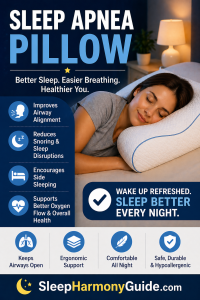
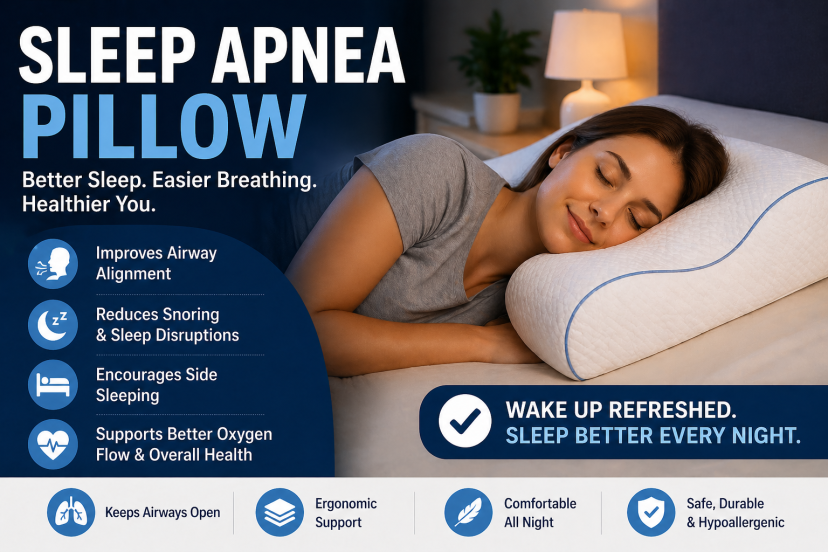
A sleep apnea pillow is a specially designed pillow that helps keep your head, neck, and airways aligned to support better breathing during sleep.
It typically:

- Encourages side sleeping
- Reduces airway collapse
- Minimizes snoring
- Improves airflow
👉 While it doesn’t treat the root cause of sleep apnea, it can reduce symptoms and improve sleep quality.
🧠 How Sleep Apnea Affects Your Breathing
To understand how a sleep apnea pillow helps, you need to know what’s happening in your body.
Sleep apnea—especially obstructive sleep apnea (OSA)—occurs when:
- The airway partially or completely collapses
- Breathing briefly stops during sleep
- Oxygen levels drop
- The brain wakes you up to resume breathing
This cycle can happen dozens—or even hundreds—of times per night.
👉 The result: poor sleep, low energy, and long-term health risks.
🛏️ How A Sleep Apnea Pillow Works
A sleep apnea pillow is designed to improve sleep posture, which plays a major role in airway function.
Key Benefits:
- Keeps Your Head Elevated
Helps reduce airway obstruction - Supports Neck Alignment
Prevents your airway from narrowing - Encourages Side Sleeping
Side positions reduce apnea episodes compared to back sleeping - Reduces Snoring
Better airflow means less vibration in the airway
👉 In simple terms: it helps your body stay in a position that supports easier breathing.
😴 Types Of Sleep Apnea Pillows
Not all sleep apnea pillows are the same.
Here are the most common types:
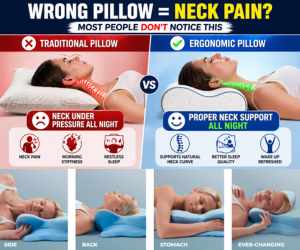
🧱 1. Contoured Memory Foam Pillows
These have a curved shape to support the neck and head.
Features:
- Ergonomic design
- Neck support
- Promotes proper alignment
Best For:
- Back and side sleepers
- People with neck pain
🛌 2. Wedge Pillows
These are triangular-shaped pillows that elevate your upper body.
Features:
- Inclined sleeping position
- Reduces airway collapse
- Helps with acid reflux as well
Best For:
- Back sleepers
- People with mild sleep apnea or snoring
↔️ 3. Side-Sleeping Pillows
Designed to keep you from rolling onto your back.
Features:
- Full-body support
- Encourages side sleeping
- Reduces pressure on the airway
Best For:
- People whose apnea worsens on their back
🎧 4. CPAP-Compatible Pillows
If you use a CPAP machine, these pillows are designed to accommodate the mask.
Features:
- Cutouts for mask space
- Reduces air leaks
- Improves comfort
Best For:
- CPAP users
⚠️ Can A Sleep Apnea Pillow Cure Sleep Apnea?
Let’s be clear:
👉 A sleep apnea pillow is NOT a cure.
It can:
- Reduce symptoms
- Improve comfort
- Support better sleep posture
But it cannot:
- Fully treat moderate to severe sleep apnea
- Replace medical treatments like CPAP
Best Use Case:
- Mild sleep apnea
- Snoring issues
- As a supplement to other treatments
🧩 Who Should Try A Sleep Apnea Pillow?
A sleep apnea pillow may help if you:
- Snore loudly
- Sleep on your back often
- Have mild sleep apnea
- Feel discomfort with regular pillows
- Use a CPAP machine and need better positioning
👉 It’s a low-risk option worth trying for many people.
🚫 Who May Need More Than A Pillow?
A pillow alone may not be enough if you:
- Have moderate to severe sleep apnea
- Wake up gasping frequently
- Experience extreme daytime fatigue
- Have been diagnosed and prescribed CPAP
👉 In these cases, medical treatment is essential.
🔍 How To Choose The Best Sleep Apnea Pillow
Choosing the right pillow makes a big difference.
Key Factors To Consider:
📏 1. Sleeping Position
- Side sleepers → contoured or side-support pillows
- Back sleepers → wedge pillows
- CPAP users → CPAP-compatible pillows
🧱 2. Firmness
- Medium-firm is usually best
- Too soft = poor support
- Too firm = discomfort
📐 3. Height And Elevation
- Proper height keeps your airway open
- Too low = airway compression
- Too high = neck strain
🧼 4. Material
- Memory foam → supportive and durable
- Breathable fabrics → reduce overheating
💡 5. Comfort And Adjustability
- Look for adjustable designs if possible
- Comfort is key for consistency
🛠️ Tips To Get The Most Out Of Your Pillow
A pillow alone won’t fix everything—but used correctly, it can help.
Do This:
- Use it every night
- Combine with side sleeping
- Keep your sleep environment optimized
- Maintain a consistent sleep schedule
🧘 Combine With These Sleep Improvements
To get better results, pair your pillow with simple habits:
- Reduce screen time before bed
- Avoid alcohol late at night
- Maintain a healthy weight
- Practice good sleep hygiene
👉 These amplify the benefits of your pillow.
📊 How Effective Are Sleep Apnea Pillows?
Results vary depending on the person.
What Studies And Users Suggest:
- Helpful for reducing snoring
- Can improve mild sleep apnea symptoms
- Improves comfort for CPAP users
👉 But effectiveness depends on consistency and severity.
⏳ How Long Does It Take To See Results?
Many people notice improvements within:
- 1–3 nights → better comfort
- 1–2 weeks → improved sleep quality
Your body may need time to adjust to a new position.
🚫 Common Mistakes To Avoid
Avoid these if you want better results:
- Choosing the wrong pillow type
- Using it inconsistently
- Expecting it to cure sleep apnea
- Ignoring other sleep habits
❓ FAQ: Sleep Apnea Pillow
Do Sleep Apnea Pillows Stop Snoring?
They can reduce snoring, especially if it’s caused by poor sleep position.
Are They Worth It?
Yes—for comfort and mild symptom improvement.
Can I Use One With CPAP?
Yes—CPAP pillows are specifically designed for this.
How Do I Know If I Have Sleep Apnea?
A sleep study is the only way to diagnose it properly.
🌟 Final Thoughts: A Simple Upgrade For Better Sleep
A sleep apnea pillow won’t replace medical treatment—but it can make a real difference in how you sleep.
It helps by:
- Improving your sleep position
- Supporting your airway
- Reducing snoring and discomfort
If you’re looking for a simple, low-risk way to improve your sleep…
👉 This is a great place to start.
⚠️ Disclaimer
This content is for informational purposes only and is not intended as medical advice. Always consult a qualified healthcare professional if you have ongoing sleep problems or health concerns.
 Explore more: