Why Do You Wake Up Exhausted Even After Sleeping?
🛋️ Still Wake Up Exhausted Every Morning?
Do you crawl into bed at a reasonable hour, sleep for what seems like a full night, yet still wake up exhausted every morning? If so, you’re not imagining things. Many adults struggle with persistent morning fatigue even when they appear to get enough sleep.
Feeling exhausted after sleeping can affect your mood, concentration, work performance, and overall health. You may find yourself relying on coffee just to function or wishing you could go back to bed a few hours after waking.
The encouraging news is that waking up exhausted isn’t always about sleeping longer. In many cases, improving sleep quality, identifying underlying causes, and making a few lifestyle adjustments can help you feel more refreshed.
In this guide, we’ll explore why you wake up exhausted, what symptoms to watch for, practical ways to improve your sleep naturally, and when it’s time to seek professional advice.
⭐ Quick Answer: Wake Up Exhausted
If you wake up exhausted even after sleeping, common causes include poor sleep quality, interrupted sleep, stress, anxiety, sleep apnea, restless legs syndrome, poor sleep hygiene, certain medications, or underlying medical conditions. Improving your bedtime routine and addressing the root cause may help you wake up with more energy.
Key Takeaways
Most likely cause: If you wake up exhausted despite getting enough hours of sleep, poor sleep quality or frequent nighttime disruptions are often to blame. Stress, inconsistent sleep habits, snoring, sleep apnea, medications, and certain health conditions can also contribute.
Usually serious? Occasional morning fatigue is usually not serious. However, persistent exhaustion—especially with loud snoring, breathing pauses, morning headaches, dizziness, or excessive daytime sleepiness—should be discussed with a healthcare professional.
First thing to check: Look at your sleep schedule and sleep quality. Notice whether you’re waking during the night, snoring heavily, using screens or caffeine too close to bedtime, or sleeping at inconsistent times.
Best solution: Improve sleep habits by keeping a consistent schedule, creating a cool and comfortable bedroom, limiting late caffeine and alcohol, and developing a relaxing bedtime routine. If fatigue continues despite these changes, consider talking with a healthcare professional to rule out an underlying sleep or medical condition.
🌙 Why Do You Wake Up Exhausted Even After Sleeping?
Many people assume sleeping eight hours guarantees good rest.
However, healthy sleep depends on completing multiple sleep cycles that include deep sleep and REM sleep. If these cycles are interrupted—even briefly—you may wake feeling like you barely slept.
You may also experience non-restorative sleep, which means you spend enough time asleep but never feel refreshed.

If you’re looking for a complete overview of morning fatigue, read our related guide:
Why Do I Wake Up Tired? 15 Common Causes And What May Help
https://sleepharmonyguide.com/why-do-i-wake-up-tired-15-common-causes-and-what-may-help
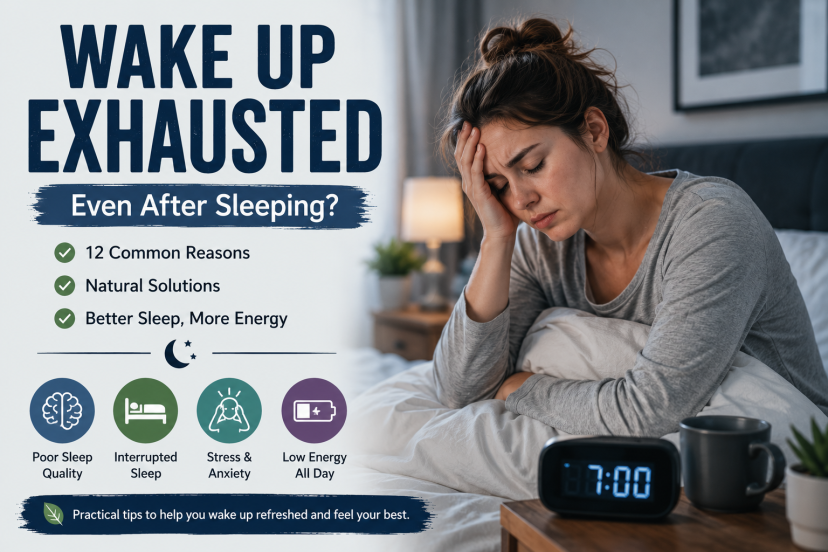
😴 12 Common Reasons You Wake Up Exhausted
1. Poor Sleep Quality
One of the most common reasons people wake up exhausted is poor-quality sleep.
Although you may spend enough hours in bed, your brain may not spend enough time in deep restorative sleep.
Signs include:
- Frequent waking
- Brain fog
- Morning grogginess
- Low daytime energy
2. Stress And Anxiety
Stress doesn’t always prevent sleep.
Sometimes it causes lighter, fragmented sleep that leaves you feeling exhausted.
Stress-related symptoms include:
- Racing thoughts
- Waking several times
- Early morning waking
- Feeling mentally drained
Practicing relaxation before bed may improve sleep quality.

3. Sleep Apnea
Sleep apnea repeatedly interrupts breathing during sleep.
Many people don’t realize it’s happening until a partner notices loud snoring or breathing pauses.
Other symptoms include:
- Morning headaches
- Dry mouth
- Daytime sleepiness
- Difficulty concentrating
Sleep apnea should always be evaluated by a healthcare professional.
4. Poor Sleep Hygiene
Healthy sleep habits make a significant difference.
Poor sleep hygiene includes:
- Watching television in bed
- Using your phone late at night
- Bright bedroom lighting
- Irregular sleep schedules
Small improvements often lead to better sleep over time.
5. Too Much Caffeine
Caffeine can remain active in your body for several hours.
Coffee, tea, energy drinks, soft drinks, and chocolate consumed late in the day may interfere with deep sleep without making it obvious.
Many sleep specialists recommend limiting caffeine after early afternoon.

6. Alcohol Before Bed
Although alcohol may help you fall asleep quickly, it often disrupts sleep later in the night.
As alcohol leaves your system, sleep becomes lighter and more fragmented.
7. Restless Legs Syndrome
An uncomfortable urge to move your legs can repeatedly interrupt sleep.
Many people are unaware that these movements continue overnight, preventing restorative sleep.
8. An Inconsistent Sleep Schedule
Your body’s circadian rhythm thrives on consistency.
Going to bed at different times every night—or sleeping much later on weekends—can leave you feeling exhausted throughout the week.
9. Depression Or Mood Disorders
Depression may cause insomnia, oversleeping, or poor-quality sleep.
Even sleeping nine or ten hours may not leave you feeling refreshed.

If symptoms persist, seek guidance from a healthcare provider.
10. Nutrient Deficiencies
Low levels of certain vitamins and minerals may contribute to fatigue.
Common deficiencies include:
- Iron
- Vitamin D
- Vitamin B12
- Magnesium
Your healthcare provider can determine whether testing is appropriate.
11. Certain Medications
Some medications can interfere with normal sleep.
Examples include:
- Steroids
- ADHD medications
- Decongestants
- Some antidepressants
Never stop taking prescription medications without medical advice.
12. Chronic Health Conditions
Conditions that may contribute to waking exhausted include:
- Thyroid disorders
- Diabetes
- Chronic pain
- Heart disease
- Autoimmune disorders
Persistent fatigue deserves medical evaluation.
🌿 Natural Remedies That May Help You Stop Waking Up Exhausted
Many people improve their sleep through consistent healthy habits.

Magnesium
Magnesium may support relaxation and healthy sleep for some individuals.
Always discuss supplements with your healthcare provider before starting them.
Melatonin
Melatonin may be useful for certain sleep timing issues, jet lag, or shift work.
It’s generally best to use the lowest effective dose unless your healthcare provider recommends otherwise.
Herbal Teas
Many people enjoy calming herbal teas such as:
- Chamomile
- Lemon balm
- Lavender
- Passionflower
Although research varies, these caffeine-free drinks may encourage relaxation before bedtime.
Relaxation Techniques
Try incorporating:
- Deep breathing
- Meditation
- Progressive muscle relaxation
- Gentle stretching
- Guided sleep meditation
Relaxation helps prepare your body and mind for restorative sleep.
🛏️ Lifestyle Changes That May Improve Sleep Quality
If you regularly wake up exhausted, these simple habits may help.
Helpful Sleep Habits
- ✔ Go to bed at the same time every night.
- ✔ Wake up at the same time every morning.
- ✔ Exercise regularly.
- ✔ Get morning sunlight.
- ✔ Avoid heavy meals before bed.
- ✔ Limit alcohol.
- ✔ Reduce caffeine later in the day.
- ✔ Keep your bedroom cool, quiet, and dark.
- ✔ Reserve your bed for sleep instead of scrolling on your phone.
Small, consistent changes often produce better long-term results than dramatic overnight changes.
📱 Sleep Products That May Support Better Sleep
Many U.S. adults use sleep products to improve their bedtime routine.
Popular options include:
- White noise machines from Hatch, LectroFan, and Yogasleep
- Sleep trackers such as Fitbit, Apple Watch, Garmin, and Oura Ring
- Cooling pillows
- Blackout curtains
- Sunrise alarm clocks
- Weighted blankets for people who find gentle pressure calming
Sleep trackers estimate sleep patterns but should not replace professional medical evaluation.
🌅 Morning Habits To Help You Feel More Energized
Your morning routine can influence how alert you feel throughout the day.
Try these simple strategies:
- Open your curtains immediately.
- Drink a glass of water.
- Spend 15–20 minutes in natural sunlight.
- Stretch gently.
- Eat a balanced breakfast if you’re hungry.
- Avoid hitting the snooze button repeatedly.
These habits reinforce your body’s natural sleep-wake cycle.
⚠️ When To See A Doctor
Occasionally waking exhausted is common.
However, you should consult your healthcare provider or a sleep specialist if you:
- Wake up exhausted most mornings for several weeks.
- Snore loudly or stop breathing during sleep.
- Fall asleep unintentionally during the day.
- Wake with frequent morning headaches.
- Experience severe insomnia.
- Feel exhausted despite improving your sleep habits.
- Suspect an underlying health condition.
A sleep study or additional testing may help identify treatable sleep disorders.
❓ FAQs: Wake Up Exhausted
Why do I wake up exhausted after 8 hours of sleep?
Poor sleep quality, stress, interrupted sleep, sleep disorders, medications, or health conditions may prevent restorative sleep even if you spend enough time in bed.
Is it normal to wake up exhausted every morning?
No. Regularly waking exhausted may indicate an underlying sleep or health issue that should be evaluated.
Can anxiety make me wake up exhausted?
Yes. Anxiety can interrupt deep sleep and increase nighttime awakenings, leading to morning fatigue.
Does magnesium help with sleep?
Some adults find magnesium supports relaxation and better sleep, although results vary. Speak with your healthcare provider before taking supplements.
Can sleep apnea cause morning exhaustion?
Yes. Sleep apnea repeatedly interrupts breathing during sleep, reducing sleep quality and causing daytime fatigue.
What is non-restorative sleep?
Non-restorative sleep means you sleep for enough hours, but never feel refreshed because your sleep quality is poor.
How can I stop waking up exhausted?
Improving sleep hygiene, maintaining a regular sleep schedule, managing stress, limiting caffeine and alcohol, and treating underlying sleep disorders may all help.
🎯 Final Thoughts On Wake Up Exhausted
If you consistently wake up exhausted, remember that better sleep is often possible. Morning fatigue is usually a sign that your body isn’t getting the restorative sleep it needs—not necessarily that you need more hours in bed.
Start by improving your bedtime routine, reducing common sleep disruptors, and creating a calm, comfortable sleep environment. Even small changes can add up over time. If your exhaustion continues despite healthy habits, don’t hesitate to seek help from a healthcare provider or sleep specialist. Identifying the underlying cause can be the first step toward waking up refreshed and ready for the day.
Disclaimer
This article is for educational purposes only and should not be considered medical advice. It is not intended to diagnose, treat, cure, or prevent any medical condition. Always consult a qualified healthcare provider before starting supplements, making significant lifestyle changes, or if you experience persistent fatigue, loud snoring, breathing pauses during sleep, or ongoing sleep concerns.
 Explore more: