Why Does My Room Feel Stuffy? 11 Common Causes And Easy Fixes
If you’ve been asking yourself, why does my room feel stuffy, you’re not alone. A bedroom can quickly become uncomfortable when the air feels stale, heavy, or difficult to breathe. Even if the room looks clean and the temperature seems normal, poor air circulation can leave the space feeling warm, humid, and unpleasant—making it harder to relax and enjoy a restful night’s sleep.
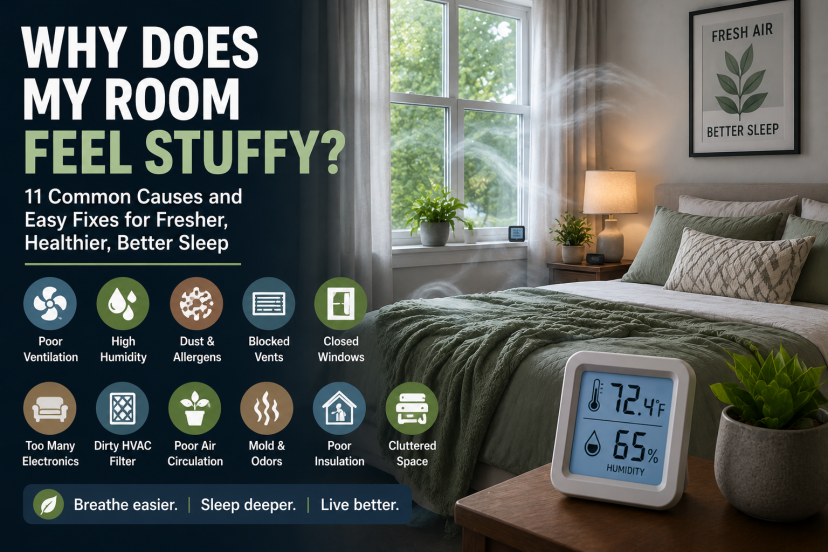
A stuffy room is usually caused by poor ventilation, trapped humidity, dust buildup, blocked air vents, or limited fresh air entering the room. Fortunately, these problems are often easy to identify and fix without expensive renovations or equipment.
In this guide, you’ll learn why your bedroom feels stuffy, how to identify the underlying cause, and practical ways to create a healthier, quieter, cooler, cleaner, and more comfortable bedroom that supports better sleep every night.
⚡ Quick Answer: Why Does My Room Feel Stuffy?
A bedroom usually feels stuffy because fresh air isn’t circulating properly. Poor ventilation, high humidity, dirty HVAC filters, blocked air vents, dust buildup, or keeping windows and doors closed for long periods can all make the air feel stale. Improving airflow and reducing excess moisture are usually the quickest ways to make your room feel fresher.
Key Takeaways |
|---|
| Most likely cause: Poor ventilation and limited fresh airflow |
| Usually serious? No. Most causes are easy to improve. |
| First thing to check: Make sure vents are open and try increasing fresh air circulation. |
| Best solution: Improve ventilation, reduce humidity, and keep the room clean and well ventilated. |
🌬️ Why This Happens – How To Identify The Problem
A bedroom becomes stuffy when indoor air isn’t replaced with fresh outdoor air often enough. As you breathe, your room naturally accumulates carbon dioxide, moisture, dust, and other airborne particles. Without proper airflow, these build up and make the room feel stale.
Unlike temperature, “stuffy” air is usually a combination of poor circulation, humidity, and indoor air quality.
Ask yourself:
- Does the room feel fresher after opening a window?
- Is the room more stuffy in the morning?
- Do you notice condensation on windows?
- Does the room smell stale?
- Are air vents blocked?
- Does the room feel humid or damp?
Your answers can help identify the underlying cause.
🌡️ The Most Common Causes
1. Poor Ventilation
The most common reason a room feels stuffy is inadequate ventilation.
Without enough fresh air entering, stale indoor air continues circulating.
Signs include:
- Heavy air
- Feeling uncomfortable after several hours
- Improved comfort when opening a window
2. High Indoor Humidity
Too much moisture in the air can make a room feel hot, sticky, and stuffy.
Common causes include:
- Long showers
- Drying clothes indoors
- Humid weather
- Poor ventilation
Ideally, indoor humidity should stay between 30% and 50%.
3. Dirty HVAC Filter
A clogged HVAC filter restricts airflow throughout your home.
Reduced airflow can make bedrooms feel stale while allowing more dust to circulate.
Replacing the filter often improves airflow immediately.
4. Blocked Air Vents
Heating or cooling vents covered by furniture, rugs, or curtains reduce air circulation.
Common obstructions include:
- Beds
- Dressers
- Storage boxes
- Curtains
Keeping vents clear allows fresh conditioned air to circulate properly.
5. Dust And Allergens
Dust buildup doesn’t just affect cleanliness—it also impacts air quality.
Common indoor allergens include:
- Dust mites
- Pet dander
- Pollen
- Fabric fibers
Dirty carpets, bedding, and upholstered furniture can all contribute to stale-feeling air.
6. Closed Windows All The Time
Modern homes are often tightly sealed for energy efficiency.
While this helps reduce heating and cooling costs, it also limits natural air exchange.
Opening windows—even briefly—can noticeably freshen the room.
7. Too Many Electronics
Electronics generate heat and can slightly warm the surrounding air.
Examples include:
- Computers
- TVs
- Gaming systems
- Chargers
- Wi-Fi routers
Combined with poor ventilation, these heat sources contribute to a stuffy environment.
8. Dirty Air Ducts
Dust and debris inside ductwork may reduce airflow and contribute to poor indoor air quality.
While ducts don’t always require cleaning, heavily contaminated systems may benefit from professional inspection.
9. Overcrowded Furniture
A room filled with large furniture can reduce airflow.
Tight spaces between furniture prevent air from moving freely, making the room feel warmer and more stagnant.
10. Mold Or Mildew
Persistent stuffiness combined with a musty smell may indicate mold growth.
Possible locations include:
- Behind furniture
- Inside closets
- Window frames
- Exterior walls
- Around leaks
Mold should be addressed promptly to protect indoor air quality.
11. Lack Of Air Movement
Even clean air feels stale when it isn’t moving.
A ceiling fan or portable fan doesn’t add fresh air, but it helps circulate existing air and improves comfort significantly.
✅ How To Confirm The Cause
Begin with a few simple checks.
Open a window for 15–30 minutes and notice whether the room feels fresher.
Check your HVAC filter for dust buildup.
Inspect supply and return vents to ensure they aren’t blocked.
Measure indoor humidity using a hygrometer.
Look for condensation, musty odors, or signs of moisture.
If air quality improves quickly after increasing ventilation, poor airflow is likely the main issue.
🛠️ How To Fix It
Most stuffy bedrooms improve after several simple changes.
Try these practical solutions:
- Open windows regularly when weather allows.
- Replace dirty HVAC filters.
- Keep vents clear.
- Use ceiling or portable fans to improve circulation.
- Run exhaust fans after showers.
- Use a dehumidifier if humidity remains above 50%.
- Vacuum carpets and upholstery regularly.
- Wash bedding weekly.
- Remove unnecessary clutter.
- Consider an air purifier if dust or allergies are contributing.
Combining several of these improvements often produces the best results.
⚠️ Mistakes To Avoid
Avoid these common mistakes:
- Keeping windows closed all day.
- Blocking HVAC vents.
- Ignoring dirty HVAC filters.
- Overusing scented sprays instead of improving ventilation.
- Allowing humidity to remain high.
- Forgetting to clean bedding and fabrics regularly.
These habits can make the room feel even stuffier over time.
🌿 How To Prevent It
Keeping your bedroom feeling fresh requires regular maintenance.
Helpful habits include:
- Replace HVAC filters every 1–3 months.
- Open windows regularly when conditions permit.
- Keep indoor humidity between 30% and 50%.
- Vacuum and dust weekly.
- Wash bedding every week.
- Keep furniture away from air vents.
- Reduce unnecessary clutter.
- Maintain your HVAC system annually.
These simple habits help maintain cleaner, fresher indoor air throughout the year.
❓ Frequently Asked Questions
Why does my room feel stuffy even with air conditioning?
Air conditioning cools the air but doesn’t always provide enough fresh outdoor air. Poor ventilation or dirty filters may still make the room feel stale.
Can high humidity make a room feel stuffy?
Yes. High humidity makes air feel heavier and reduces your body’s ability to cool itself.
Will an air purifier fix a stuffy room?
An air purifier improves air quality by removing particles, but it won’t replace fresh air or reduce humidity by itself.
Is it bad to sleep in a stuffy bedroom?
Occasionally, no. However, poor ventilation may reduce sleep comfort and worsen allergies or respiratory irritation for some people.
How often should I open my bedroom window?
Even opening a window for 10–20 minutes each day can help improve air exchange when outdoor conditions are suitable.
💙 Final Thoughts Oמ Why Does My Room Feel Stuffy
If you’ve been asking why does my room feel stuffy, the answer is usually related to poor airflow, excess humidity, or indoor air quality rather than a serious problem. In many cases, improving ventilation, reducing moisture, and keeping your bedroom clean are all it takes to make the space feel noticeably fresher.
Start by checking your vents, replacing HVAC filters, opening windows when possible, and reducing dust and clutter. These simple improvements can help create a healthier, quieter, cooler, cleaner, and more comfortable bedroom where it’s easier to relax and enjoy a better night’s sleep.
⚠️ Disclaimer
This article is intended for informational and educational purposes only and should not be considered professional HVAC, environmental, or medical advice. Every home is different, and indoor air quality problems may have multiple causes. If your bedroom remains persistently stuffy despite improving ventilation, or if you notice ongoing mold, water damage, or health symptoms, consult a qualified indoor air quality or HVAC professional for a proper evaluation.
 Explore more: